President Macron "Will Take Measures Against Excessive Refining Margins"
As international oil prices soar, the French government is pushing for a plan to allow the petroleum distribution industry to sell diesel and gasoline below cost price.
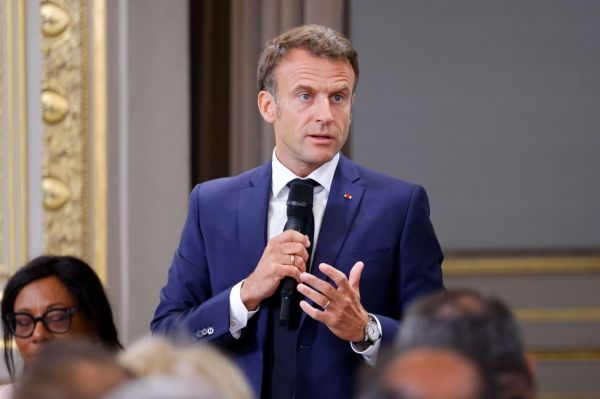
According to major foreign media including Bloomberg on the 30th, French President Emmanuel Macron recently stated in an interview with French media, "One action we can take is to address excessive refining margins." He added that Prime Minister ?lisabeth Borne will meet with the refining industry to demand increased transparency of refining margins.
The French government plans to lower fuel prices by encouraging price competition in the distribution industry as household burdens surge due to rising oil prices. France introduced a measure in 1963 that prohibited petroleum distributors from selling diesel and gasoline below cost price. However, as international oil prices surged to the $90 per barrel range, the government is now pushing for a major deregulation for the first time in 63 years.
Brent crude, the international oil price benchmark, is trading in the low $90 per barrel range amid supply shortage concerns as major oil producers Saudi Arabia and Russia cut production. Prices have risen about 30% since June. Some market forecasts even suggest that international oil prices could surpass $100 per barrel.
President Macron’s decision to bring out the deregulation card for the distribution industry for the first time in 63 years reflects how politically sensitive fuel prices are in France. When President Macron pushed for a fuel tax increase in 2018, the Yellow Vest protests erupted across France and lasted about five months in opposition. Macron’s approval rating also plummeted to 18% at that time.
However, President Macron drew a line on the possibility of fuel tax cuts or fuel subsidies. The French government paid massive fuel subsidies last year using government finances. Macron explained that there is no room to lower fuel taxes as government finances need to be invested in carbon neutrality transition and welfare. If fuel taxes were cut, government revenue would decrease, requiring additional borrowing, and once fuel taxes are lowered, it would face strong resistance if the government tries to raise rates again when oil prices stabilize.
© The Asia Business Daily(www.asiae.co.kr). All rights reserved.
![Clutching a Stolen Dior Bag, Saying "I Hate Being Poor but Real"... The Grotesque Con of a "Human Knockoff" [Slate]](https://cwcontent.asiae.co.kr/asiaresize/183/2026021902243444107_1771435474.jpg)















