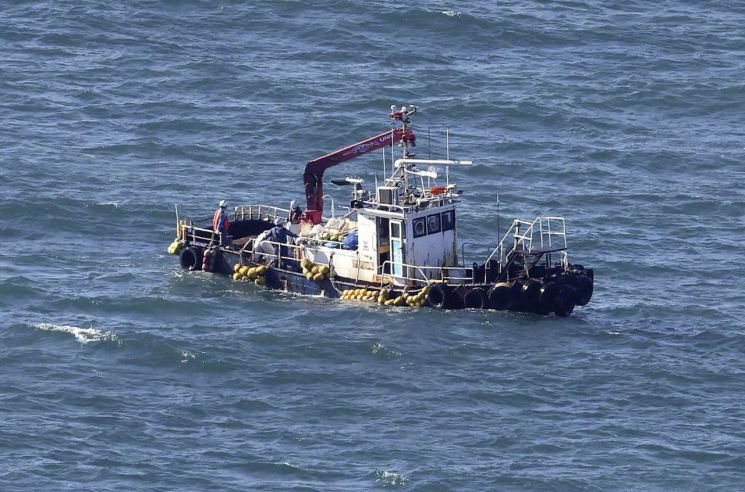
Fishing Operations with Japanese Vessels in International Waters near Japan
Asahi Criticizes, "If a Chinese Ship Catches It, Is It Chinese-Made?"
Amid China's complete ban on Japanese seafood imports following the discharge of contaminated water from the Fukushima Daiichi Nuclear Power Plant, it has been revealed that Chinese fishing vessels have been catching fish in waters near Japan after the discharge. Japanese media criticized this situation, stating, "If Japanese fishing vessels catch fish, it is considered Japanese seafood, but if Chinese vessels catch fish in the same area and bring it to China, it is distributed as Chinese seafood."
On the 25th, Asahi Shimbun reported the results of an investigation into Chinese vessel activities in the North Pacific using Global Fishing Watch (GFW), which tracks the maritime positions and fishing activities of ships. Many Chinese vessels were confirmed in international waters about 1,000 km east of Nemuro City, at the eastern tip of Hokkaido. This area is known for fishing saury, mackerel, and sardines.
According to Asahi, as of the 3rd of last month, before the contaminated water discharge, there were 156 Chinese vessels, and even on the 19th, after the discharge began, 162 Chinese fishing vessels were operating in the area. During the period of contaminated water release, the number of vessels per day ranged from 146 to 167, showing little significant change.
Japan's Fisheries Agency also stated that the number of Chinese vessels fishing in international waters near Japan is at a similar level compared to the same period last year. Chinese companies engaged in distant-water fishing acknowledged to Asahi's inquiry, "We are still catching saury and other fish in this area."
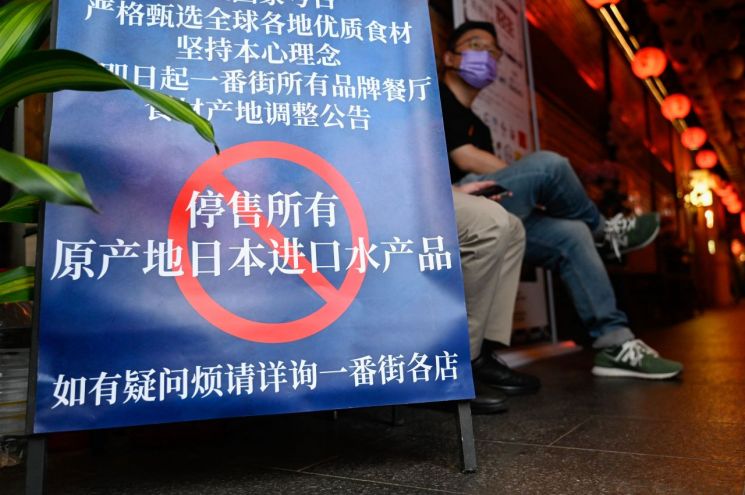
Currently, China has imposed a complete ban on imports of Japanese seafood since the 24th of last month, citing the need to "protect consumer health." Asahi pointed out, "Seafood caught by Japanese vessels in this area is considered Japanese, while seafood caught by Chinese vessels in the same waters is labeled as Chinese and distributed within China."
Additionally, Chinese vessels have been fishing in waters about 200 km northwest of Okinawa since the contaminated water discharge. Asahi criticized that Japanese vessels are also fishing in adjacent waters, effectively meaning that Japanese and Chinese vessels are fishing together in the same sea.
Furthermore, citing the social media of Ambassador Rahm Emanuel, the U.S. Ambassador to Japan, on the 22nd, Asahi noted, "China has decided to ban imports of Japanese seafood, but in reality, Chinese vessels are fishing off the Japanese coast."
Yasuhiro Sanada, a visiting associate professor at Waseda University, stated, "China's complete ban on Japanese seafood imports while fishing in the North Pacific where Japanese vessels operate is a double standard."
Meanwhile, the Japanese government has submitted a written request to the World Trade Organization (WTO) demanding the lifting of China's seafood import ban, but there has been no noticeable change from China.
© The Asia Business Daily(www.asiae.co.kr). All rights reserved.