Plan to Expand Three Major Accommodation Facilities Including Converting Closed Schools into Youth Hostels
The Seoul Metropolitan Government plans to convert closed schools into youth training facilities called ‘Youth Hostels’ and pilot a ‘Campus Stay (tentative name)’ program using university dormitories to accommodate foreign students visiting Korea.
Additionally, the city will encourage the construction of tourist accommodation facilities through land use zone changes or upgrades, introduce the concept of a ‘Tourist Accommodation Specialized District Unit Plan’ to reorganize motel areas, and expand the types of buildings eligible for urban lodging business registration.
On the 24th, Seoul announced that it will improve the urban planning system and tourism industry regulations as part of the ‘Seoul Tourism Future Vision’ unveiled on the 12th, by establishing the ‘Three Major Expansion Plans for Accommodation Facilities’ incorporating these measures.
Previously, Seoul declared the 「Seoul Tourism Future Vision」, which aims to become a ‘30 million tourist city’ by enhancing tourism content and infrastructure in collaboration with the tourism industry.
The city has formulated the 「Seoul Tourism Infrastructure Comprehensive Plan」, which includes four core strategies?Accommodation (Stay), Hospitality (Welcome), Cleanliness (Clean), and Fun (Fun)?along with detailed projects, and plans to sequentially announce improvements starting with accommodation facilities.
Securing Accommodation Facilities by Utilizing Closed Schools and University Dormitories... Supporting Land Use Changes for Accommodation in Old Commercial Buildings
First, to quickly support accommodation for large-scale tourists such as group travelers, the city will utilize closed schools, university dormitories, and old commercial buildings.
The plan is to remodel closed schools and provide them as ‘Youth Hostels’ for domestic and international youth visiting Seoul. Although schools that have closed cannot build commercial or residential facilities on the land designated for ‘educational facilities,’ student training is considered educational, so conversion to youth hostels is deemed possible.
Currently, Seoul is consulting with the Seoul Metropolitan Office of Education to secure closed schools, with the former Gonghang High School site (Banghwa-dong) being prioritized for review.
‘Campus Stay (tentative name)’ will also be introduced, allowing foreign students to stay in university dormitories near the city center, linked with university programs. The city plans to prepare a proposal within this year, gather university feedback, select one or two universities capable of implementation, and pilot the program during next year’s vacation period.
A Seoul city official explained, “This is expected to revitalize university commercial districts, promote universities internationally, and provide a new utilization model for universities facing challenges such as declining student numbers.” Currently, Sejong University operates ‘Sejong Stay,’ an accommodation facility using part of the university’s space.
The city will also promote ‘activation of land use changes’ to convert old buildings such as commercial properties into accommodation facilities. The plan includes simplifying land use change procedures and operating architectural consultation desks in autonomous districts to facilitate conversion to accommodation use. Seoul is currently focusing on reviewing land use changes in commercial areas around Dongdaemun, Sinchon, and Guui Station.
Urban Planning Support... Upgrading Land Use Zones in ‘Linear Commercial Areas’
Second, to ensure sufficient long-term supply of accommodation facilities, the city will actively support urban planning.
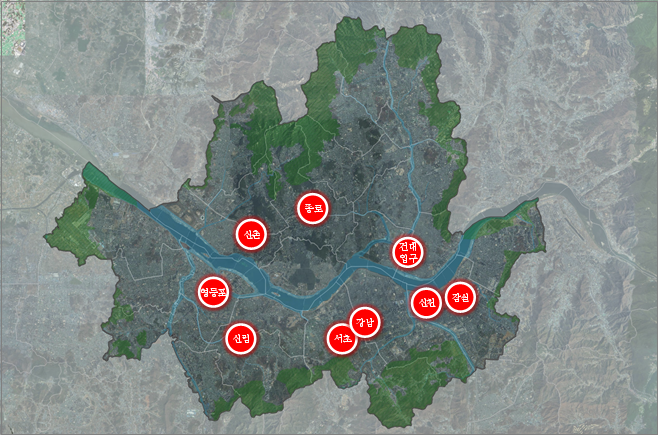
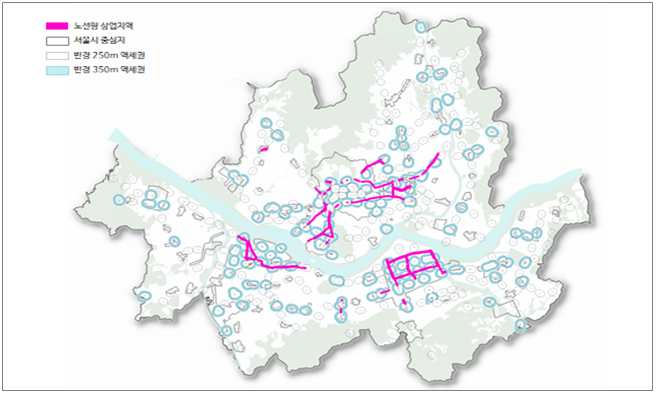
The land use zones in ‘linear commercial areas,’ where two or more land use zones overlap, will be upgraded to support the development of tourist accommodation facilities. These linear commercial areas are mainly located in the three downtown areas of Seoul (Seoul downtown, Yeongdeungpo·Yeouido, Gangnam downtown), and expanding accommodation facilities there is expected to enhance tourist convenience and revitalize commercial districts.
To convert old motel districts into high-quality accommodation facilities, the city will establish standards for a ‘Tourist Accommodation Specialized District Unit Plan’ and amend urban planning ordinances to relax floor area ratio incentives up to 30% (240% for general commercial areas). The city is prioritizing areas with dense old motels such as around Sinchon Station, Jongno 3-ga, Hwayang-dong, and Seoul National University Station for review.
Improvement of the ‘Urban Lodging Business’ System and Proposal for Enactment of the ‘Special Act on Tourist Accommodation Facilities’ Previously Operated Temporarily
Third, the city will pursue institutional improvements related to the supply and operation of tourist accommodation facilities while creating accommodations that offer special experiences utilizing tourist resources such as the Han River and Hanok (traditional Korean houses).
The city proposes to amend the law to improve restrictions on the ‘Foreign Tourist Urban Lodging Business’ under the Tourism Promotion Act, which currently only allows operation by ‘foreigners’ in ‘residential houses,’ by expanding the scope to allow domestic residents to use the service and broadening the types of buildings subject to urban lodging business registration.
Seoul also proposes the enactment of the ‘Special Act on Expanding Tourist Accommodation Facilities,’ which was temporarily in effect from 2012 to 2016.
To provide not only quantitative supply but also unique accommodation experiences exclusive to Seoul, the city will operate event rooms linked with nearby tourist resources such as popup hotels at famous city spots like DDP, the Han River, and the Seoul Trail.
In particular, the city plans to convert the Han River bridge ‘Observation Cafe’ into a viewing hotel to offer a special accommodation experience in the middle of the Han River, and will continue to expand the popular ‘Hanok Stay’ for foreign tourists.
Cho Nam-jun, Director of the Urban Planning Bureau, said, “Securing accommodation facilities is the most fundamental and essential element to leap forward as a world-class tourist city. We will expand not only accommodation but also overall tourism facilities to make Seoul a city where visitors can stay comfortably for a long time and want to return, thereby enhancing Seoul’s urban competitiveness.”
© The Asia Business Daily(www.asiae.co.kr). All rights reserved.


















