Indefinite Ban on Diesel and Gasoline Exports
Last Year, European Gas Pipelines Shut... Resource Weaponization Again
Biden Administration Faces Greater Burden if Inflation Rebounds
"Aiming to Influence Next Year's US Presidential Election"
As international oil prices surged to the $90-per-barrel range, Russia has indefinitely banned the export of diesel and gasoline overseas. Critics say Russia, which shut off gas pipelines to Europe after last year's Ukraine war, has once again resorted to 'energy weaponization.'
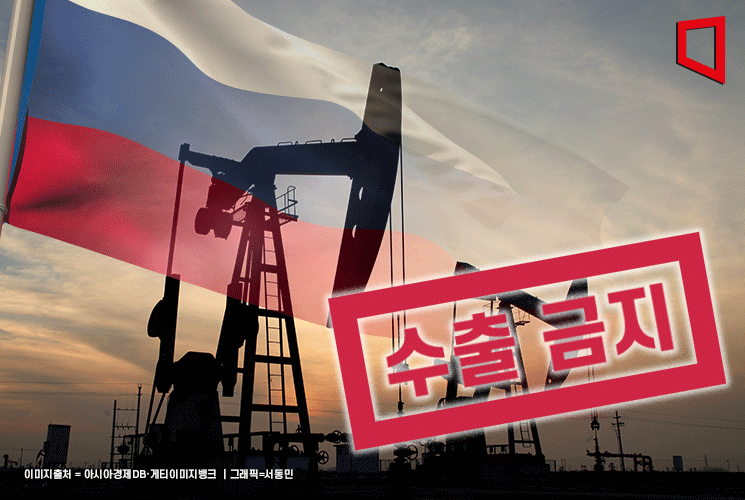
On the 21st (local time), the Russian government announced a ban on the overseas export of diesel and gasoline to stabilize domestic oil prices. The four former Soviet countries?Belarus, Kazakhstan, Armenia, and Kyrgyzstan?are exempt from the export ban.
The Russian government described the measure as 'temporary.' It stated that the ban would remain in effect until the energy market and oil prices stabilize but did not specify an end date. In effect, it is an 'indefinite' implementation.
Pavel Sorokin, Deputy Minister of Energy of Russia, explained, "We expect the market to feel the effects quickly," but added, "The lifting of the export ban depends on the results, such as how stable the market becomes."
The export ban on oil by Russia, a major global supplier of diesel and crude oil producer, comes as international oil prices have surged to the $90-per-barrel range. Brent crude, the global oil market benchmark, closed at around $92 per barrel that day. Due to the extension of production cuts by Saudi Arabia and Russia, crude oil prices have risen by 30% since June. The market fears that Russia's export ban on diesel and gasoline could further push up international oil prices. Diesel, in particular, is a key fuel for the global economy, playing a major role in freight, transportation, and aviation sectors. Heating oil is also derived from diesel.
Henning Gloystein, Director at the Eurasia Group, a U.S. think tank, said, "Russia wants to inflict pain on Europe and the United States," and analyzed, "It appears Russia is repeating the strategy it took in the gas market last year in the oil market ahead of winter." He added, "This shows that Russia's wielding of power in the energy market is not over."
Earlier, after Russia's invasion of Ukraine in February last year, Western countries including the U.S. and Europe condemned Russia and imposed sanctions, leading Russia to reduce gas supplies to Europe. This caused energy prices to soar and triggered a global surge in inflation. There are concerns that Russia's recent move could reignite inflation, which had only recently begun to ease.
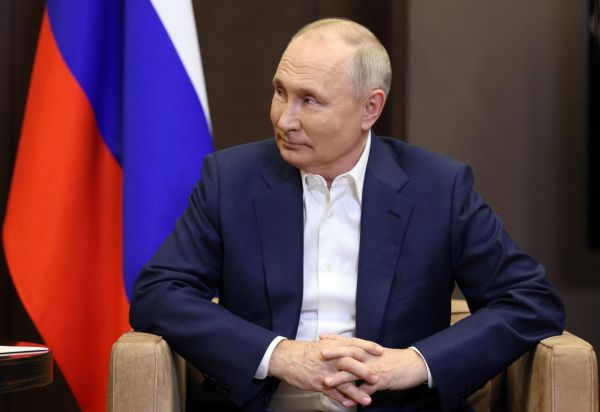
Some analysts suggest that President Vladimir Putin is aiming to drive up oil prices to pressure the Joe Biden administration and influence next year's U.S. presidential election. Donald Trump, a leading Republican candidate, has stated that if he wins the election, he will pressure Ukraine to negotiate with Russia and end the war immediately.
Helima Croft, Global Head of Commodity Strategy at global investment bank RBC Capital Markets, pointed out that while Russia may face short-term domestic supply shortages, the export ban "demonstrates the Kremlin's willingness to weaponize oil supply." She added, "Russia still wants to cause disruption and break the West's resolve in supporting Ukraine," and analyzed, "Putin appears to be watching to see if this move will have an impact on next year's U.S. election."
© The Asia Business Daily(www.asiae.co.kr). All rights reserved.
![Clutching a Stolen Dior Bag, Saying "I Hate Being Poor but Real"... The Grotesque Con of a "Human Knockoff" [Slate]](https://cwcontent.asiae.co.kr/asiaresize/183/2026021902243444107_1771435474.jpg)
















