Medical AI company Lunit announced on the 21st that the research results predicting breast cancer treatment response using the AI biomarker ‘Lunit Scope IO’ have been published in ‘NPJ Breast Cancer’ (IF 5.9), a sister journal of the world-renowned scientific journal Nature.
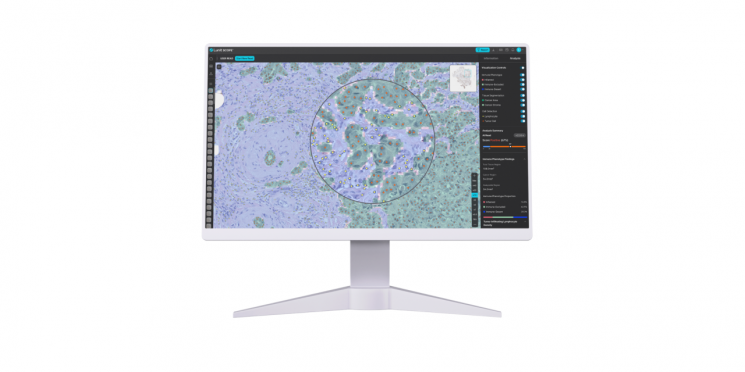
In this study, pathologists verified whether using Lunit Scope IO could reduce measurement variability of stromal tumor-infiltrating lymphocytes (Stromal TIL, sTIL) present in the breast cancer stroma. The degree of tumor-infiltrating lymphocytes (TIL) infiltration is one of the indicators that can predict prognosis and treatment response in breast cancer patients. However, due to the complexity of the evaluation method and subjective judgment by observers, there was a problem of large measurement variability among pathologists.
Three different specialists analyzed 402 breast cancer patient slide images obtained from the US and Korea and evaluated sTIL scores respectively. As a result, in 226 cases (56.2%), the evaluation scores differed by more than 10 percentage points between the analysis results of Lunit Scope IO and those of the specialists. Accordingly, pathologists re-examined the slides with more than a 10%p difference from Lunit Scope IO using the result screen of Lunit Scope IO. As a result, disagreement among specialists was greatly reduced to 116 cases (28.9%). This indicates that Lunit Scope IO could be a useful tool to reduce variability in sTIL evaluation by pathologists for breast cancer treatment.
The study also confirmed that Lunit Scope IO can accurately predict the treatment response of neoadjuvant chemotherapy, which is chemotherapy given before surgery in cancer patients. High sTIL levels are known as a predictor of the effectiveness of neoadjuvant chemotherapy.
In the study, when pathologists judged sTIL as high, the probability of achieving remission after neoadjuvant chemotherapy was not statistically significantly higher. On the other hand, when pathologists used Lunit Scope IO to assess sTIL, the probability of achieving remission after neoadjuvant chemotherapy was statistically significantly higher in the patient group with high sTIL. This demonstrates that assessment using Lunit Scope IO can more accurately predict the effectiveness of anticancer treatment for patients.
Seobeom Seok, CEO of Lunit, said, “Despite the importance of TIL evaluation in predicting breast cancer treatment response, there has been no research on objective evaluation using AI until now,” adding, “In particular, this study once again proved the potential of Lunit Scope IO as a biomarker that predicts treatment response in breast cancer patients by objectively analyzing TIL levels.”
© The Asia Business Daily(www.asiae.co.kr). All rights reserved.
![Clutching a Stolen Dior Bag, Saying "I Hate Being Poor but Real"... The Grotesque Con of a "Human Knockoff" [Slate]](https://cwcontent.asiae.co.kr/asiaresize/183/2026021902243444107_1771435474.jpg)















