Yangtze Memory Technologies Co. (YMTC), China's largest memory semiconductor company, is reportedly in discussions with related companies to localize American equipment, according to a report by the Hong Kong South China Morning Post (SCMP) on the 20th.
SCMP cited an anonymous source saying that YMTC is strengthening discussions and cooperation with local equipment semiconductor companies, including major firms based in Beijing, to develop and produce substitutes for key components manufactured by the American company Lam Research. Lam Research halted the supply of equipment and services to mainland Chinese customers after the U.S. announced export controls targeting China's semiconductor industry in October last year.
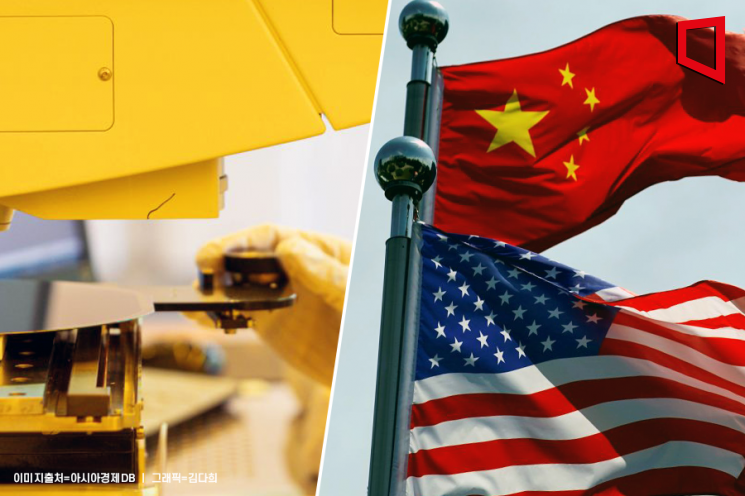
With the need for maintenance and parts replacement of semiconductor equipment, YMTC is also experiencing demand for electrostatic chucks (ESC) parts replacement. Electrostatic chucks are components used to secure wafer pieces.
At the 'Semicon China Conference' held in Shanghai last June, YMTC Chairman Chen Nanshang stated, "As geopolitical tensions escalate, the global chip sector is facing turmoil," adding, "Any supplier unable to guarantee equipment delivery or operation must have their customers purchase the equipment from them."
Founded in 2016 in Wuhan, Hubei Province, YMTC is at the forefront of China's semiconductor industry. In August, it unveiled the first 232-layer 3D NAND flash (X3-9070). However, after being placed on the U.S. trade blacklist in December last year, YMTC postponed the construction of its second wafer factory in Wuhan and significantly reduced equipment orders. Subsequently, in March, it received funding of approximately $7 billion (about 9.3 trillion KRW) from state-owned investors, including the Chinese government-backed 'Big Fund.'
According to sources, YMTC has been pouring funds into localizing the production of parts long procured from overseas and finding companies to maintain and manage equipment. The source speculated that if YMTC fails to localize parts, it could face a decline in production yield due to shortages in equipment maintenance, repairs, and replacement parts, threatening its survival.
© The Asia Business Daily(www.asiae.co.kr). All rights reserved.
![Clutching a Stolen Dior Bag, Saying "I Hate Being Poor but Real"... The Grotesque Con of a "Human Knockoff" [Slate]](https://cwcontent.asiae.co.kr/asiaresize/183/2026021902243444107_1771435474.jpg)
















