Revealed as a Native American Apple Employee Model
Same Photo Used in the US and Korea as Well as China
Chinese netizens strongly opposed a photo of a 'person with braided hair' on Apple's official website, saying it reminded them of the Qing Dynasty queue hairstyle. However, it was revealed that the model in the photo is a Native American Apple employee.
"'Braided hair, small eyes' reminiscent of Qing Dynasty" China criticizes... but the model is a 'Native American'
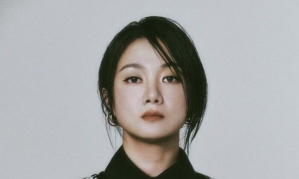
 On Apple's official website in China, a person with braided hair is seen wearing a T-shirt featuring the Apple logo and smiling brightly. Chinese netizens strongly opposed the image, saying it reminded them of the Qing dynasty's queue hairstyle, but the model in the photo was revealed to be a Native American employee of Apple in the United States.
 [Photo by Apple China official website capture]
According to Chinese local media such as Guancha.cn on the 18th, a hashtag reading "How should we view the braided hair image on Apple's official China website?" rose to the top on Weibo (China's social networking service) the previous day.
The controversial photo was posted in the Apple Watch 'Expert 1-on-1 Shopping' guide menu. The person with braided hair was wearing a T-shirt with the Apple logo and smiling brightly.
Chinese netizens strongly opposed the photo, saying it reminded them of the Qing Dynasty queue hairstyle.
One netizen criticized, "This queue hairstyle was already cut off by us 100 years ago, yet they still try to insult us," and asked, "What is their ulterior motive?"
In response to the controversy, Apple Customer Service reportedly said, "We have received feedback and take it very seriously," and "Please watch for further reactions on the official website," according to local media.
It was also revealed that the person in the photo is not Chinese but a Native American Apple employee, and that this photo appears on the front pages of Apple websites not only in China but also in Korea, the United States, and Japan.
"Must accept feedback" vs. "Should refrain from using images that fit insults first"?Opinions emerge
Hu Xijin, former editor-in-chief of the Global Times and a prominent Chinese journalist, said, "Some Chinese are very sensitive to the Western 'insult to China' issue, which has real historical and cultural causes," adding, "Currently, Sino-US relations are tense, and China's relations with the West are not what they used to be. American and Western companies should avoid using images in product advertisements that could cause misunderstandings among Chinese people."
He continued, "Chinese people should not be stuck in past experiences and sorrows; they must protect national dignity and clearly resist malicious provocations," emphasizing, "At the same time, we must not neglect our own sensitivity."
However, Han Ping, the US correspondent for the state-run China Central Television (CCTV), argued, "If you do not speak out against racial discrimination in the US, the other side will think it does not exist," and claimed, "Apple's photo perfectly fits Western symbols that insult China, such as our narrow eyes or braided hair."
Meanwhile, Apple recently released new products, the iPhone 15 and Apple Watch Series 9, but a 'ban on iPhones' has been imposed in China.
On the 13th, the Chinese Ministry of Foreign Affairs denied the 'iPhone ban' rumor, stating, "China has not issued any laws, regulations, or policies banning the purchase or use of foreign brand mobile phones such as Apple," but there have been increasing indications that various institutions and companies are prohibiting the use of foreign mobile phones under the policies of 'supporting domestic products' and 'strengthening security.'
At the same time, China's leading telecommunications equipment manufacturer Huawei unveiled the 'Mate 60 Pro' smartphone, made with domestic technology despite US sanctions, sparking a wave of 'patriotic consumption' among some local consumers encouraging the purchase of Huawei products.
However, when official pre-orders for the iPhone 15 Pro and Pro Max series began in China on the 16th, they sold out within one minute.
© The Asia Business Daily(www.asiae.co.kr). All rights reserved.