Warning about caffeine intake is insufficient
Inhibits calcium and iron absorption, hindering growth
The Ministry of Food and Drug Safety has banned the sale of high-caffeine-containing foods such as coffee in schools, but concerns about excessive caffeine intake are growing as the number of adolescents using low-cost franchise cafes around schools and academies increases.
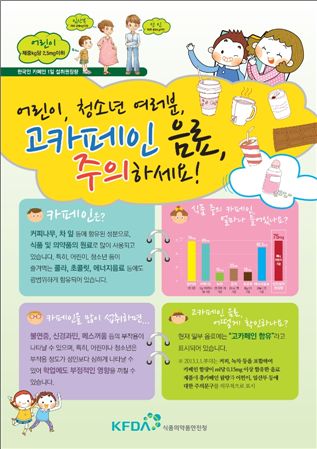
According to the Ministry, the maximum recommended caffeine intake for children and adolescents is less than 2.5 mg of caffeine per 1 kg of body weight. For an adolescent weighing 50 kg, the maximum daily recommended caffeine intake is 125 mg. According to the website of a low-cost coffee brand, a 20oz (approximately 600mL) iced Americano contains 204.2 mg of caffeine. Drinking just one cup of this coffee means many adolescents exceed the maximum recommended daily caffeine intake by a large margin.
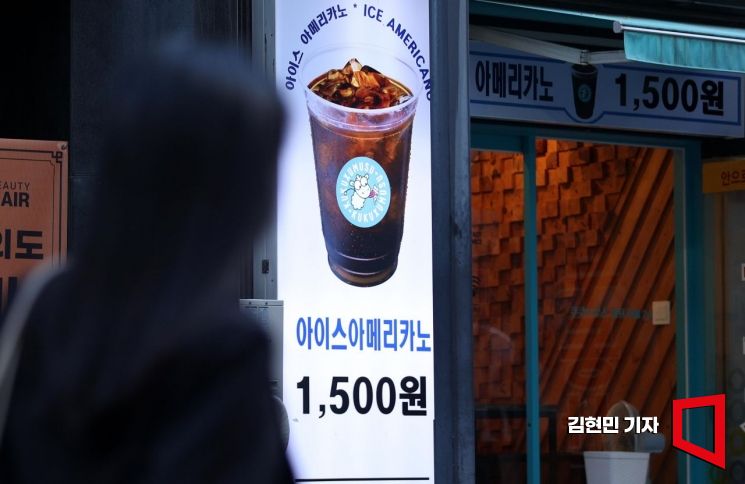
Since September 2018, the government has completely banned the sale of high-caffeine-containing foods, including coffee, in school stores and vending machines. Additionally, last April, the Ministry of Food and Drug Safety expanded a pilot project nationwide to reduce excessive caffeine intake among adolescents by displaying cautionary labels about caffeine consumption on high-caffeine beverage shelves in convenience stores and informing about possible side effects of excessive intake. High-caffeine beverages are defined as drinks containing 15 mg or more of caffeine per 100 mL.
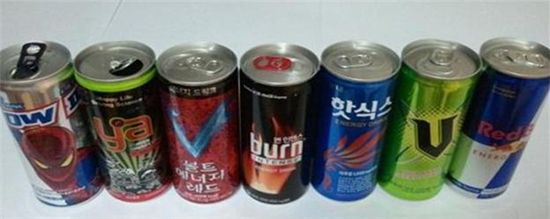 Energy Drink
Earlier, since 2021, the Ministry had conducted a pilot project targeting 314 convenience stores around middle and high schools in the Seoul and Gyeonggi areas, displaying cautionary labels and side effect warnings on high-caffeine beverages, and expanded this project to 695 convenience stores around middle and high schools nationwide.
However, despite these efforts, there is no management or supervision of low-cost cafes near schools and academies where students mainly buy coffee. Especially, low-cost franchise cafes are easy to find anywhere due to their many locations and relatively affordable prices, so adolescents use them without much burden.
According to the Ministry, the weekly consumption rate of high-caffeine beverages among middle and high school students increased rapidly from 3.3% in 2015 to 8.0% in 2017 and 12.2% in 2019. A 2020 survey found that 30% of adolescents who consumed high-caffeine beverages reported drinking three or more bottles per day. Furthermore, last year, the Korea Disease Control and Prevention Agency conducted the 'Youth Health Behavior Survey' targeting about 60,000 middle and high school students from 800 schools nationwide, where 22.3% of respondents said they consumed high-caffeine beverages three or more times a week, and 26.4% said they drank them once or twice a week. This means half of middle and high school students drink high-caffeine beverages at least once a week.
The Ministry stated, "There is no legal basis to regulate the sale of coffee to adolescents in cafes around schools or academies," and added, "It is also impossible to put stickers warning about the side effects of high-caffeine beverages inside cafes."
Experts warn that excessive caffeine intake during adolescence can adversely affect growth. While moderate caffeine consumption can stimulate neural activity, reduce fatigue, and improve concentration, excessive intake can cause side effects such as anxiety, excitement, insomnia, and gastrointestinal disorders. In particular, excessive caffeine intake in adolescents interferes with calcium and iron absorption, leading to osteoporosis, anemia, and hindering growth and development.
© The Asia Business Daily(www.asiae.co.kr). All rights reserved.
![Clutching a Stolen Dior Bag, Saying "I Hate Being Poor but Real"... The Grotesque Con of a "Human Knockoff" [Slate]](https://cwcontent.asiae.co.kr/asiaresize/183/2026021902243444107_1771435474.jpg)
















