User numbers drop 95% after pilot project guidance period ends
Government preparing regulatory easing measures aligned with introduction purpose
As the pilot project for non-face-to-face medical consultations focused on returning patients was implemented, the number of users sharply declined. The government is preparing measures to expand the scope of users in line with the original purpose of introducing non-face-to-face medical consultations.
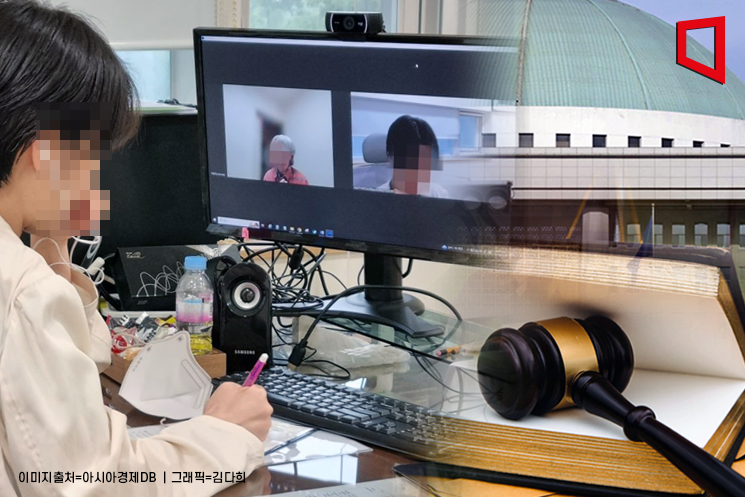
According to the Remote Medical Industry Council (WonSanHyup) on the 15th, the average daily number of non-face-to-face medical consultation applications from the 1st to the 10th of this month was 246, of which 62 consultations were completed. Compared to May before the pilot project (about 5,000 cases), this is a decrease of more than 95%. With the transition to the pilot project, non-face-to-face medical consultations are effectively on the path to collapse.
The problem lies in the excessively narrow scope of eligibility for non-face-to-face medical consultations. For returning patients, those with chronic diseases such as hypertension who have had face-to-face consultations within the past year, and for other diseases, patients who visited for the same illness within 30 days are eligible. Exceptional first-time consultations are only allowed for residents of islands and remote areas, and persons with disabilities.
Medical institutions spend a significant amount of time verifying whether patients are eligible for non-face-to-face consultations and canceling appointments, and most patients feel inconvenienced because they are not eligible. According to WonSanHyup, the completion rate of non-face-to-face consultations dropped from 88.3% in May to 14.7% recently.
This has also led to the withdrawal of platform companies. Jang Ji-ho, co-chairman of WonSanHyup and director of Dr. Now, said, "More than half of the 29 platform companies have terminated their non-face-to-face medical consultation services since the pilot project," adding, "If this continues, most of the remaining platforms will have no choice but to terminate their services as well."
Ultimately, as even eligible patients find it difficult to use non-face-to-face consultations, the government is gathering opinions on expanding the scope of users for non-face-to-face medical consultations.
First, there is a plan to relax the overly narrow criteria for first-time patients. It is being seriously considered to allow first-time consultations during nighttime, holidays, and long weekends when medical institutions are usually closed, and to expand the areas where first-time consultations are permitted to nationwide medically underserved regions. There are also plans to expand the criteria for returning patients and increase medical staff discretion. The regulation will be eased to allow returning consultations based on medical staff judgment even if the set period for returning patients is exceeded.
At a public hearing held on the 14th by the Ministry of Health and Welfare to gather opinions on the direction of non-face-to-face medical consultation regulations, experts pointed out that current regulations are hindering digital medical innovation.
Kwon Yong-jin, professor at Seoul National University Hospital Public Medical Center, said, "While digital medicine using remote technology is already thriving in advanced countries, we must feel a sense of crisis that even evidence generation is not happening in our country." Shin Ae-seon, professor of preventive medicine at Seoul National University and chair of the Korean Telemedicine Society's executive committee, emphasized, "The era when medical care was only provided in physical hospital spaces is over. Non-face-to-face medical consultations can be connected to home care, remote monitoring, and digital therapeutics, so flexible design is needed to avoid institutional barriers in the future."
© The Asia Business Daily(www.asiae.co.kr). All rights reserved.
![Clutching a Stolen Dior Bag, Saying "I Hate Being Poor but Real"... The Grotesque Con of a "Human Knockoff" [Slate]](https://cwcontent.asiae.co.kr/asiaresize/183/2026021902243444107_1771435474.jpg)















