Will Samsung Galaxy S24 Feature Exynos?
Samsung AP Share↓... MX Price Competitiveness Also↓
Foundry Reliability Recovery Is Key
Focus May Shift to Reviving Galaxy-Exclusive Chips
Samsung Electronics is showing signs of strengthening its own AP (Application Processor) brand, 'Exynos.' There is even talk of equipping the next-generation flagship smartphone series, the 'Galaxy S24,' scheduled for release early next year, with Exynos. Samsung's commitment to Exynos is also linked to its ambition to become the number one in system semiconductors. Attention is focused on how Samsung will utilize Exynos to enhance its system semiconductor capabilities, led by fabless (semiconductor design) and foundry (semiconductor contract manufacturing) sectors.
Exynos is one of Samsung's main products in system semiconductors (System LSI division + Foundry division). It refers to semiconductor chipsets that act as the 'brain' of smartphones and tablet PCs.
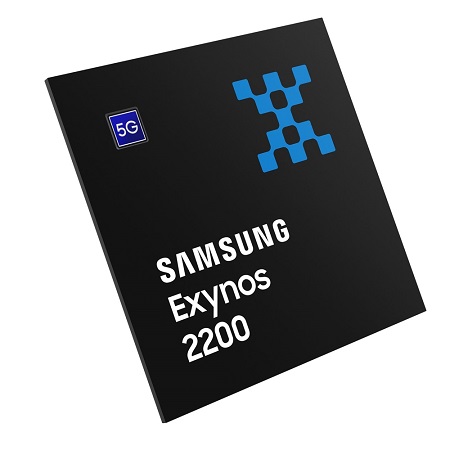
Recently, the Chinese benchmark site AnTuTu revealed details of a chipset presumed to be the 'Exynos 2400' under development by Samsung Electronics. The Exynos 2400 is a deca-core processor equipped with 10 cores: one Cortex X4 core, which is ARM's latest and highest-spec core, five high-performance A720 cores, and four high-efficiency A520 cores. The graphics core (GPU) is expected to be the Eclipse 940, developed in collaboration with AMD, which is said to have more than doubled performance compared to last year. The communication module is expected to feature the 'Exynos 5300 5G' modem, which delivers speeds of 10Gbps, the same as Qualcomm's 'Snapdragon X75' modem. It is also reported to include two-way satellite communication functionality.
Samsung Electronics has traditionally used a strategy of employing both Exynos and Qualcomm's AP, 'Snapdragon,' in the Galaxy S series. This was to maintain bargaining power over the AP price, which accounts for a large portion of smartphone costs, and to strengthen system semiconductor competitiveness.
However, after the 'Galaxy S22,' released last year with the 'Exynos 2200,' sparked controversy over the Game Optimization Service (GOS), Samsung changed its policy. Ultimately, the 'Galaxy S23' released this year was equipped entirely with Qualcomm's 'Snapdragon 8 Gen 2' chips, excluding Exynos.
As a result, Exynos's position in the mobile AP market has been steadily declining. In the first quarter, Samsung Electronics' share of the global smartphone AP market by shipment volume was only about 4%. The gap with Taiwan's MediaTek (32%), the US's Qualcomm (28%), and Apple (26%) is widening.
By relying entirely on other companies for APs, Samsung Electronics' MX (Mobile Experience) division's price competitiveness has weakened. The mobile AP purchase amount for the DX (Device Experience) division in the first half of this year reached 5.7457 trillion KRW. The proportion of mobile AP in the DX division's total raw material purchases (32.4846 trillion KRW) in the first half of this year was about 17.7%.
There have been setbacks in Samsung Electronics' grand plan to strengthen its system semiconductor business. Above all, the reliability of the foundry business, which produces Exynos exclusively, has been damaged. Since advanced process technology is the core of Samsung Electronics' super-gap strategy, the success or failure of the Exynos series produced using this technology determines the foundry business's credibility.
The problem lies in performance. Tae-moon Roh, President of Samsung Electronics' MX division, has repeatedly stated in public that "It is not about whether it is Exynos or Qualcomm, but which chipset provides the best experience to consumers that is most important." Accordingly, there is analysis that Samsung is likely to adopt the Exynos 2400 only in some basic and plus models, excluding the top-tier Galaxy S24 Ultra.
Some say Samsung is more likely to focus on developing Galaxy-exclusive chips instead of Exynos to target the flagship AP market. There is analysis that the brand itself could be changed for image transformation. In fact, at the end of last year, the System LSI division established an 'AP Solution Development Team' together with the MX division to optimize APs and conduct next-generation advanced research. Additionally, key developers were recruited from AMD and ARM to form an internal CPU optimization dedicated team. Tae-moon Roh, President of Samsung Electronics' MX division, confirmed the development of a 'Galaxy-exclusive AP' as a foregone conclusion during a press conference held immediately after the 'Galaxy Unpacked 2022' event in New York in August last year, stating, "We are discussing and reviewing with various partners."
© The Asia Business Daily(www.asiae.co.kr). All rights reserved.
![Clutching a Stolen Dior Bag, Saying "I Hate Being Poor but Real"... The Grotesque Con of a "Human Knockoff" [Slate]](https://cwcontent.asiae.co.kr/asiaresize/183/2026021902243444107_1771435474.jpg)
















