Contract Signed with Bolivian Lithium Corporation Alongside 3 Korean Companies
Planning Local Hydroxide Lithium Plant Construction After SPC Establishment
Blind Fund Being Raised, Plans to Invest in SMR and AI Semiconductors
"Unexpected Chinese Progress, Korean Battery Companies Must Stay Alert"
The salt flat (salt lake) located in Uyuni, Potos?, the heart of South America, Bolivia. Due to the high altitude of 3,600 meters above sea level, the area suffers from a shortage of oxygen, making it difficult to breathe. Lithium, a key mineral for electric vehicle battery production, is dissolved in this salt flat like salt. Lithium is the core raw material for lithium-ion batteries and is called "white oil" because its global production is limited.
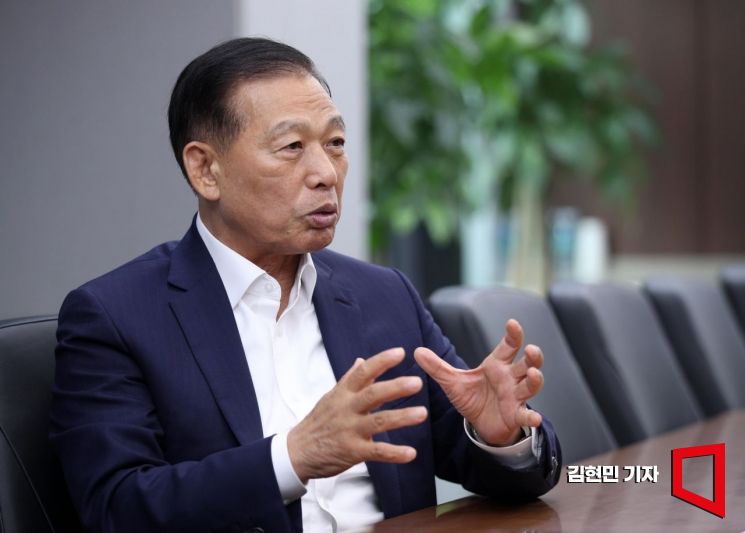
This is why Kim Jae-wook, chairman of BNW Investment, who discovered Ecopro BM when no one paid attention to secondary batteries, personally visited the Bolivian salt flat last month. Because of the high altitude, breathing was difficult, so he had to borrow an oxygen respirator, and the schedule was so exhausting that his eyes turned red from fatigue, but he had to see it with his own eyes. Kim, who has an instinctive ability to sense what essential links are needed at key junctures of domestic manufacturing, is promoting the Bolivian lithium mining business as his next venture.
Chairman Kim is an engineer-turned-executive who served as the head of Samsung Electronics’ semiconductor plant in Giheung and as president of Samsung Electronics. True to his background as a factory head of Korea’s top company, he had to step on the ground himself. Kim visited Bolivia with executives from three companies: secondary battery material company ENPLUS, Korean-origin raw material company Korindo Group operating in Indonesia, and highway rest area operator JS Corporation.
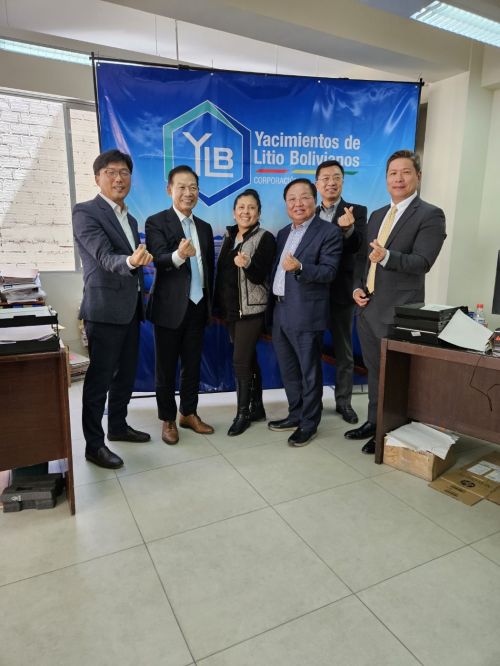 Vice Chairman Park Jong-seong of EN Plus, Chairman Kim Jae-wook of BNW Investment, Patricia Lozano Versas, Sales Director of Bolivia Lithium Corporation (YLB), Chairman Eom Jeong-wook of JS Trading, CEO Jeong Ki-tae of Campol, and Vice President Park Jin-hwi of Korindo Group (from left in the photo) are taking a commemorative photo after signing a supply contract for lithium carbonate at the YLB headquarters.
The four companies, including BNW Investment, formed a consortium and signed a contract with the Bolivian Lithium Corporation (YLB) for lithium supply. They plan to establish a separate corporation in the future to build a lithium hydroxide production plant in Bolivia. The goal is to produce more than 10,000 tons annually.
In an interview with this publication on the 11th at the BNW office in Yeoksam-dong, Seoul, Kim Jae-wook said, "Currently, Korea imports about 80% of its lithium from China," adding, "If this project succeeds, it will significantly reduce dependence on China."
It is expected that Korea and China will form a competitive structure in the battery sector, risking their national economies. Kim said, "If China weaponizes lithium resources, no matter how excellent the technology of Korea’s three battery companies is, they will inevitably lose in price competitiveness." He added, "Large companies like POSCO are also striving to secure battery raw materials such as lithium, and Korea plans to aggressively secure high-quality lithium from the Bolivian region by taking advantage of the temporary pause in China and Russia due to conflicts with the U.S."
Kim’s judgment is that now is the optimal time for lithium resource exploration and production investment, as Korean capital and companies’ value have risen above China’s following the implementation of the Inflation Reduction Act (IRA).
First Independent Blind Fund, “Interested in SMR”
Kim founded BNW Investment in 2013 after serving as president in charge of memory manufacturing at Samsung Electronics’ semiconductor division, president of manufacturing technology at Samsung Electronics, president of Samsung SDI, and president of Samsung LED. He has achieved remarkable results by investing mainly in advanced industries such as semiconductors and secondary batteries, as well as information technology (IT).
In 2016, after spinning off Ecopro’s secondary battery division, which was in deficit, BNW invested 60 billion won together with SK Securities PE and Industrial Bank of Korea PE, securing a 30% stake. Since then, BNW successfully recovered its investment with returns five times the invested amount.
BNW is currently forming its first independent blind fund. A blind fund is a fund that raises capital without pre-selecting investment targets and then seeks investment opportunities. Thanks to its good track record, it has received positive responses from investors. So far, it has raised 230 billion won, with a goal of 500 billion won by the end of the year. If successful, BNW’s assets under management (AUM) will exceed 1 trillion won.
Kim plans to continue investing in advanced industries that could become the country’s next growth engines. The Bolivian lithium project is one of them. Bolivia, along with Chile and Argentina, is one of the world’s largest lithium reserves. However, due to lack of technology and other reasons, lithium production has lagged behind other countries. Recently, lithium development has accelerated through contracts with overseas companies such as those from China and Russia. The world’s largest battery cell company, China’s CATL, is also participating in the Bolivian lithium project. No Korean company has yet entered the Bolivian lithium business.
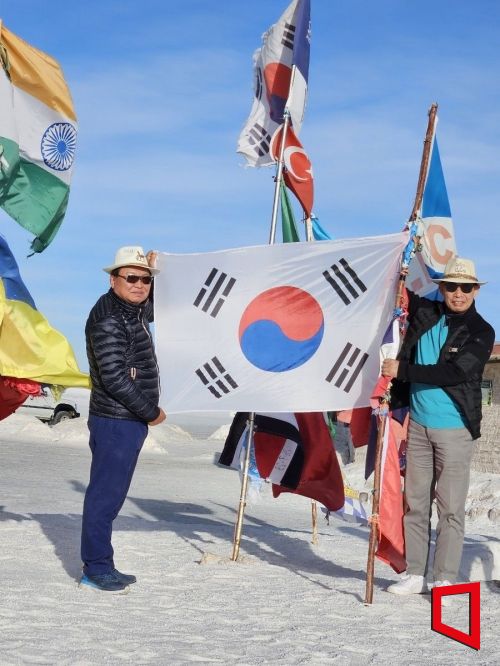 Kim Jae-wook, Chairman of BNW Investment, and Eom Jeong-wook, Chairman of JS Mulsan, are holding the Taegeukgi and taking a commemorative photo at Salar de Uyuni in Potos?, Bolivia.
Kim said, "Initially, we plan to receive 3,000 tons of lithium carbonate samples with 98.5% purity to test with domestic companies," and "After increasing supply to 7,000 tons, we plan to build a lithium hydroxide manufacturing plant in Bolivia in the long term." Lithium carbonate is used in lithium iron phosphate (LFP) batteries, which China focuses on. Lithium hydroxide, which has higher purity, is used in ternary batteries such as nickel-cobalt-manganese (NCM), where domestic companies have strengths.
For the Bolivian lithium project, BNW formed a consortium with ENPLUS, Korindo Group, and JS Corporation. These companies plan to create a special purpose company (SPC) to carry out the project.
Kim is eyeing energy and artificial intelligence (AI) semiconductor sectors as his next investment targets. He said, "We cannot keep producing electricity needed for the electric vehicle era from fossil fuels," adding, "In Korea, we have no choice but to move toward nuclear power rather than solar or wind energy." He especially views small modular reactors (SMR), which can ensure safety, as promising.
The Teachings of Former Samsung Chairman Lee Kun-hee
Kim founded BNW 10 years ago, leaving one year remaining in his three-year advisory period at Samsung Electronics. He wanted to create a number one company in the materials, components, and equipment sector just as Samsung Electronics became number one in memory semiconductors.
It was not easy at first. Few investors were willing to entrust money to him, who had no prior investment experience. However, after successive successes investing in Comico, a semiconductor cleaning and coating equipment company in 2013, and Ecopro BM, a secondary battery cathode material company in 2016, the industry began to take notice.
Other successful investments include J.O., Sungil Hightech, WCP, and Mirae Ceratech. Sungil Hightech is a leading company in the recycling of spent batteries. Kim invested in this company in 2019 when there was little interest in battery recycling.
When deciding on investments, Kim focuses primarily on whether the company belongs to a growth industry. He also looks at whether the company truly has technology and the people, such as the CEO. He does not decide investments based on trends or fads. The teachings he received from former Samsung Electronics chairman Lee Kun-hee, who he worked with in the past, remain valid.
Kim explained, "The basics of working are the same in manufacturing and investment industries," adding, "I adhere to two things: working with a clear understanding of the 'essence of the business' emphasized by Chairman Lee, and not engaging in businesses without opposition." Having opposition allows one to anticipate and prepare for flaws in decisions.
BNW is gaining attention because, unlike other private equity funds, it can leverage the management know-how and networks Kim accumulated at Samsung Electronics. CEOs of companies he invested in continuously seek his advice. He plays a significant mentoring role for Korean materials, components, and equipment (SoBuJang) companies.
"Korean Secondary Battery Companies Must Stay Alert"
Although he has succeeded investing in semiconductor and secondary battery companies, Kim does not view the future of domestic SoBuJang companies unconditionally optimistically. The display sector has already been caught up by China, and except for memory, semiconductor companies are losing ground to overseas competitors from the U.S., Japan, and Taiwan.
The secondary battery sector, where Korea has recently performed well, is no exception. Kim emphasized, "It is time for domestic secondary battery companies to be alert." This is because the LFP batteries developed by China are capturing the market faster and more extensively than initially expected. He believes that more differentiated technology is needed to outpace China.
Kim made a resolution when he started investing: never to rely on luck. He said, "My role is to grow companies with solid technology in growth industries and trustworthy management," adding, "I will nurture companies that form a solid foundation for the national economy and fulfill my duties as an investor to help those companies develop further after exit."
◆Profile of Kim Jae-wook, Chairman of BNW Investment
After graduating from Hanyang University with a degree in Electronic Communications Engineering, he joined Samsung Electronics in 1978 through open recruitment. He served as vice president and head of Samsung Electronics’ semiconductor Giheung plant, and in 2005 became president in charge of memory manufacturing for semiconductors. He was the first president from Samsung Electronics’ manufacturing division. He later served as president in charge of manufacturing technology at Samsung Electronics, president of Samsung SDI, and president of Samsung LED. He is regarded as a living witness to the history of Samsung semiconductors. In February 2013, he resigned as an advisor to Samsung Electronics and established BNW Investment, focusing on discovering and investing in companies with outstanding technology and supporting their growth.
© The Asia Business Daily(www.asiae.co.kr). All rights reserved.
![Clutching a Stolen Dior Bag, Saying "I Hate Being Poor but Real"... The Grotesque Con of a "Human Knockoff" [Slate]](https://cwcontent.asiae.co.kr/asiaresize/183/2026021902243444107_1771435474.jpg)


















