First Trial Begins on the 12th...Lawsuit Proceeding After 3 Years
Basic Search Engine Contract with Apple and Others 'Key Issue'
The United States government and Google, a leading big tech company in the U.S., will begin an antitrust lawsuit trial on the 12th (local time) to determine whether Google engaged in anticompetitive practices while ascending to the top spot in the global search engine market. This trial marks the first court hearing in three years since the lawsuit was filed during the Donald Trump administration.
Since its founding in 1998, Google has rapidly grown alongside the spread of smartphones, achieving a 90% market share in search. The core issue in this lawsuit is whether Google illegally leveraged its dominance by pre-installing its search engine as the default on devices like the iPhone. Given that a similar lawsuit against Microsoft (MS) over 20 years ago had significant repercussions, including a corporate breakup ruling, both Google and the related industry are closely watching the outcome of this trial.
This trial is seen as a case that will not only determine Google's fate but also influence the competitive landscape of the technology industry for decades to come. Regardless of the outcome, both sides are expected to appeal, so it may take years before a final conclusion is reached. Before the trial begins, we have summarized three key points to consider regarding the lawsuit between Google and the U.S. government.
The core issue: contracts for pre-installing search engines
This trial disputes whether Google's contracts with smartphone manufacturers like Apple and telecom companies like AT&T to pre-install its search engine on devices violate antitrust laws. Google reportedly spends billions of dollars annually to have its search engine pre-installed as the default on these devices.
The U.S. Department of Justice argues that through this process, Google illegally controlled the search engine distribution network and used the massive advertising revenue generated to block competitors from entering the market. As a result, other search engines such as Microsoft's Bing and DuckDuckGo, known for not collecting user personal information, have struggled to enter the market, and Google's influence has affected consumer choice.
On the other hand, Google claims that these contracts were made through reasonable competition, with the partners choosing directly to provide consumers with a better experience. Kent Walker, Google's Chief Legal Officer, noted that since 60% of product searches in the U.S. start on Amazon, consumers have many options for online search beyond Google.
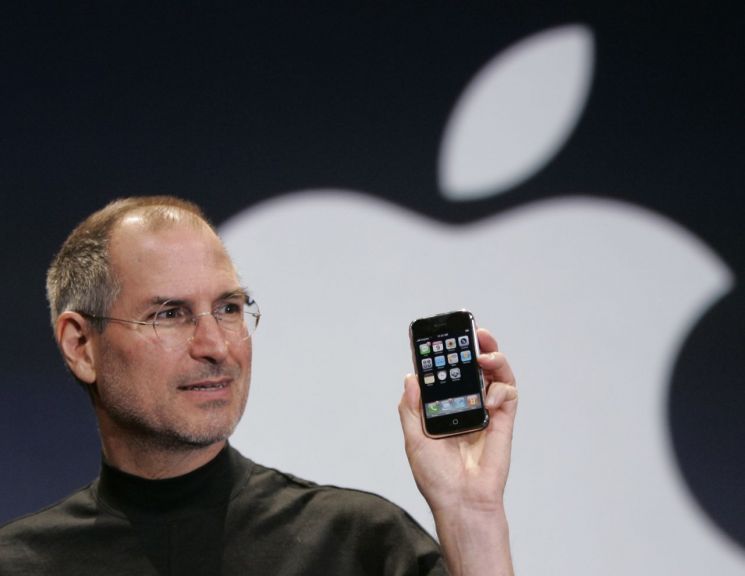
Experts predict that the trial will ultimately focus on whether the pre-installation contracts with companies like Apple were made for business reasons beyond merely strengthening and maintaining Google's dominance. Bill Kovacic, a professor at George Washington University and former chair of the Federal Trade Commission (FTC), said, "The judge is likely to find that Google has significant monopoly power," adding, "Therefore, all attention will be focused on those actions (contracts)."
Another issue to be discussed in the trial is Google's contracts requiring phone manufacturers that use the Android operating system to pre-install certain Google applications (apps).
Google's growth alongside the iPhone and its relationship with Apple
As the pre-installation contracts emerge as a key issue in this trial, attention is focused on the relationship between Google and Apple. Google's search engine was pre-installed on Apple's flagship product, the iPhone, which contributed to Google's rapid growth. Currently, Google pays Apple the largest amount related to pre-installation, making their contract a central point in this case.
Although the exact amount has not been disclosed, the market estimates that Google pays Apple approximately $20 billion annually (about 26.6 trillion KRW).
Bloomberg News described the interaction between Apple and Google as "one of the ways that defines modern Silicon Valley relationships," noting that "for decades, the two companies have simultaneously engaged in fierce competition and passionate cooperation."
Their relationship began in 2005. Eddy Cue, Apple's Senior Vice President, explained that when Apple and Google first signed a contract, Microsoft's Windows and Internet Explorer dominated the market, but Apple chose Google because its Safari browser allowed easy searching without entering a URL. At the time of the first contract in 2005, Safari's search market share was only 1.3%, but it grew rapidly after the iPhone's success.
Later, when Google launched Android and entered the smartphone business, Apple founder Steve Jobs felt deeply betrayed and famously threatened to wage a "nuclear war." This incident led Eric Schmidt, former Google CEO and a close friend of Jobs on Apple's board, to resign from Apple's board in 2009.
Although their relationship seemed to break temporarily, it was later restored. In 2016, Apple changed the default search engine for Siri and MacBook from Microsoft's Bing to Google. In 2018, Apple CEO Tim Cook and Alphabet CEO Sundar Pichai met to discuss cooperation. At a meeting that year, a senior Apple executive reportedly told their Google counterpart, "Our vision is to move as if we are one company," suggesting this approach would generate more revenue.
Rebecca Haw Allensworth, a professor at Vanderbilt University Law School, believes Google can argue that the amount paid to Apple is justified. She suggests that being pre-installed as the default search engine on the iPhone and placed prominently increases advertisers and ultimately generates more revenue, making the payment worthwhile from a business perspective. She expects the government to bring in experts who will argue that such payments are not economically justified.
Why the 'MS lawsuit' from 25 years ago is still referenced today
The current trial between Google and the U.S. government is seen as proceeding under the same logic as the antitrust trial against Microsoft during the Bill Clinton administration in 1998. At that time, Microsoft was sued for pre-installing Internet Explorer as the default browser on computers with Windows. The Department of Justice won the first trial, resulting in a massive ruling for corporate breakup. Microsoft appealed, and while most of the first trial's rulings were upheld, the corporate breakup order was legally contested again. Eventually, the DOJ abandoned the breakup and reached a settlement with Microsoft.
The DOJ referenced that case when filing the lawsuit against Google, stating, "Google is using the same playbook."
However, The New York Times (NYT) noted that "although this lawsuit borrows much from the MS case 25 years ago, there is a difference in 'cultural impact,'" explaining that "in the late 1990s, Microsoft was the only big tech company, and Gates was a national icon."
Today, with various big tech companies like Amazon, Apple, and Meta Platforms, Google does not hold the same stature as Microsoft did then, according to the NYT. Additionally, Microsoft's antitrust trial was a pressure on the influence of its founder and the world's richest man, Bill Gates, whereas Google's founders Sergey Brin and Larry Page do not play as significant a role, the NYT observed.
Google also argues that the current lawsuit is not identical to the MS case. Walker explained that in the late 1990s, 90% of personal computers used Microsoft's Windows, which controlled other services displayed on the PC screen. He added that Google collaborates with partners who make smartphones and browsers and must pay related costs.
© The Asia Business Daily(www.asiae.co.kr). All rights reserved.
![Clutching a Stolen Dior Bag, Saying "I Hate Being Poor but Real"... The Grotesque Con of a "Human Knockoff" [Slate]](https://cwcontent.asiae.co.kr/asiaresize/183/2026021902243444107_1771435474.jpg)


















