Jamie Dimon, CEO of JP Morgan Chase, the largest bank in the United States, publicly criticized the capital regulations being pursued by U.S. authorities on the banking sector, stating that they would have a negative impact on the U.S. economy.
On the 11th (local time), during a speech at the Barclays-hosted financial conference held in New York, Dimon said, "I question what the financial authorities are trying to achieve through these regulations," and directly stated, "Requiring U.S. banks to meet stricter capital requirements than their overseas competitors will have a huge negative effect on the economy." He also argued that JP Morgan must secure about 30% more capital than European banks.
He warned that strict capital regulations would cause credit tightening and constrain corporate activities, thereby having ripple effects on the real economy and ultimately hindering economic growth. Dimon urged, "Authorities need to show more transparency to justify the basis of these regulations," and called for "considering the social cost-benefit of regulatory implementation first."
U.S. regulatory authorities are preparing a major financial reform, including strengthening capital requirements for mid-sized banks with assets exceeding $100 billion (approximately 133 trillion won). Following the collapse of Silicon Valley Bank (SVB) in March, which demonstrated the potential impact of small and medium-sized banks on financial system stability, the plan is to impose stricter capital and liquidity requirements on commercial banks.
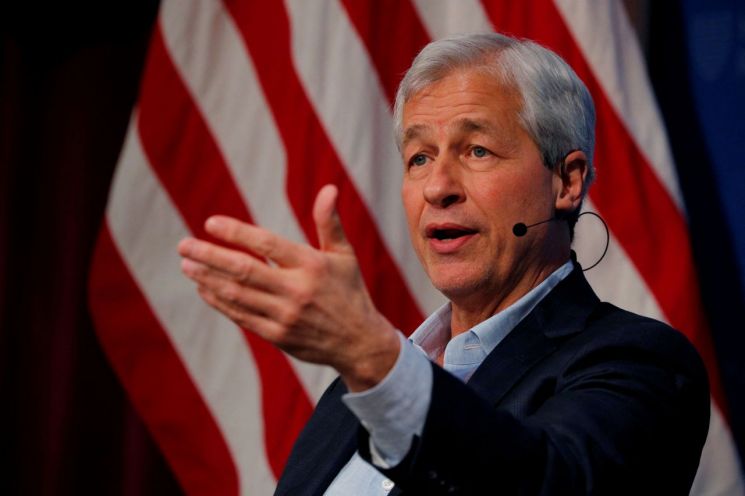
Dimon warned that although banks have historically earned excess returns in the lending sector due to low default rates over several years, tensions are emerging in some areas such as real estate loans and subprime auto loans.
Known as the "Emperor of Wall Street," Dimon also expressed concerns about the U.S. economic outlook. He said, "While the U.S. economy is currently performing well, believing that this situation will continue for several years would be a huge mistake."
He continued, "Consumers’ sound financial conditions and wage increases are currently supporting the economy, but there are significant risks lurking due to central banks suppressing liquidity through quantitative tightening, the ongoing war in Ukraine, and governments around the world spending like drunken sailors."
Last year, Dimon described the future outlook for the U.S. economy as "a hurricane is coming to the U.S. economy." Although the outlook for a soft landing is gaining traction as strong consumer spending and a hot labor market continue despite expected recession, Dimon’s concerns about the U.S. economic outlook remain.
He also reaffirmed previous warnings about significant headwinds due to geopolitical tensions. He said, "I do not expect a war to break out in Taiwan, but the situation could deteriorate."
Dimon also revealed concerns about the Chinese economic crisis. He said, "Since visiting China for the first time in four years last May, I have become very cautious," adding, "From a risk-reward perspective, China business has dropped from 'very good' to 'good,' and we are being careful in managing risks originating from China."
Earlier, in a private speech at the JP Morgan Global China Summit held in Shanghai at the end of May, Dimon warned that "(In addition to U.S.-China conflicts) policy uncertainty from the Chinese government could undermine investor confidence," and advised that "both the U.S. and China need genuine engagement on security and trade issues."
© The Asia Business Daily(www.asiae.co.kr). All rights reserved.
![Clutching a Stolen Dior Bag, Saying "I Hate Being Poor but Real"... The Grotesque Con of a "Human Knockoff" [Slate]](https://cwcontent.asiae.co.kr/asiaresize/183/2026021902243444107_1771435474.jpg)
















