Strengthening the Public Order Management Act... Criticism Over Ambiguous Regulations
"Fueling Anti-Japanese Sentiment After Japan's Contaminated Water Discharge"
China has proposed an amendment to the law stipulating that wearing clothing that damages the spirit of the Zhonghua ethnic group and harms ethnic sentiments in public places can result in detention for up to 15 days.
According to Xinhua News Agency and others on the 6th, Chinese authorities recently announced a draft revision of the "Public Security Administration Punishments Law" and are currently soliciting public opinions, Yonhap News reported.
The proposed amendment adds new penalty provisions for offenses such as exam cheating, pyramid selling, obstructing public transportation drivers, and unauthorized drone flights.
Notably, it explicitly lists as illegal acts "wearing or forcing others to wear clothing or symbols in public places that damage the spirit and feelings of the Zhonghua ethnic group" and "producing, spreading, or distributing items or writings that damage the spirit and feelings of the Zhonghua ethnic group."
The amendment states that such acts may be punished with detention ranging from more than 10 days up to 15 days, along with a fine of up to 5,000 yuan (approximately 910,000 KRW).
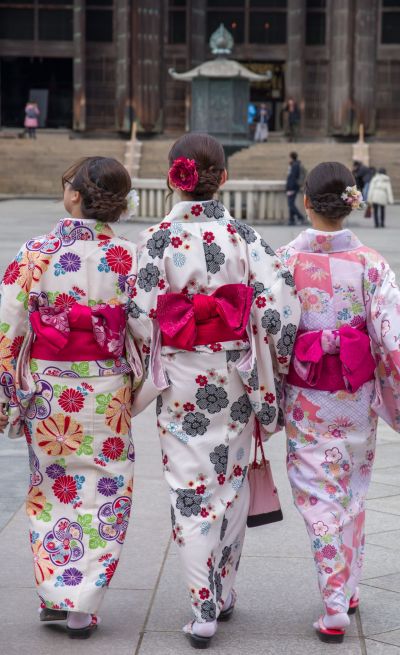
The problem lies in the lack of a concrete definition of what constitutes clothing, symbols, items, or writings that damage the spirit and feelings of the Zhonghua ethnic group.
Netizens criticize the vagueness of the criteria for illegal acts, questioning "What exactly are the spirit and feelings of the Zhonghua ethnic group, and can the police judge them?" and "What kind of attire harms ethnic sentiments?"
Some suggest that in the context of extremely intense anti-Japanese sentiment in China following the Fukushima Daiichi Nuclear Power Plant contaminated water discharge, the amendment is aimed at Japan.
In fact, there have been frequent reports in China of women wearing the traditional Japanese garment kimono being reported as wearing "clothing that incites ethnic resentment."
Earlier in February, a Chinese woman in Dali City, Yunnan Province, was stopped by security guards when trying to enter a tourist site wearing a kimono. In August last year, a woman taking photos in a kimono in Suzhou City, Jiangsu Province, was reported by bystanders and detained by police, who confiscated her kimono. Also, in Haining City, Zhejiang Province, a woman walking in a kimono was reported by residents, prompting a public security response.
The anti-Japanese sentiment in China, heightened after Japan’s nuclear wastewater discharge, has not easily subsided.
Although extreme actions such as throwing stones at the Japanese embassy or schools and making protest calls have somewhat decreased, expressions of hostility toward Japan continue, such as a restaurant in Dalian recently posting a sign saying "Japanese not allowed."
© The Asia Business Daily(www.asiae.co.kr). All rights reserved.

















