Oil Prices Surpass $90 Due to Production Cuts by Oil-Producing Countries
Rising Inflation Raises Expectations for Prolonged US Tightening
Increase in Treasury Bond Yields... Impact on Loan Interest Rates
Relief in Treasury Bond Supply Burden Acts as a Factor for Yield Decline

Due to production cuts by oil-producing countries, international oil prices have soared, and inflation concerns have spread again, causing government bond yields to rise continuously. With international oil prices exceeding $90 per barrel, the value of the US dollar also reached its highest level in six months, and financial market instability both domestically and internationally is expected to continue for the time being.
According to the Financial Investment Association's final yield on the 7th, the 10-year government bond yield rose by 11.5bp (1bp = 0.01 percentage points) to 3.893% compared to the 1st of this month, and the 5-year government bond yield increased by 9.9bp to 3.816%. The 20-year (3.826%) and 30-year (3.765%) bonds also rose by 10.3bp and 8bp, respectively, during the same period.
Government bond yields had sharply increased until the end of last month following US Treasury bonds due to expectations of prolonged tightening by the US Federal Reserve (Fed), then slightly declined as concerns about tightening eased, but recently have turned upward again.
This is interpreted as being influenced by the outlook that the US Fed will maintain a tight monetary policy stance for a considerable period. Although the US unemployment rate for August, released earlier this month, rose by 0.3 percentage points to 3.8%, suggesting a slowdown in the labor market and weakening justification for Fed rate hikes, Cleveland Federal Reserve Bank President Loretta Mester changed the sentiment by stating, "An unemployment rate of 3.8% is still low."
Additionally, the steep rise in international oil prices is increasing inflationary pressures. Saudi Arabia, the world's largest oil exporter, announced in a statement yesterday that it would extend its voluntary production cut policy of 1 million barrels per day, which began in July, for three more months until December, pushing oil prices to their highest level this year.
The benchmark international oil prices, North Sea Brent and Dubai crude oil, which South Korea mainly imports, surpassed $90 per barrel, and West Texas Intermediate (WTI) crude oil also reached its highest level since November last year. Not only Saudi Arabia but Russia also plans to extend its export cut of 300,000 barrels per day until the end of this year, making it likely that oil price pressures will continue for the time being.
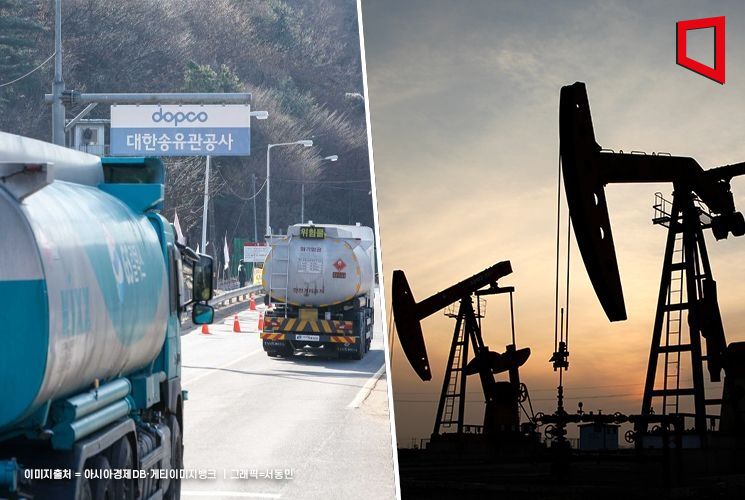
If international oil prices remain at the high level of $90 per barrel, it will be difficult for both South Korea and the US to pivot (change monetary policy direction), which will be a factor in rising government bond yields. A Bank of Korea official explained, "Usually, Dubai crude oil prices are slightly lower than Brent crude oil prices, but recently they have been higher or similar," adding, "If the $90 level continues until the end of the year, it will act as an upward factor for inflation."
According to the Chicago Mercantile Exchange (CME) FedWatch on the day, the probability of a 25bp rate hike at the September Federal Open Market Committee (FOMC) meeting is only 7%, but the probabilities of rate hikes at the November and December FOMC meetings are relatively high at 38.2% and 36.9%, respectively. Fed Governor Christopher Waller said on CNBC on the 5th (local time), "I do not necessarily think the economy will fall into a recession just because we raise rates once more if deemed necessary." Amid concerns over US tightening, the dollar index rose to 104.81, its highest level in six months, and the won-dollar exchange rate rebounded, surpassing 1,330 won.
Although there is uncertainty depending on the content of this month's FOMC, government bond yields are expected to remain high for the time being. Jo Yong-gu, a researcher at Shin Young Securities, explained, "The Fed is expected to keep rates unchanged in September and leave room for one more rate hike," adding, "US Treasury yields will remain high for the time being." Since US Treasury yields affect domestic government bonds and bank bonds with a time lag, this could also impact the rise in bank loan interest rates, including mortgage loans.
However, many analyses suggest that since US Treasury yields are already excessively high and the Fed will need to seek a pivot point in the future, government bond yields will also follow a downward trend. In particular, domestically, despite a record-level tax revenue shortfall, the government maintains its stance of covering the deficit with funds without preparing a supplementary budget, so the pressure on yields from increased government bond supply is expected to be less. Kim Myung-sil, a researcher at Hi Investment & Securities, explained, "The easing of government bond issuance burden will act as a factor for lowering government bond yields."
© The Asia Business Daily(www.asiae.co.kr). All rights reserved.
![Clutching a Stolen Dior Bag, Saying "I Hate Being Poor but Real"... The Grotesque Con of a "Human Knockoff" [Slate]](https://cwcontent.asiae.co.kr/asiaresize/183/2026021902243444107_1771435474.jpg)












