[Petrochemical Carbon Neutrality Dilemma]①
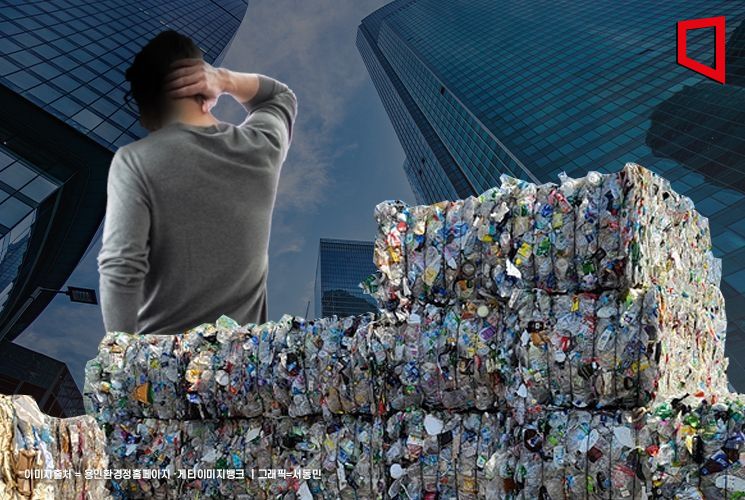
"I know a market will come where you can't survive without using recycled materials. I know that, but there's nothing feasible right now. I'm going through this with a huge dilemma, wondering if this is the right path." - Mr. A, a representative of a petrochemical company promoting plastic waste recycling business.
Domestic petrochemical companies such as LG Chem, Lotte Chemical, and SK Geo Centric are entering the plastic waste recycling business as one of the measures to respond to decarbonization regulations. Building related facilities alone costs hundreds of billions of won. However, even if recycled materials are produced, there are no buyers. To be precise, there is demand overseas, but domestic demand is extremely low.
Some domestic end users say they will buy, but the volume is small. In the petrochemical industry, end users refer to front-end industry companies such as food companies, cosmetics companies, electronics companies, and automobile companies that package products or food and ultimately sell them to consumers. A representative of a domestic consumer goods company said, "We participate in using recycled materials because we need to be recognized by investors for good ESG (environment, social, governance), but since the price is high, we use only the minimum." When plastic is made from recycled materials, the price rises by 30% compared to products made from conventional naphtha (raw material for chemical products).
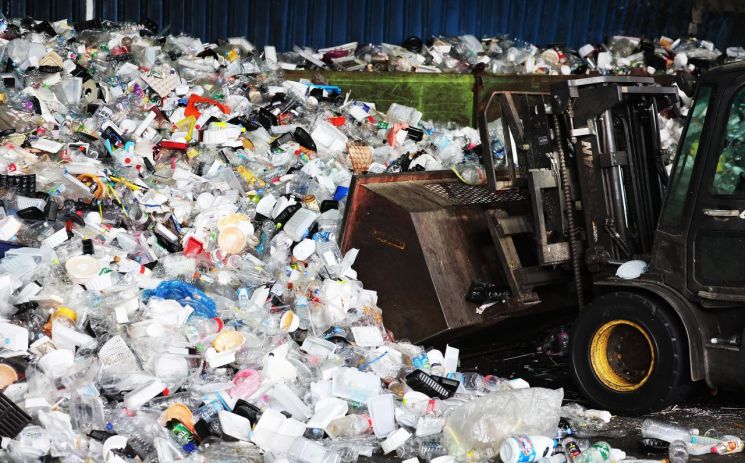
The situation changes even for the same domestic companies in the European market. For example, CJ CheilJedang is busy looking for plastic waste to use in food packaging containers. This is because from now on, to sell instant rice 'Hetbahn' or 'Bibigo' in Europe, containers and packaging must be made from recycled raw materials.
Europe has imposed mandatory use of recycled raw materials not only on plastic manufacturers but also on end-user companies. According to the revised "Packaging and Packaging Waste Regulation" released by the European Union (EU) Commission in November last year, from 2030, all plastic containers distributed within the EU must mandatorily use at least 30% recycled raw materials, and labels on plastic packaging must specify the use of recycled plastic raw materials. In other words, recycled materials must be used regardless of price. A legally binding UN plastic international agreement is also expected to be established by November next year.
Global companies such as Coca-Cola, L'Or?al, and Adidas have declared their own recycled raw material usage targets and are sending love calls not only to domestic companies but also to domestic petrochemical companies to secure recycled materials. A representative of a petrochemical company said, "Before even building plastic waste recycling plants, inquiries from global companies are pouring in," adding, "We have signed several pre-sale contracts with these companies."
On the other hand, in Korea, the obligation to use recycled raw materials applies only to plastic producers, not to the final users who purchase plastic materials. Companies producing more than 10,000 tons of PET raw materials annually are required to use at least 3% recycled raw materials from this year, and this must be increased to 30% by 2030. This is why domestic petrochemical companies started plastic waste recycling businesses before the market even exists. Final users may or may not indicate the proportion of recycled raw materials used in packaging or containers. There is no way to verify the input and output ratios of recycled raw materials.
No matter how much the petrochemical industry tries to transform its business structure into a circular economy system for carbon neutrality, if there is no consumption market, those efforts become futile. As global regulatory authorities increase their involvement in carbon neutrality-related matters, petrochemical industry representatives point out the need for policy support for recycling systems and related infrastructure for the circular economy.
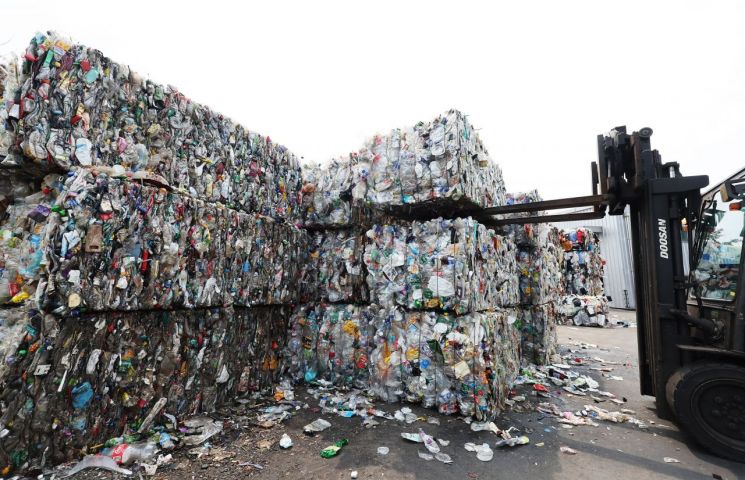
Stable procurement of plastic waste is also a problem. Most plastic waste generated domestically is used as Solid Refuse Fuel (SRF) in power plants and other facilities. It is not easy to say "we will recycle it, so please give us" for plastic waste currently used for energy recovery. A representative of a petrochemical company said, "The conditions and structure to carry out recycling business are not established, so we cannot bring in large quantities of plastic waste," adding, "Currently, we rely on small-scale plastic waste collection and sorting companies." In an uncertain future, it is difficult for companies to rush into mass production. A CEO of a petrochemical company said, "When I asked customers if they were willing to buy recycled material products as we considered starting a plastic waste recycling business, 60% said they would not buy because it is expensive, and 40% said they were unsure," adding, "I think it is better to be a 'fast follower' than a 'first mover,' so I am just watching the investment timing."
However, this business cannot be abandoned. A petrochemical industry representative lamented, "Large companies have to consider not only domestic consumption but also exports, so they cannot avoid the global trend of recycling waste batteries." Another petrochemical company representative said, "Countries like Europe, Japan, and Taiwan, which have well-established plastic waste recycling infrastructure, have many options domestically. If local companies produce cheaper and higher-quality recycled materials, there is no reason to use recycled materials from Korea," adding, "Therefore, even if it takes a long time, infrastructure must be built to enhance the competitiveness of the domestic plastic waste recycling market."
© The Asia Business Daily(www.asiae.co.kr). All rights reserved.
![Clutching a Stolen Dior Bag, Saying "I Hate Being Poor but Real"... The Grotesque Con of a "Human Knockoff" [Slate]](https://cwcontent.asiae.co.kr/asiaresize/183/2026021902243444107_1771435474.jpg)


















