Seoul Districts Including Mapo-gu, Dongdaemun-gu, and Seongdong-gu Making Every Effort to Recycle Tens of Tons of Coffee Grounds Generated Daily
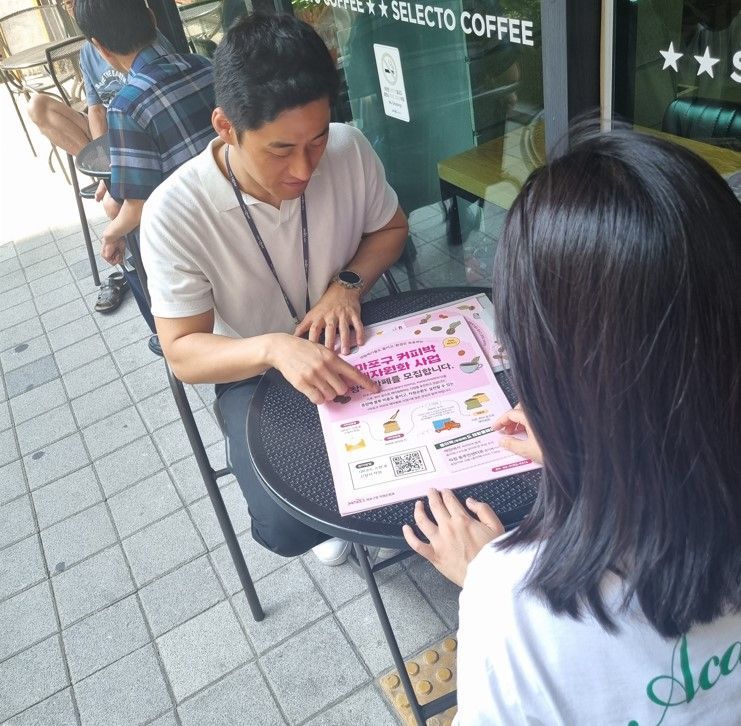 Visiting the Mapo-gu Resource Circulation Division's Jikwori Cafe, explaining the recycling plan for coffee grounds.
Coffee consumed by millions every day.
Coffee is undoubtedly the most popular menu item of this era, with coffee shops on nearly every street corner. Naturally, there are both bright and dark sides to this coffee culture.
What happens to the coffee grounds discarded after enjoying a fragrant cup of coffee? Until now, coffee grounds have been classified as household waste and typically thrown away in regular trash bags.
This practice has led to a massive increase in household waste and carbon emissions, causing environmental problems.
Accordingly, Mapo-gu (District Mayor Park Gang-su) plans to visit all 1,585 coffee specialty stores in the district by the 8th to conduct a full survey on coffee grounds disposal status.
Coffee grounds are being utilized in various ways such as fertilizer, compost, animal feed, and fuel pellets. Mapo-gu is currently running a pilot program where coffee grounds from 100 coffee shops are collected by recycling companies for reuse. The district plans to establish a system next year to recycle coffee grounds from all 1,500 stores.
The import volume of coffee beans increased from 110,000 tons in 2012 to 200,000 tons in 2022, nearly doubling over ten years, making it urgent to devise measures for coffee grounds disposal and recycling. A Mapo-gu official stated, “Coffee grounds are a valuable resource that can be recycled in various forms,” and urged, “We ask for active cooperation in the full survey to establish systems for coffee grounds disposal and recycling.”
District Mayor Park Gang-su emphasized, “Separating and recycling coffee grounds can reduce household waste and carbon emissions,” adding, “We will do our best to establish an advanced recycling system and make Mapo-gu a leader in carbon neutrality.”
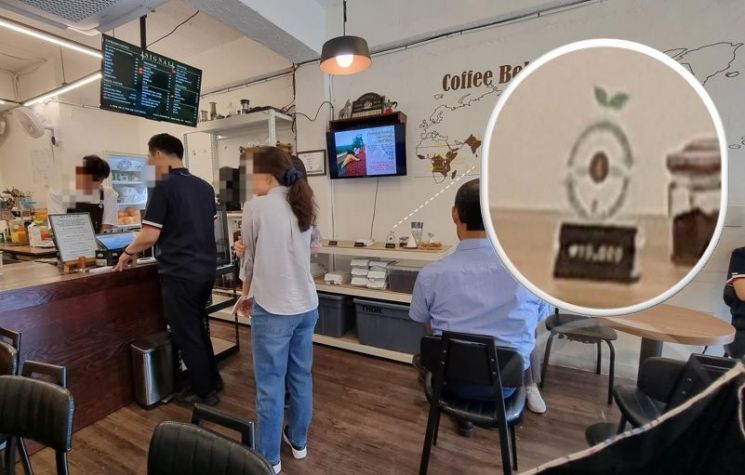
Dongdaemun-gu (District Mayor Lee Pil-hyung) presented certification plaques last month to coffee specialty stores in Dongdaemun-gu leading the resource circulation of coffee grounds.
The ‘Coffee Grounds Resource Project’ is a program that recycles coffee grounds discharged from coffee shops into various products such as solid raw materials and bioplastics. When coffee is brewed, only 0.2% of the coffee beans are used, and the remaining 99.8% is discarded as waste.
In response, the district established a collection and recycling system for coffee grounds. In June, it signed an agreement with a recycling company and recruited coffee shops in five neighborhoods (Yongsin, Jegi, Cheongnyangni, Jeonnong 1, and Hoegi) to participate in the project, starting coffee grounds collection in July. The collected coffee grounds are processed into solid raw materials by the recycling company and used as energy sources for dyeing clothes or threads at nearby dyeing factories.
About 4 tons of coffee grounds were collected in July from 70 coffee shops participating in the project. The district created and presented coffee grounds certification plaques symbolizing a sprout growing from coffee beans to express gratitude to the participating coffee shops.
A Dongdaemun-gu official said, “We will strive to encourage more cafes to participate in the coffee grounds resource project,” and added, “We will continue to explore various resource recycling methods to achieve carbon neutrality.”
Seongdong-gu (District Mayor Jung Won-oh) also established Seoul’s first waste recycling resource circulation model in 2021 and officially launched the ‘Resident-led Coffee Grounds Recycling Project.’
Seongdong-gu introduced innovative technologies from social economy enterprises in the waste disposal and recycling process, streamlined waste collection, and hired local residents as collection workers to create jobs, cooperating to build a ‘local resource circulation system.’
Through Seongdong Future Job Corporation, the district employed local residents to form a coffee grounds collection team. Seongdong-gu has set up an intermediate collection hub for coffee grounds and established a control center to monitor the collection and recycling of coffee grounds across participating local governments at a glance.
© The Asia Business Daily(www.asiae.co.kr). All rights reserved.
![Clutching a Stolen Dior Bag, Saying "I Hate Being Poor but Real"... The Grotesque Con of a "Human Knockoff" [Slate]](https://cwcontent.asiae.co.kr/asiaresize/183/2026021902243444107_1771435474.jpg)












