The price of natural diamond rough has plummeted by 40% over the past year. This decline is analyzed to be due to the deflation of the pandemic (global outbreak) bubble that had triggered revenge spending.
According to Bloomberg and others on the 3rd (local time), De Beers, the world's largest supplier of diamond rough, announced that the price of rough stones graded one level above the average grade, called 'Select Makeable,' recorded $850 per carat (as of the end of July). This is nearly a 40% drop compared to June last year ($1,400). The market also sees a high possibility of further decline.
According to the global rough diamond price index, the price of natural diamonds has fallen 24.2% from its all-time high recorded in February last year during the pandemic to the current date (as of the 2nd). This year alone, it has dropped 13.1%.
The biggest cause of the price plunge is cited as a lack of demand. Ankur Daga, CEO of Angara Jewelry, explained, "During the COVID-19 pandemic lockdown, revenge spending demand for luxury goods and jewelry exploded, causing prices to soar, but after the endemic phase, the bubble has burst, and natural diamond prices have also sharply declined."
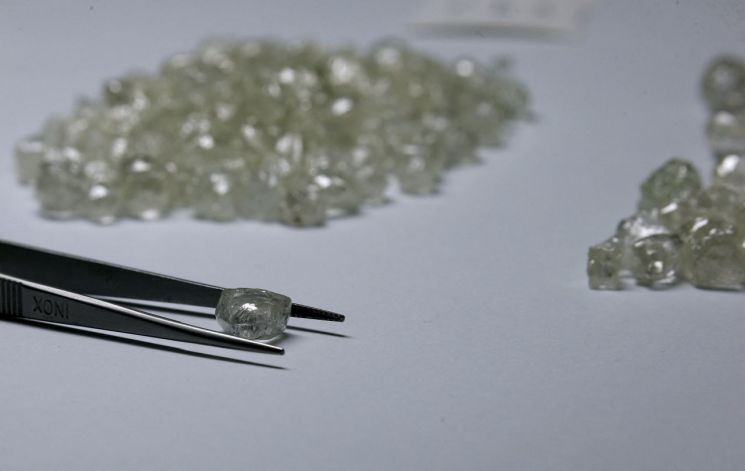
The growing market for synthetic diamonds (lab-grown diamonds) has also affected rough diamond prices. Bloomberg reported, "As more consumers turn their attention to the synthetic diamond market, where natural diamonds are artificially cultivated, the related market is expanding."
According to Ethan Golan of Diamond Research & Data, a diamond market research firm, the sales share of synthetic diamonds compared to natural diamonds surged from 2.4% in 2020 to 9.3% this year. Considering that natural diamonds are more expensive, investment firm Riverum Capital Markets analyzed that the volume-based share of synthetic diamonds has already reached about 25 to 35%.
De Beers analyzed, "(The recent price weakness) is due to a natural decrease in demand caused by the pandemic aftermath," adding, "Although synthetic diamonds have penetrated some markets, we do not view this as a structural change." Paul Rowley, De Beers' Head of Trading, said, "While we cannot deny the 'market cannibalization' effect caused by the expansion of the synthetic diamond market, the real cause of the price decline lies in macroeconomic issues."
© The Asia Business Daily(www.asiae.co.kr). All rights reserved.
![Clutching a Stolen Dior Bag, Saying "I Hate Being Poor but Real"... The Grotesque Con of a "Human Knockoff" [Slate]](https://cwcontent.asiae.co.kr/asiaresize/183/2026021902243444107_1771435474.jpg)















