From Teacher Power Abuse to Military and Companies
Falling from 'Role Model' to 'Service'
"Need to Reestablish Social Values"
"Please assign my child to this class.", "Could you please give my child some medicine?", "Did you send them to school for this?", "Please don't raise your voice at my child and try to persuade them gently."….
On the 3rd of last month, the Korea Federation of Teachers' Associations released a collection of cases from teachers, which included numerous examples of 'power harassment language' that teachers hear in their daily lives. The 'Seoi Elementary School incident' last month exposed cases of parents expressing distorted affection toward their children. Since then, the hardships teachers face daily have been revealed in detail, being regarded as a social pathology. On the 4th, marking the 49th day since the death of a Seoi Elementary School teacher, teachers will gather in the square as a result of this growing awareness of the issue.
Recently, this phenomenon of overprotection has extended beyond schools to the military and workplaces, continuing even after children become adults. For example, some parents contact their enlisted children's military units requesting "Please exempt my child from training," or "My child is weak, so please make sure they eat well."
The intense educational zeal and affection of some parents toward their children is not a new phenomenon. However, recently, voices have pointed to the 'commodification of relationships' as the reason why these desires have escalated into demands, orders, and even violence toward specific targets. In the past, teachers were regarded as role models for children, but recently, public education is seen as a paid service, disrupting the balance of power.
Teacher-Student Relationship as 'Transaction', Public Education as 'Service'
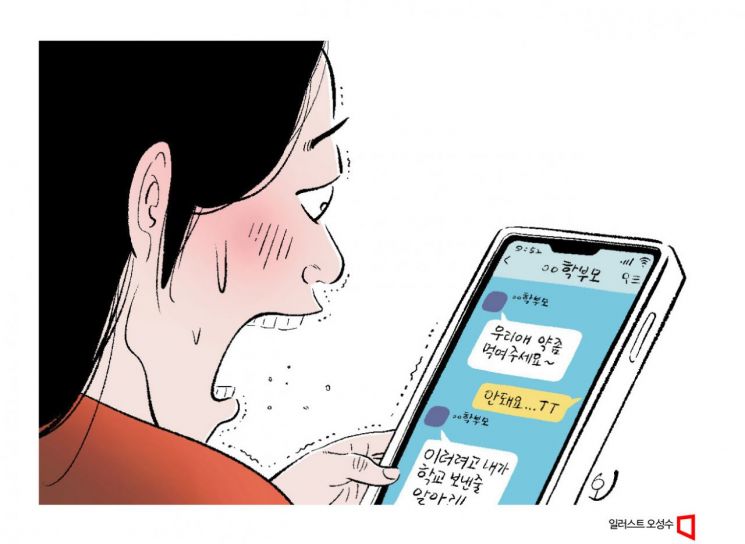
In the past, teachers in Korean society were close to 'sabeom (師範)', meaning not just conveyors of knowledge but exemplary role models. Even in modern times, teachers were expected to teach not only knowledge but also lifestyle habits and moral awareness. Teachers were not mere tools providing knowledge but one of the relationships children should engage with within the school environment.
However, recently, the once forbidden territory of teachers' domain has begun to break down. Schools are no longer diverse spaces for learning knowledge and character but have become places providing educational services indistinguishable from private academies. Parents who once respected teachers and entrusted their children to them have started demanding 'services' from teachers.
The fundamental cause of this change lies in the commodification of human relationships. It is the belief that by exchanging one's money (taxes, tuition fees, etc.) for teachers' educational activities, one can enjoy rights deemed appropriate in the market for that cost. Professor Jeon Woo-young of the Department of Psychology at Chungnam National University explained, "Our society is beginning to view all human relationships as a kind of transaction. In the case of schools, sending children is seen as receiving a service that provides knowledge that my children must acquire with the money I paid." He added, "Parents tend to think they hold much more power and consider it their 'natural right.'"
Underlying this is a distorted capitalist characteristic. The more parents perceive their investment in education as significant, the stronger their sense of entitlement becomes. In fact, household education expenses have steadily increased every year. According to Statistics Korea in May, the average monthly education expenditure for the lowest 20% income households in the first quarter of this year was 34,282 KRW, an increase of 8,898 KRW (35.1%) compared to a year ago. This means that even in deficit households, education expenses cannot be reduced. Parents who excessively invest in private education have reached a point where they demand rights even in the realm of public education, believing that paying taxes entitles them to rights in public education.
Education Environment Hardened by the Pandemic
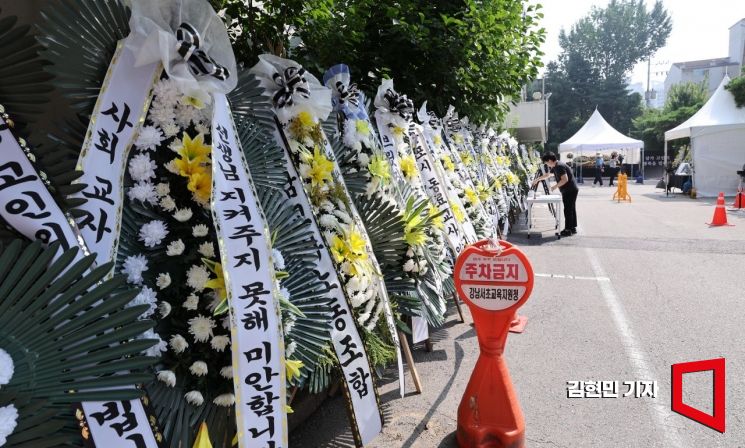 A memorial altar for homeroom teacher A of Seoi Elementary School has been set up at the Gangnam Seocho Office of Education in Seoul. Photo by Hyunmin Kim kimhyun81@
Excessive demands for rights from teachers have intensified recently during the COVID-19 pandemic. The three years from 2021 to 2023, when the pandemic paralyzed our society, led to the perception that public education can be easily replaced. A parent who wished to remain anonymous confessed, "After experiencing the pandemic, I realized that my child can receive education without necessarily going to school or meeting the teacher face-to-face."
Additionally, changes in the education sector emphasizing students' human rights have made society indifferent to teachers' rights. Professor Song Ki-chang of the Department of Education at Sookmyung Women's University said, "In the past, power was more on the side of teachers than parents or students, so nothing could be done, but now teachers have become vulnerable to parents' actions. As a result, parents have engaged in various power harassment against teachers, leading to the decline of teachers' authority." This means that based on the perception of teachers as equals, if educational services are not provided appropriately as a right, parents can easily complain to teachers.
The development of social media has shortened the communication gap between parents and teachers, making demands for rights easier. With the rise of the internet and smartphones, parents have created group chat rooms with teachers, sending messages and making calls day and night, increasing direct communication. While SNS communication between home and school has contributed to improving relationships between parents and teachers, in some cases, indiscriminate messages and calls have led to attacks, increasing teachers' fatigue.
Professor Sung Dong-gyu of the Department of Media Communication at Chung-Ang University explained, "Digital democracy has rapidly destroyed privacy and existing social orders, leading to excessive situations where marginalized groups like students exercise their rights. This is a kind of transitional phase in development."
Can We Escape 'Rights Addiction'?
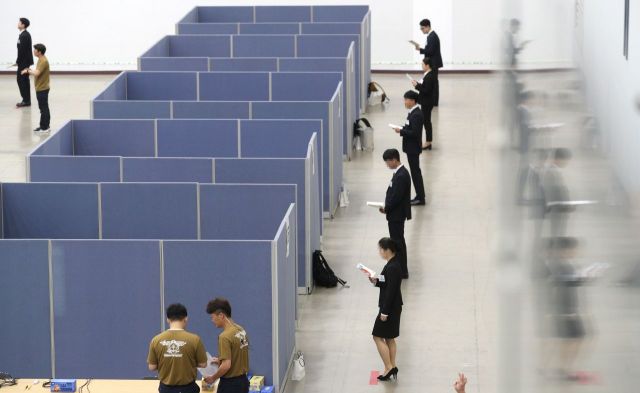
Parents addicted to 'rights' assert their rights through their children beyond schools and into society. A typical example is parents contacting their enlisted children's military superiors via personal messages to inquire about every detail of their child's behavior. There are also cases where parents directly contact companies to ask why their child failed a job interview or even submit resignation letters on their child's behalf.
As long as people view human relationships solely as transactions, cases of parents expressing distorted affection will likely continue even after their children leave classrooms and enter society. Therefore, to solve these problems, it is pointed out that not only institutional improvements in various social groups but also social-level discussions on awareness are necessary. The entire society must begin serious reflection on relationships between individuals and between individuals and communities.
Ultimately, there is a call for reflection on 'humanity.' Professor Jeon said, "Viewing human relationships transactionally is not entirely bad," but added, "However, if this transactional view dominates society and overwhelms all other values, humanity disappears." He continued, "If society members share the side effects of such values and the problems they cause, values can change. But unless there is serious discussion about what kind of community is safe and happy and the direction we should take, change will not happen."
© The Asia Business Daily(www.asiae.co.kr). All rights reserved.
![Clutching a Stolen Dior Bag, Saying "I Hate Being Poor but Real"... The Grotesque Con of a "Human Knockoff" [Slate]](https://cwcontent.asiae.co.kr/asiaresize/183/2026021902243444107_1771435474.jpg)

















