"Wagner Group Directly Under Putin"... Increased Risk of Provocation
The death of Yevgeny Prigozhin, the head of the Russian mercenary group Wagner Group stationed in Belarus, has heightened vigilance among NATO countries in Eastern Europe. Concerns are rising that the Wagner Group could become a direct unit under Russian President Vladimir Putin, potentially leading to increased military provocations around the Belarusian border area.
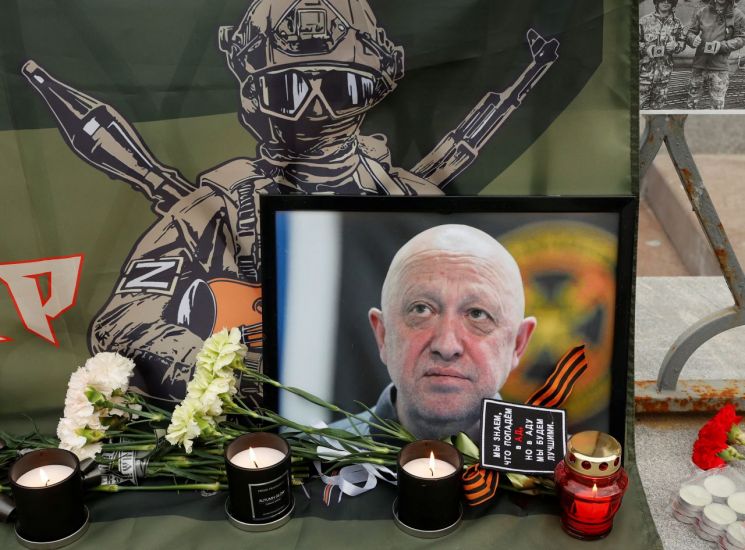
On the 24th (local time), according to the Associated Press, Polish Prime Minister Mateusz Morawiecki stated at a press conference that the Wagner Group could soon come under the direct control of President Putin and warned against lowering tensions. He said, "The Wagner Group is coming under the leadership of President Putin. Let us all ask ourselves: will the threat increase or decrease? For me, this is not a question seeking an answer."
Lithuanian President Gitanas Naus?da also commented on Prigozhin's death, emphasizing that there is no cause for complacency. He said, "This is evidence that the Russian Putin regime has entered another phase of killing each other," adding, "However, Prigozhin's death should not be seen as an improvement in the security situation that would allow us to feel safe. One of the Wagner Group's objectives is to destabilize and provoke the situation in the eastern front area."
Within the European Union (EU), officials have drawn a line by stating that this is not a matter for comment, while showing caution against escalating military tensions. Peter Stano, the EU Commission's spokesperson for foreign affairs and security policy, said at a regular briefing that "As with other issues in Russia, it is very difficult for us to verify this, and therefore it is not something we can comment on." When asked about the potential impact of Prigozhin's death, he avoided specifics, saying, "Any mention at this stage would be purely speculative."
Meanwhile, after Wagner Group's failed military rebellion in June, they relocated their base to Belarus, where approximately 5,000 mercenaries have been training alongside Belarusian regular forces in the western border area. Consequently, NATO Eastern European member states such as Poland, Lithuania, and Latvia have significantly strengthened border security and vigilance along the Belarus border.
Although the future course of the Wagner Group remains undecided, there are concerns that if it is absorbed into the Russian military or reorganized as a mercenary unit directly under President Putin, military provocations against Eastern European countries will intensify.
© The Asia Business Daily(www.asiae.co.kr). All rights reserved.
![Clutching a Stolen Dior Bag, Saying "I Hate Being Poor but Real"... The Grotesque Con of a "Human Knockoff" [Slate]](https://cwcontent.asiae.co.kr/asiaresize/183/2026021902243444107_1771435474.jpg)















