Japan began discharging contaminated water from the Fukushima Daiichi Nuclear Power Plant into the ocean on the 24th.
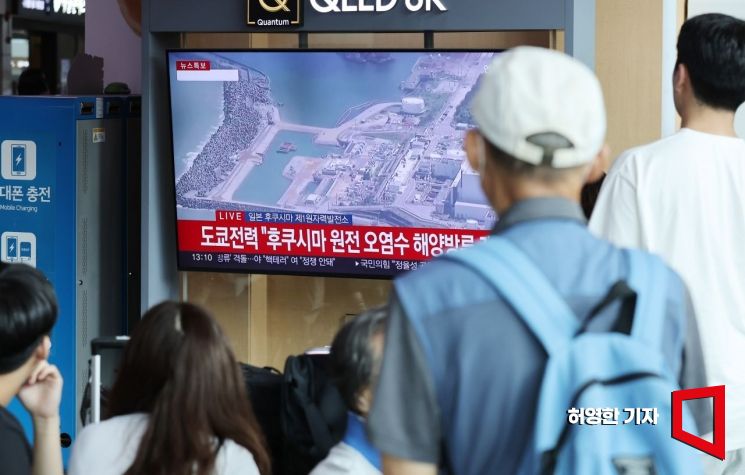 On the afternoon of the 24th at 1 PM, news was broadcasted on TV that Japan had started discharging contaminated water from the Fukushima nuclear power plant. Citizens and travelers at Seoul Station are watching the news broadcast. Photo by Heo Younghan younghan@
According to Kyodo News, Tokyo Electric Power Company (TEPCO), the operator of the Fukushima nuclear plant, started releasing the contaminated water into the sea in the afternoon following the Japanese government's decision on the 22nd to proceed with the discharge.
This marks two years and four months since then-Prime Minister Yoshihide Suga decided in April 2021 to dispose of the contaminated water by ocean discharge, and about twelve and a half years since the Fukushima nuclear accident caused by the Great East Japan Earthquake on March 11, 2011.
Before the discharge, TEPCO announced that the tritium concentration in the contaminated water met the discharge standard of 1,500 becquerels (Bq) per liter. Accordingly, the contaminated water stored in tanks on the Fukushima Daiichi Nuclear Power Plant site was diluted with seawater and began to be discharged into the sea in front of the plant through an approximately 1 km long underwater tunnel.
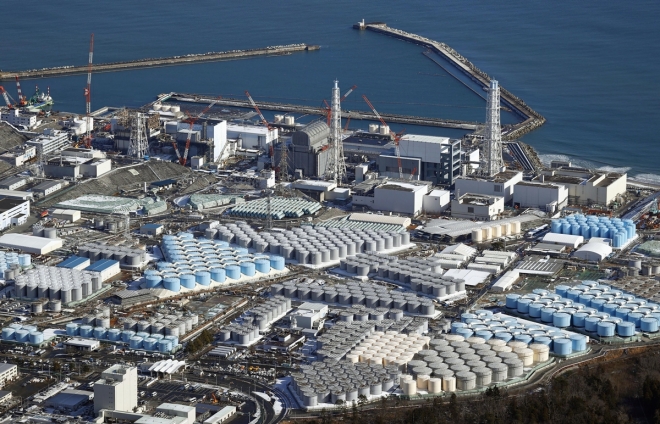
TEPCO plans to carry out the operation of diluting and discharging about 460 tons of contaminated water daily with seawater for 17 days, initially releasing 7,800 tons of contaminated water into the ocean. The expected total volume of contaminated water to be discharged this year is 31,200 tons. After the discharge begins, concentration analysis will be conducted once a week.
© The Asia Business Daily(www.asiae.co.kr). All rights reserved.
![Clutching a Stolen Dior Bag, Saying "I Hate Being Poor but Real"... The Grotesque Con of a "Human Knockoff" [Slate]](https://cwcontent.asiae.co.kr/asiaresize/183/2026021902243444107_1771435474.jpg)
















