FSS Establishes TF to Inspect Asset Managers Causing Major Investor Losses Since January
"Will Actively Conduct Dispute Resolution After Further Verification"
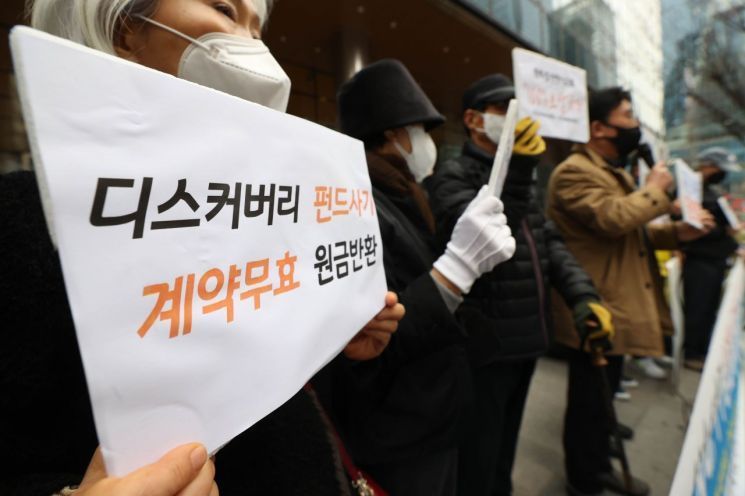
On the 24th, the Financial Supervisory Service (FSS) announced that additional inspections of Lime Asset Management, Optimus Asset Management, and Discovery Asset Management revealed new allegations of violations, which have been reported to investigative agencies.
According to the 'Inspection Results of Major Investor Damage Asset Management Companies Task Force (TF)' released by the FSS, the main allegations identified so far include Lime Asset Management's fund recycling and embezzlement by five investee companies; Optimus Asset Management's receipt of investment-related bribes, embezzlement of fund money, and conspiracy in fraudulent transactions; and Discovery Asset Management's fund recycling, use of insider information, and embezzlement of fund money.
Looking closely at the allegations, Lime Asset Management engaged in fund recycling for specific fund beneficiaries. Just before the large-scale suspension of redemptions declared in August-September 2019, when asset deterioration and liquidity shortages occurred in four Lime funds, they used 12.5 billion KRW from other fund monies and 450 million KRW of the management company's proprietary funds to provide preferential redemptions to some investors.
There were also allegations of embezzlement of about 200 billion KRW from five companies invested in convertible bonds (CB), bonds with warrants (BW), and private bonds. In December 2018, Lime funds invested 30 billion KRW in private bonds issued by an unlisted company A. The FSS found that during this process, the chairman of company A and others withdrew the funds under the pretext of executive loans and misappropriated 27.6 billion KRW for acquiring a resort in the Philippines, totaling 29.9 billion KRW in misuse.
Additionally, in January 2018, Lime invested 7 billion KRW in CB of company B, whose CEO and others deposited 5.06 billion KRW of the invested funds and 40 billion KRW from affiliated companies into their personal accounts. Lime also invested about 40 billion KRW in BW issued by another listed company C, where the CEO and others conspired with executives of other companies to embezzle 18 billion KRW from proceeds of subsidiary share sales.
In 2018, Lime jointly conducted a development project in Cambodia with listed company D. The CEO of D transferred 10 million USD (approximately 13.4 billion KRW) of company funds under false pretenses to a Hong Kong-based company. Later in December of the same year, there were indications of arbitrary withdrawal and use of 4 billion KRW under false loan claims to a subsidiary, and about 100 million USD (approximately 133.9 billion KRW) invested in a Cambodian resort jointly with Lime funds was transferred by a director of D to entities in tax havens, indicating embezzlement.
The rehabilitation manager of company E, whose convertible redeemable preferred shares were acquired by Lime funds in February 2021, transferred 9.04 billion KRW to his own company by creating false sales contracts during inventory sales from May to September last year.
During the inspection, the FSS discovered 19.1 billion KRW in loans from Lime fund investees to third parties. Measures were taken to allow the bridge management company to claim debt repayment from these third parties through creditor subrogation.
Regarding Optimus Asset Management, allegations of receiving bribes related to investments were uncovered. A fund management director of a public institution invested a total of 106 billion KRW, about 37% of the entire fund, into Optimus funds from June 2017 to March 2018. During this process, the director received 10 million KRW from the head of Optimus Asset Management and his child received a salary from a company where the head was chairman, indicating receipt of bribes.
Additionally, the CEO of a special purpose company (SPC) invested with Optimus fund money arbitrarily withdrew 1.5 billion KRW of fund money and deposited 1.2 billion KRW into the account of a law firm's lead attorney, using it for personal purposes. A former executive, aware that the fund was being raised by deceiving investors, instructed investments in private bonds of unlisted companies instead of the accounts receivable purchase stated in the investment proposal, and was found to have conspired in fraudulent transactions by receiving 10 million KRW.
Another Optimus executive is suspected of paying 4.33 billion KRW to acquire 50% of shares in a real estate development company, expecting to quickly obtain permits for a metropolitan logistics complex development project.
The FSS additionally confirmed that fund money without actual substance was invested in a specific real estate developer through an SPC. As a result, it became possible to recover investments through related revenue rights valued at approximately 2.71 billion KRW held by the SPC.
Discovery Asset Management was found to have engaged in linked transaction-style fund recycling. Discovery operated by investing fund money in overseas SPCs, which then purchased U.S. loan receivables. However, when three funds matured in February 2019 and repayment became difficult due to overseas SPCs' lack of funds, another overseas SPC supported the troubled SPC by acquiring subordinated bonds. Although about 27.2 billion KRW of the three funds were repaid, the SPC that acquired the subordinated bonds failed to recover principal and interest, and the use of falsified investment proposals was also investigated.
Four employees managing real estate loan funds at Discovery acquired shares in related developers under their own or third-party names using insider information such as permits, gaining about 46 million KRW in private profits from dividends and share sale gains. Discovery loaned a total of 10.9 billion KRW to the developer with real estate fund money and waived or deferred payment of about 570 million KRW in agreed interest.
Furthermore, an overseas SPC manager embezzled about 600 million KRW by purchasing distressed assets held by a U.S. fund with the funds he managed. He purchased distressed assets with a face value of 55 million USD (approximately 73.4 billion KRW) and arbitrarily withdrew about 800 million KRW to his own company.
Discovery funds were sold through commercial banks such as Industrial Bank of Korea and Hana Bank, as well as securities firms between 2017 and April 2019, but due to incomplete sales and poor management by the asset manager, redemptions were suspended, causing significant losses to individual and corporate investors.
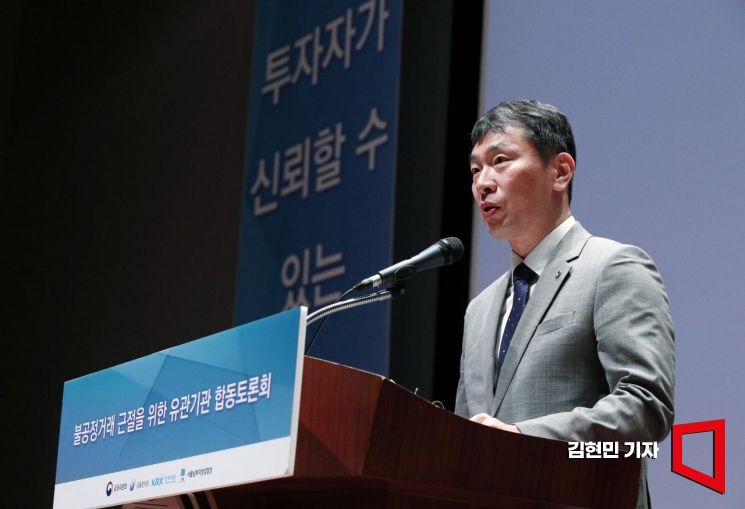
The FSS plans to swiftly complete disciplinary procedures for violations of the Capital Markets Act and respond strictly in cooperation with investigative agencies. It will also analyze data obtained from non-supervisory authorities and take measures such as notifying investigative agencies if additional allegations are identified.
Since June 2020, the FSS has been conducting dispute mediation for victims of large-scale private fund redemption delays through the Financial Dispute Mediation Committee. As a result, investors in three funds were mediated under 'contract cancellation due to mistake,' and other fund investors received 'compensation' ranging from 40% to 80% of damages depending on the degree of incomplete sales by financial sales companies. Since January this year, a task force for inspecting asset management companies causing major investor damage has been established to conduct additional inspections of Lime, Optimus, and Discovery Asset Management.
With the additional inspections revealing new facts such as illegal acts by asset managers affecting dispute mediation, the FSS judged that dispute mediation is necessary for the relevant funds. For Discovery's SPC investment funds, which faced fund shortages, if investors were led to believe normal repayments were occurring while distressed assets were being purchased and funds recycled, the responsibility of the asset manager or sales company could increase. Also, the new fund of Discovery SPC that acquired subordinated bonds recruited fund money using falsified investment proposals, and if sales companies used the same proposals, it could constitute incomplete sales.
An FSS official stated, "We will actively conduct dispute mediation after additional verification such as inspections of financial sales companies including Industrial Bank of Korea and detailed fact-finding on the status at the time of investors' fund subscription," emphasizing, "We will also make greater efforts to remedy private fund investor damages and protect financial consumer rights."
© The Asia Business Daily(www.asiae.co.kr). All rights reserved.
![Clutching a Stolen Dior Bag, Saying "I Hate Being Poor but Real"... The Grotesque Con of a "Human Knockoff" [Slate]](https://cwcontent.asiae.co.kr/asiaresize/183/2026021902243444107_1771435474.jpg)
















