First Press Conference Since the Inauguration of the Executive Committee in February This Year
The Korea Battery Industry Association will submit a statement to the European Union (EU) authorities requesting the withdrawal or suspension of regulations on per- and polyfluoroalkyl substances (PFAS).
Park Tae-sung, Vice Chairman of the Korea Battery Industry Association, said at the first press briefing held on the 9th after the launch of the association's executive team in February this year, “Last month, we submitted a statement emphasizing that ‘the regulation is excessive and could pose a significant burden in the battery trading market’ to the EU battery association ‘RECHARGE.’ This was to lay the groundwork for a joint response to the European authorities.” He added, “In addition, we plan to submit a separate statement to the EU authorities.”
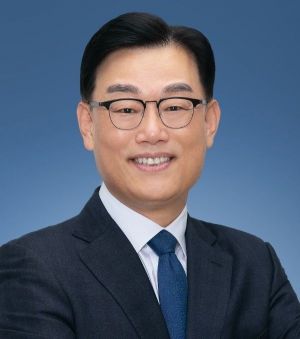 Park Tae-sung, Vice Chairman of the Korea Battery Industry Association [Photo by Korea Battery Industry Association]
PFAS refers to organic compounds used in lithium-ion batteries and other applications. They have properties that prevent water or oil from penetrating, making them widely used across industries. However, since they do not naturally decompose, they cause environmental pollution and are not easily expelled from the human body, earning the nickname “forever chemicals.” The European Chemicals Agency (ECHA) proposed a PFAS restriction report in March and is accepting stakeholder feedback until next month.
Vice Chairman Park emphasized the need to establish a “framework for cooperation” to counter U.S. and European regulations in relation to the establishment of Korea-China joint ventures. He said, “It is difficult to predict how the U.S. Inflation Reduction Act (IRA) Foreign Entities of Concern (FEOC) regulations will be concretely shaped, causing deep concerns for both the industry and policy authorities. Although uncertainties remain, we cannot just wait indefinitely.”
He added, “It seems advisable to proceed with business according to each company’s management goals. If building supply chains with China is inevitable, it would be practical and flexible to first proceed with cooperation and later manage risks according to FEOC guidelines.”
The association previously submitted a statement to the U.S. Treasury Department in June, calling for transparency and predictability regarding the IRA. Vice Chairman Park explained, “The statement submitted to the U.S. government did not include demands to relax the shareholding ratio of Chinese joint ventures. However, considering the complexity of the global battery supply chain, we requested a practical and flexible approach rather than uniform and rigid regulations.”
Vice Chairman Park also expressed intentions to strengthen cooperation with the Japan Battery Association. When asked whether there had been exchanges with Japanese battery companies such as Panasonic amid the improving Korea-Japan relations, he said, “We have not yet held bilateral channel consultations, but we see a strong need for them. There is ample room for cooperation with Japan in areas such as precursors and mineral processing products.”
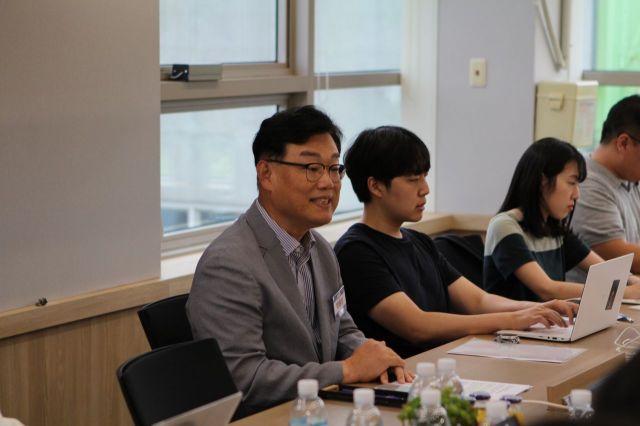 Vice Chairman Park Tae-sung speaking at a press conference held on the 9th at the Korea Battery Industry Association headquarters in Seocho-gu, Seoul.
 Photo by Battery Industry Association
Vice Chairman Park cited several reasons why Korea-Japan mutual cooperation is important: the similarity of positions between Korea and Japan regarding the U.S. IRA and various EU battery regulations, joint investments between Korean and Japanese companies in the U.S., and the high demand for cooperation in supply chains involving critical minerals.
He said, “We are planning meetings to strengthen cooperation with the Japan Battery Association starting in the second half of this year. We will continue to actively respond to trade and supply chain issues related to the U.S. IRA and EU battery legislation.”
© The Asia Business Daily(www.asiae.co.kr). All rights reserved.
![Clutching a Stolen Dior Bag, Saying "I Hate Being Poor but Real"... The Grotesque Con of a "Human Knockoff" [Slate]](https://cwcontent.asiae.co.kr/asiaresize/183/2026021902243444107_1771435474.jpg)

















