Amid the United States' advanced technology investment restrictions, China has hinted at a countermeasure, raising prospects that China may retaliate by targeting the electric vehicle and solar power sectors, where it dominates the global supply chain.
The Wall Street Journal (WSJ) reported on the 10th (local time) that China could impose export controls on electric vehicle and solar power technologies as a countermeasure to the White House's investment restriction executive order. Following China's export controls earlier this month on gallium and germanium?key semiconductor materials?in response to the U.S.'s strengthened semiconductor equipment export controls, it is analyzed that China may extend export controls to manganese, cobalt, graphite, and other critical materials for electric vehicle batteries and solar panels.
According to CRU Group, a raw materials market analysis firm, China's share in the manganese smelting industry reached 95% (as of the end of last year), and it also dominates the markets for cobalt (73%) and lithium (67%). In the graphite mining market, China's share is 78%. If China, which controls the global battery and solar power critical minerals, weaponizes these resources, the global supply chain would effectively come to a halt.
There is also a forecast that China's biotechnology sector could emerge as a new investment destination for U.S. capital, avoiding the three sectors targeted by U.S. restrictions?semiconductors, quantum computing, and artificial intelligence (AI). Nathan Picarsic, a China policy researcher at the Foundation for Defense of Democracies (FDD) and co-founder of consulting firm Horizon Advisory, predicted, "U.S. capital may enter other fields, particularly biotechnology, which could impact military or police capabilities."
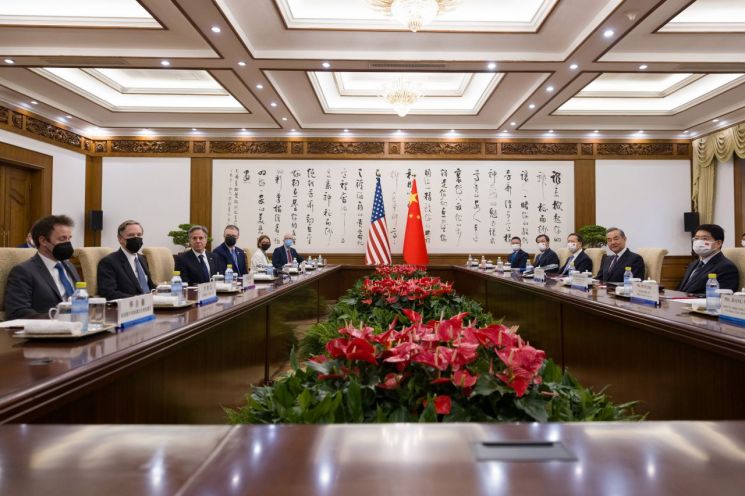
Within the Republican Party, there have been calls to include biotechnology, as well as electric vehicles and energy sectors, in the scope of regulations. Mike Gallagher, Republican Representative and Chair of the House Select Committee on the Strategic Competition between the United States and the Chinese Communist Party, issued a statement on the same day saying, "This measure fails to block indirect funding to malicious Chinese Communist Party-affiliated companies," and demanded expanded regulations.
Michael McCaul, Republican Representative and Chair of the House Foreign Affairs Committee, also criticized in a statement the previous day, saying, "It is concerning that existing investments in technology sectors failed to include biotechnology and energy sectors."
Earlier, after the White House announced an executive order restricting investments in three advanced technology sectors related to China, the Chinese Ministry of Foreign Affairs issued a statement saying, "The United States is politicizing and weaponizing trade and technology issues," and indicated the possibility of retaliation by stating, "We will protect our rights and interests."
This development has ushered U.S.-China relations into a new phase, introducing variables to the potential meeting between U.S. President Joe Biden and Chinese President Xi Jinping scheduled for November. Previously, U.S. Secretary of State Antony Blinken, after meeting President Xi during his visit to China in June, directly mentioned the possibility of a Biden-Xi meeting on the sidelines of the Asia-Pacific Economic Cooperation (APEC) summit in November. Recently, senior Chinese Foreign Ministry officials visited Washington and held talks with the U.S. State Department, discussing topics including a summit between the two leaders, which aligns with this context.
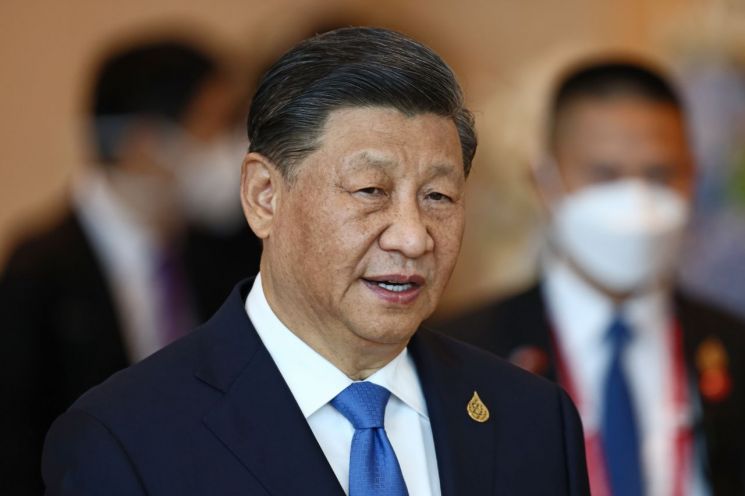
Regarding China's moves, the WSJ stated, "China, which is struggling economically due to deflation and a sharp decline in foreign investment, will likely strive for stability in relations with the U.S. in the short term," but added, "However, the investment restriction measures could accelerate efforts to dismantle the economic and trade ties that have sustained bilateral relations for decades."
There is also an analysis that the cooling of bilateral relations will inevitably lead to the decoupling of U.S. capital from China. Lisa Tobin, a former National Security Council (NSC) official, said, "'D-keywords' such as diversification, de-risking, decoupling, and disentangling have taken root in the minds of U.S. policymakers and Silicon Valley, and this is reflected on Wall Street as well."
© The Asia Business Daily(www.asiae.co.kr). All rights reserved.
![Clutching a Stolen Dior Bag, Saying "I Hate Being Poor but Real"... The Grotesque Con of a "Human Knockoff" [Slate]](https://cwcontent.asiae.co.kr/asiaresize/183/2026021902243444107_1771435474.jpg)
















