The U.S. administration under Joe Biden has decided, as initially announced, to restrict American capital investments in China's advanced technology sectors such as artificial intelligence (AI), semiconductors, and quantum computing. Amid intensifying U.S.-China hegemonic competition, this measure aims to prevent American funds from flowing into technology development that could be linked to China's military sector. The Biden administration has repeatedly emphasized that this action is a 'derisking' measure from a national security perspective rather than an economic one, but strong backlash from China is expected.
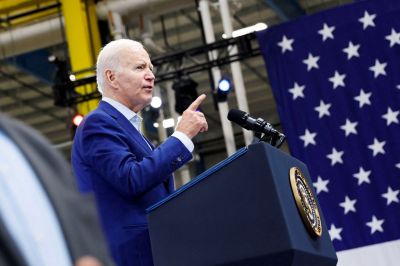
According to the White House, on the 9th (local time), President Biden signed an executive order regulating investments by American capital, including private equity and venture capital, in China's advanced technology sectors. China, along with the Hong Kong and Macau Special Administrative Regions, has been designated as so-called 'countries of concern,' with direct investments in three areas?AI, advanced semiconductors, and quantum computing?being prohibited or restricted.
Accordingly, companies intending to invest in these sectors in China must mandatorily report their investment plans in advance, and the authority to make decisions, including investment bans, will rest with the U.S. Secretary of the Treasury (Janet Yellen). In a letter to Congress, President Biden declared a national emergency concerning critical technologies related to military and intelligence, emphasizing that "some American capital investments are exacerbating these risks." The administration plans to announce detailed implementation rules after consulting industry stakeholders.
The three advanced technology sectors targeted by the Biden administration are all considered central to the U.S.-China hegemonic competition. A senior administration official said in a phone briefing, "This investment restriction targets a small number of core technologies related to the modernization of China's military and internal surveillance capabilities," adding, "China has sought to acquire sensitive core technologies for military modernization." The explanation is that this measure aims to prevent American funding from being used in the development of various advanced technologies that could be utilized in China's military technology.
In particular, the Biden administration has repeatedly emphasized that this measure is about national security, not economics, seemingly aware of China's backlash. The White House stated, "Cross-border investment has long contributed to the vitality of the U.S. economy," and explained, "We remain committed to open investment while taking narrowly targeted actions for national security." It added, "This is a 'small yard, high fence' approach to address national security threats posed by countries of concern, involving high-intensity measures in critical areas."
Since this measure focuses on investment restrictions related to China, it is expected to have no immediate direct impact on South Korea. However, as the Biden administration strongly urges allies to participate in its China containment efforts, it cannot be ruled out that South Korea may face pressure to join in some form. The Wall Street Journal (WSJ) reported that "the U.S. is pressuring European and Asian allies to adopt similar measures restricting investments in China." The consensus among participants at the G7 summit held in Hiroshima, Japan, last May on the importance of protecting sensitive technologies linked to national security is also analyzed as a background to this U.S. pressure. The United Kingdom, Germany, and others have already begun implementing similar regulations.
It has been confirmed that the Biden administration conducted extensive consultations with hundreds of stakeholders, industry members, as well as allies and partners before announcing this executive order. Notably, there were significant disagreements within the administration, including the Department of Defense and the Treasury Department, regarding the scope of the regulatory fields.
This is not the first time the U.S. has blocked investments in Chinese technology. Local media noted that near the end of the Donald Trump administration, executive orders were issued banning investments in dozens of Chinese companies. However, this measure is differentiated by its broad restriction on investment flows toward China. Especially, China's economy is currently experiencing sluggishness in both domestic demand and exports, raising concerns about a prolonged downturn. The investment restrictions imposed amid this situation could mark a turning point that further freezes U.S.-China relations.
The Washington Post (WP) described it as an "initial phase that will not take effect until next year," but evaluated it as "a signal to the Chinese leadership that the U.S. intends to continue regulating China on core technologies." The New York Times (NYT) reported, "The Biden administration emphasized that this measure is a tailored action to protect national security, but China will view it as part of a broader policy to suppress its rise," adding, "Export controls have already triggered Chinese retaliation." This foreshadows additional Chinese retaliatory measures soon, similar to previous export controls on Micron, gallium, and germanium.
Earlier, the Chinese Embassy in the U.S. issued a statement through its spokesperson, protesting that "the U.S. government habitually politicizes technology and trade issues and weaponizes them under the name of national security."
However, within the U.S., particularly among hardliners on China, there are criticisms that this regulation is insufficient, excluding sectors like biotechnology and energy. Michael McCaul, chairman of the House Foreign Affairs Committee, argued, "This is a time when more aggressive measures are needed than ever," and claimed, "The administration continues a trend of appeasing industries at the expense of national security."
Andrew Collier, managing director of Orient Capital Research, predicted, "Western investors may be disappointed to lose advanced technology investment opportunities in China," but added, "There is so much domestic capital chasing these opportunities that China will not be harmed." According to the Peterson Institute for International Economics, the U.S. accounted for less than 5% of China's inbound foreign direct investment in 2021 and 2022. Nicholas Lardy, senior fellow at the institute, dismissed the move as "a waste of time," stating, "It plays into the hands of Beijing people who believe the U.S. wants to contain China and is not interested in new dialogue or easing tensions."
© The Asia Business Daily(www.asiae.co.kr). All rights reserved.
![Clutching a Stolen Dior Bag, Saying "I Hate Being Poor but Real"... The Grotesque Con of a "Human Knockoff" [Slate]](https://cwcontent.asiae.co.kr/asiaresize/183/2026021902243444107_1771435474.jpg)
















