Announcement of 'Intelligent Home Construction and Expansion Plan' on the 9th
Domestic Smart Home Market Expected to Grow to 4.3 Trillion KRW
Strengthening Global Competitiveness through Collaboration among Companies
The government is teaming up with private companies such as Samsung and LG to foster the intelligent home industry. The plan is to grow the domestic smart home market, expected to reach 3.7 trillion KRW by 2027, to 4.3 trillion KRW.
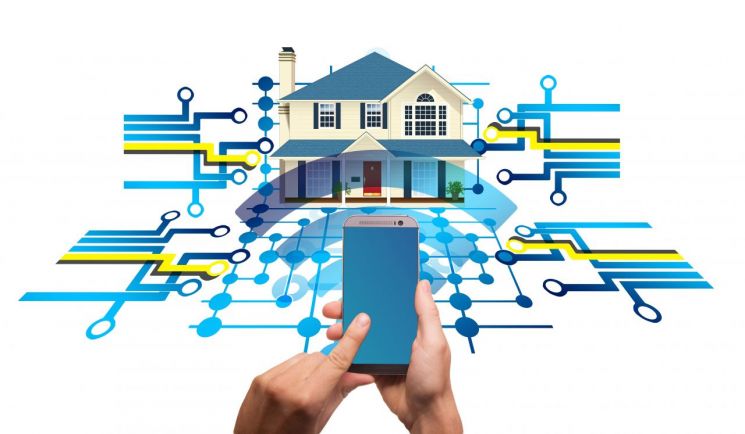
On the 9th, the Ministry of Science and ICT announced the 'Intelligent Home (AI@Home) Construction and Expansion Plan' at the Emergency Economic Ministers' Meeting. An intelligent home is a living environment that provides personalized services based on artificial intelligence (AI). Existing smart homes have limited functions, such as using a wall pad to call an elevator. Intelligent homes connect household devices like appliances, lighting, and doors through a single global standard to offer smarter, customized services.
Recently, the IoT smart home standard 'Matter,' involving major global companies, was launched, and generative AI such as ChatGPT has emerged, drawing attention to intelligent homes as an evolution beyond smart homes. Kim Guk-hyun, Director of the Digital Infrastructure Safety Division at the Ministry of Science and ICT, said, "Market research firm IDC estimates the domestic smart home market to be about 3.7 trillion KRW by 2027," adding, "We believe this strategy can enable an additional growth of about 600 billion KRW."
The United States, where 46.5 million Alexa and 27.1 million Google Home users actively use intelligent home services, sees the presence of intelligent home support affecting real estate prices. In China, the use of intelligent home services by companies like Huawei and Xiaomi is rapidly increasing. However, in Korea, only limited functions are provided, and different standards applied by each company limit market formation.
Jung Chang-rim, Director of Information Security and Network Policy at the Ministry of Science and ICT, stated, "Global companies such as Amazon, Google, and Apple are strengthening strategic investments in the intelligent home sector and focusing on building cooperative systems," adding, "In contrast, Korea’s construction companies, appliance manufacturers, and telecom companies adopt different standards and are mainly interested in maintaining their own platform ecosystems, leading to market fragmentation."
To revitalize the market, the government will first create an ecosystem where companies from various sectors can collaborate. The first step is to promote the 'Intelligent Home Leading Project (AI@Home),' which demonstrates the global standard (Matter) and AI-based models. In phase one, by next year, various devices such as lighting, ventilators, and heating/cooling systems will be connected and controlled using the global standard. Demonstrations of elderly healthcare and home automation are currently underway. In phase two, generative AI and home robots will be introduced to conduct global leading intelligent home demonstrations.
To strengthen collaboration among companies and expand the ecosystem, the 'Intelligent Home Alliance,' consisting of leading companies from each sector such as Samsung, LG, LH, and Hyundai Construction, will be launched within this year. Additionally, a three-tier private certification system will be established to help the public easily understand intelligent home expansion.
Various support projects will also be implemented to enhance global competitiveness. A globally recognized testing laboratory for the global standard will be established domestically within this year so that certification can be obtained without going abroad. Furthermore, the government will shift from a before-market approach, where construction companies install functions when building houses, to an after-market approach, where devices can be purchased and installed in existing homes. A marketplace will be created so that intelligent home products can be purchased not only from the world’s largest e-commerce company Amazon but also from domestic platforms like Naver and Kakao.
Efforts will also be made to build the data infrastructure and advance networks, which are the foundation of intelligent home services. Large-scale training data necessary for generative AI-based service development will be constructed. To provide ultra-low latency and hyper-connected services within homes, the use of Wi-Fi 6E will be expanded, and the introduction of next-generation Wi-Fi 7 will be pursued starting next year. Security will be strengthened to prevent recurrence of wall pad hacking incidents and to ensure safe use of intelligent homes. Security of service platforms based on the Matter standard will be enhanced, and specialized education in intelligent home security will be provided to cultivate advanced developers.
Lee Jong-ho, Minister of Science and ICT, said, "We will listen to field opinions and actively support efforts so that intelligent homes become a new growth engine and make our lives more convenient."
© The Asia Business Daily(www.asiae.co.kr). All rights reserved.

















