The Ministry of Health and Welfare announced on the 4th that it has established a procedure for systematic response by government ministries and related organizations in the event of instability in the supply and demand of pharmaceuticals.
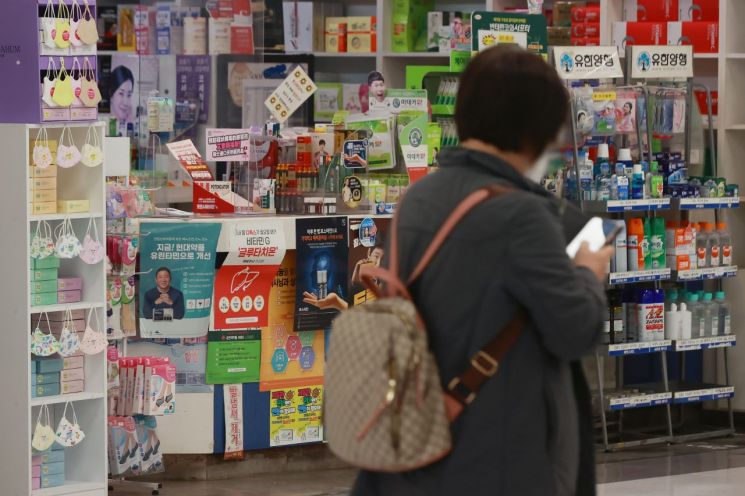
On the same day, the Ministry of Health and Welfare, together with the Ministry of Food and Drug Safety, Health Insurance Review and Assessment Service, Korean Pharmaceutical Association, Korean Medical Association, Korea Pharmaceutical and Bio-Pharma Manufacturers Association, Korea Drug Distributors Association, and Korean Society of Hospital Pharmacists, announced a systematic response procedure at the joint public-private level, including future directions for institutional improvement.
For pharmaceutical shortages deemed to require a cross-ministerial response, a system will be established where five representative associations, including the Pharmaceutical Association, Medical Association, and Pharmaceutical Bio Association, propose cross-ministerial responses, and the Ministry of Food and Drug Safety and Health Insurance Review and Assessment Service quickly assess the situation and prepare response directions.
To enable rapid supply and demand assessment and analysis, data utilization will be strengthened. This is based on the judgment that there are limitations in quickly grasping pharmaceutical usage information through health insurance claims data. The government plans to introduce a system for collecting prescription and dispensing information for real-time demand assessment in the mid to long term, based on distribution and supply volumes that can be utilized first.
To enhance proactive response capabilities, the scope and period of the current 'production, import, and supply suspension reporting system' for essential medicines will be expanded, and a system capable of predicting and analyzing supply-demand imbalances in advance will be developed. For example, the Ministry of Food and Drug Safety announced in June that it would establish an artificial intelligence (AI) prediction model as a solution to pharmaceutical supply-demand imbalance issues.
Additionally, the government decided to prepare countermeasures for various causes of pharmaceutical supply instability. The Ministry of Food and Drug Safety will identify production status, including alternative drugs, for unstable pharmaceuticals and support increased production through tailored encouragement of pharmaceutical companies and rationalization of administrative procedures.
In response to demand, unstable pharmaceuticals will be promptly notified to prescribing doctors to manage prescriptions, and the Korean Medical Association will be requested to cooperate by providing guidance on dispersed prescribing and refraining from duplicate prescriptions.
In cases of supply instability, enforcement will be strengthened against distribution distortion acts such as hoarding, bundling sales, and favoritism toward specific pharmacies, and pharmacies suspected of hoarding with excessively low usage compared to purchase volume will also be identified.
For pharmacies unable to obtain insufficient pharmaceuticals, a procedure will be established to equally prioritize distribution of a certain proportion of increased production to these small-scale pharmacies through agreements among the Pharmaceutical Association, Distributors Association, and pharmaceutical companies.
© The Asia Business Daily(www.asiae.co.kr). All rights reserved.
![Clutching a Stolen Dior Bag, Saying "I Hate Being Poor but Real"... The Grotesque Con of a "Human Knockoff" [Slate]](https://cwcontent.asiae.co.kr/asiaresize/183/2026021902243444107_1771435474.jpg)















