Top 5 Trading Companies Show Declining Q2 Performance
Net Profit Exceeds Market Expectations
Diversified Revenue Mitigates Impact of Raw Material Price Collapse
'Investment genius' Warren Buffett, chairman of Berkshire Hathaway, has increased his equity investment in Japan's five major trading companies, which showed a slowdown in earnings in the second quarter of this year due to the impact of falling raw material prices. However, there is also an assessment that they performed relatively well compared to the sharp price declines in their core raw material businesses.
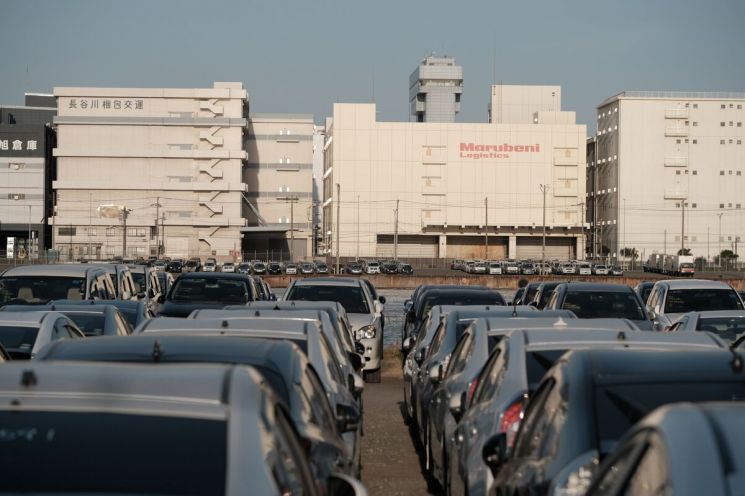 Marubeni Corporation's factory located in the Keihin Industrial Zone, Japan
 [Image source=Bloomberg]
According to the Nihon Keizai Shimbun on the 3rd, all five major Japanese trading companies (Mitsubishi, Mitsui, Sumitomo, Itochu, Marubeni) saw their net profits decline compared to the same period last year in the second quarter.
Mitsubishi Corporation's net profit recorded 317.7 billion yen, down 40% from a year earlier. This is the first time in three years that Mitsubishi's net profit has decreased year-on-year.
The decline in raw material prices is analyzed to have influenced the decrease in net profit. The mineral resources business is one of Mitsubishi Corporation's core business portfolios. It mainly participates in projects, investments, and trading related to mineral resources such as coal, copper, and iron ore, as well as natural gas, generating profits. This year, the coal price decline dealt a significant blow to the resource business. Coal prices plummeted from over $300 per ton in March last year, when the Russia-Ukraine war broke out, to $113 last month. Profits from the metals business were recorded at 87.1 billion yen, down 62% from the same period last year.
The other four trading companies also saw their second-quarter net profits decline compared to the same period last year. Marubeni's net profit decreased by 29.9% to 141.277 billion yen, and Itochu Corporation's earnings fell 8% to 313.2 billion yen. Itochu also suffered a significant hit in its metals and resources business due to the decline in raw material prices such as iron ore. Sumitomo and Mitsui & Co.'s second-quarter net profits were recorded at 129.4 billion yen and 252.85 billion yen, down 17% and 8.1% year-on-year, respectively.
However, the market also evaluated that the five major trading companies showed better-than-expected performance despite the impact of falling raw material prices. All five companies exceeded market expectations for second-quarter net profits. In particular, Mitsubishi Corporation and Itochu Corporation's net profits of 317.7 billion yen and 313.2 billion yen, respectively, significantly surpassed the forecasts of 244.7 billion yen and 196.6 billion yen.
Bloomberg explained, "Global oil companies such as ExxonMobil and Shell recorded earnings shocks due to falling raw material prices," but added, "On the other hand, these companies have diversified portfolios ranging from convenience stores to food businesses, so they did not suffer severe damage despite the decline in raw material prices."
© The Asia Business Daily(www.asiae.co.kr). All rights reserved.

![User Who Sold Erroneously Deposited Bitcoins to Repay Debt and Fund Entertainment... What Did the Supreme Court Decide in 2021? [Legal Issue Check]](https://cwcontent.asiae.co.kr/asiaresize/183/2026020910431234020_1770601391.png)