Q1 Investment Scale Reaches $4 Billion
More Than Doubled Compared to Same Period Last Year
Tokyo Office Vacancy Rate Remains Low at 6%
Overseas investors are turning their attention to the Japanese real estate market. Along with the low value of the yen, the Bank of Japan (BOJ) has maintained a long-term ultra-low interest rate policy, attracting investors looking to purchase assets at affordable prices in the Japanese real estate market.
The Wall Street Journal (WSJ) reported on the 25th (local time) that overseas investors who had been buying office buildings in the United States are withdrawing from the US and purchasing buildings in Japan.
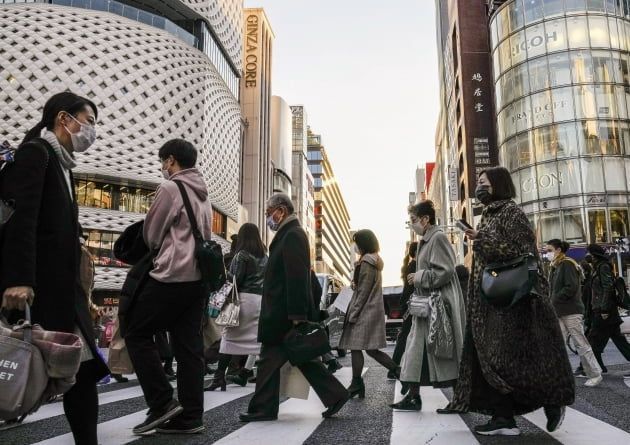
Investment sentiment in Japanese commercial real estate is reviving. According to JLL (Jones Lang LaSalle), a global comprehensive real estate consulting firm, the scale of office real estate investment in Japan in the first quarter of this year was $4 billion. This is more than double the investment scale compared to the same period last year.
In particular, inflows of foreign capital continue. LaSalle Investment Management, a global real estate asset management company, decided to invest 60% of its Asia-Pacific real estate fund, which was raised at $2.2 billion (2.8 trillion KRW), in Japanese commercial real estate. Singapore’s Keppel Asset Management has also entered the Japanese real estate investment market. Keppel Asset Management acquired a commercial building near Ginza, Japan, in November last year. Hong Kong investment firm Gaw Capital Partners plans to inject about 500 billion yen (approximately 4.9 trillion KRW) into the real estate market over the next two years. BlackRock, the world’s largest asset management company, also borrowed from Mizuho Bank to purchase a commercial building in Tokyo for $250 million.
Due to ultra-low interest rates and the depreciation of the yen, the expected returns on real estate have increased, directing overseas funds toward Japan. Katsumi Nakamoto, president of Patricia Japan, a European real estate investment company, explained to the Nihon Keizai Shimbun, "Low interest rates reduce borrowing costs when purchasing real estate, allowing for higher investment profits than before."
Moreover, Japanese offices have low vacancy rates and high rents, making the returns from real estate purchases quite attractive. According to NLI Research, as of April, the office return rate in Japan reached 75%.
On the other hand, investors are selling US commercial real estate at losses. LaSalle Investment Management sold a building in Santana, California, in February at a 50% loss, and some US pension funds and real estate developers also disposed of office buildings in the US at low prices.
The average office return rate in the US is around 50%, with vacancy rates rapidly increasing. According to global comprehensive real estate services firm CBRE, the office vacancy rate in San Francisco in the second quarter of this year was 32%. Considering that Moody’s, a credit rating agency, reported a 19% office vacancy rate in the US in the first quarter, the number of vacant buildings appears to have sharply increased within a few months.
However, some analysts argue that considering Japan’s sluggish economic growth and population decline, the influx of foreign capital into Japan is unlikely to lead to significant profits. WSJ explained, "Some investors hesitate to invest, thinking that the work-from-home trend may return in Japan," and "There are also concerned views that the Japanese market will not bring large profits due to population decline and overall slow economic growth."
© The Asia Business Daily(www.asiae.co.kr). All rights reserved.
![Clutching a Stolen Dior Bag, Saying "I Hate Being Poor but Real"... The Grotesque Con of a "Human Knockoff" [Slate]](https://cwcontent.asiae.co.kr/asiaresize/183/2026021902243444107_1771435474.jpg)
















