Asahi Criticizes "System with Strong Nuclear Power Plant Support"
The Japanese government’s announcement that it will provide subsidies for restarted nuclear power plants as part of its decarbonization efforts has sparked controversy. Amid already unfavorable public opinion both inside and outside Japan due to the Fukushima Daiichi Nuclear Power Plant’s contaminated water discharge issue, criticism is emerging that the government is openly pushing for nuclear power.
According to the Asahi Shimbun on the 26th, Japan’s Ministry of Economy, Trade and Industry (METI) stated that restarted nuclear power plants will be included as eligible recipients in the “Long-term Decarbonized Power Auction” program, a decarbonization support system to be introduced next year. The program guarantees income for 20 years in principle for newly established decarbonized power sources, such as nuclear, solar, and hydroelectric power plants.
According to METI, power plants meeting the conditions will be guaranteed 100,000 yen (approximately 900,000 KRW) per kilowatt (kW) annually. The Asahi Shimbun analyzed that if a 1,000,000 kW nuclear power plant is newly constructed or restarted, the subsidy alone could enable recovery of up to 100 billion yen (approximately 906 billion KRW) annually.
Although METI initially stated that the program would support only newly built or reconstructed power plants, controversy arose as it began considering including existing nuclear power plants as eligible recipients.
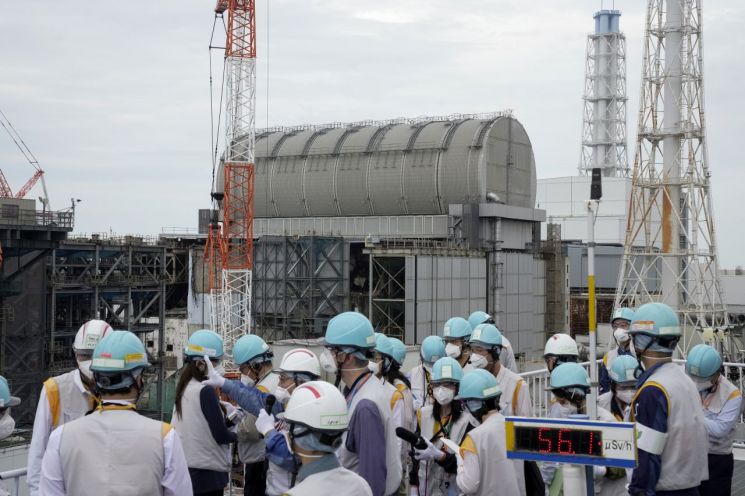
METI argues that since the Fukushima Daiichi Nuclear Power Plant accident, safety regulations such as seismic design have been significantly strengthened, and the costs required to meet these new standards could be a burden on electric power companies. The government claims that by enabling companies to recover their investment costs, it can promote investment in safety.
In fact, METI explained that electric power companies are pushing for nuclear power plant restarts but are financially pressured by the high costs of safety measures. Regarding post-accident countermeasure costs, the total burden on 11 major electric power companies was about 5.4 trillion yen (approximately 48.9 trillion KRW) as of August last year. Kansai Electric Power and Kyushu Electric Power are each expected to incur costs of about 1 trillion yen (approximately 9 trillion KRW). The problem is that there could be variables such as operational disapproval during the restart process, and even if investments are made, recovery is uncertain. The government’s policy is to provide support for this.
However, at this point, there are also criticisms that the system itself is essentially designed to support nuclear power. Asahi pointed out, “If existing nuclear power plants are included in addition to the original conditions of supporting only newly built or reconstructed plants before operation starts, the program’s nuclear support aspect will become even stronger.”
The Japanese government’s recent strong push for nuclear power restarts also reinforces these suspicions. The government announced in February that it plans to maximize the use of nuclear power. The government’s goal is to restart about 27 nuclear reactors by 2030. So far, about 10 reactors have been restarted.
Asahi reported, “METI plans to fully support major electric power companies, including revising the Basic Act on Atomic Energy last May, and the current consideration to expand the program’s support targets is part of that effort.”
© The Asia Business Daily(www.asiae.co.kr). All rights reserved.
![Clutching a Stolen Dior Bag, Saying "I Hate Being Poor but Real"... The Grotesque Con of a "Human Knockoff" [Slate]](https://cwcontent.asiae.co.kr/asiaresize/183/2026021902243444107_1771435474.jpg)















