Major U.S. banks continue to report strong earnings. Following JP Morgan and Wells Fargo, which kicked off the Q2 earnings season with 'earnings surprises,' Bank of America (BoA) also saw its net profit increase by 19%. Morgan Stanley's net profit declined by double digits compared to last year but still exceeded market expectations.
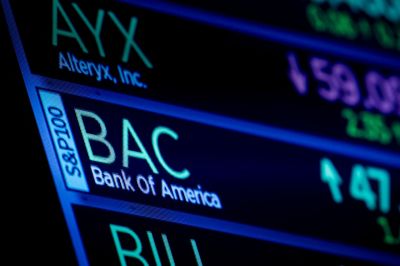
On the 18th (local time), BoA announced its Q2 net profit of $7.41 billion, a 19% increase from $6.25 billion the previous year. Revenue for the same period rose 11% to $25.2 billion, surpassing Wall Street estimates of around $25 billion. Earnings per share (EPS) stood at 88 cents, also beating market expectations of 84 cents.
Brian Moynihan, BoA's CEO, commented, "We see a healthy U.S. economy growing at a slow pace alongside a resilient labor market." With rising interest rates pushing up loan rates, BoA's net interest income increased by 14% year-over-year to $14.3 billion. The expansion of the net interest margin?the gap between loan and deposit rates?supported the strong earnings. However, the growth was less than that reported earlier by JP Morgan and Wells Fargo.
Non-interest income also rose 8% during the same period. Fixed income trading revenue increased 18% to $2.8 billion. Although equity trading revenue ($1.6 billion) fell by 2%, it still exceeded market forecasts. BoA reaffirmed its previous guidance that annual net interest income for this year would slightly exceed $57 billion.
The Wall Street Journal (WSJ) reported, "Like JP Morgan and Wells Fargo, BoA demonstrated that despite increased (interest) expenses from deposits in Q2, it can earn more money from loans." Earlier, on the 14th, large banks such as JP Morgan and Wells Fargo, which marked the start of the Q2 earnings season, posted earnings surprises. The largest U.S. bank, JP Morgan, announced a 67% surge in Q2 net profit compared to the previous year. Wells Fargo also recorded a 57% increase in net profit over the same period.
Market analysts attribute the strong performance of these major banks to high interest rates and the regional banking crisis. Following the March collapse of SVB, concerns around regional banks increased, leading to significant deposit shifts to large banks. Additionally, rising interest rates widened the net interest margin between loan and deposit rates.
On the same day, investment bank Morgan Stanley also reported results that exceeded expectations. Morgan Stanley's Q2 earnings per share were $1.24, surpassing the FactSet analyst consensus of $1.15.
According to Morgan Stanley, Q2 revenue rose 2% year-over-year to $13.5 billion. Net profit for Q2 was $2.18 billion, down 13% from the previous year due to a significant drop in investment trading, but still above forecasts. James Gorman, CEO who announced plans to step down next year, said, "We delivered solid results in a challenging market environment," adding, "This quarter started amid macroeconomic uncertainty and subdued client activity but ended constructively."
However, investment banking revenue, including M&A fees, remained roughly flat year-over-year, and trading revenue declined 22%. The WSJ noted, "Morgan Stanley's results confirm that traditional Wall Street businesses like investment banking remain depressed," and that this downturn will continue to pose challenges for large investment banks including Morgan Stanley. This weakness in investment banking was also commonly observed in the recent earnings reports from JP Morgan and Citi. According to Dealogic, global M&A volume in the first half of this year fell 39% compared to the previous year. IPO volume also shrank by 32%.
Goldman Sachs is scheduled to announce its earnings the following day, drawing attention to whether the streak of better-than-expected results among major banks will continue. The strong earnings of large banks indicate that U.S. consumers and businesses continued borrowing and spending in Q2, which, along with recent easing inflation trends, boosts expectations for a soft economic landing. The day before, Goldman Sachs lowered its recession probability forecast from 25% to 20%. JP Morgan strategist Marco Kolanovic also assessed that the short-term risk of recession is low.
Meanwhile, on the New York Stock Exchange, shares of major banks are rising. BoA and Morgan Stanley, which reported better-than-expected earnings, are currently trading up 4.56% and 6.42%, respectively. Wells Fargo is up more than 1%, and JP Morgan is slightly higher in a flat trading range.
© The Asia Business Daily(www.asiae.co.kr). All rights reserved.
![Clutching a Stolen Dior Bag, Saying "I Hate Being Poor but Real"... The Grotesque Con of a "Human Knockoff" [Slate]](https://cwcontent.asiae.co.kr/asiaresize/183/2026021902243444107_1771435474.jpg)

















