Japan Attracts Semiconductor Facilities from Taiwan and the US
'Less Risky Areas' Emerging as Investment Destinations
As investment risks in China and Taiwan increase due to the US-China conflict, Japan, which was previously considered a 'less attractive investment destination,' is emerging as a 'less risky region.' In particular, Japan has recently strengthened investments in semiconductor and battery industries, key sectors for Korea, alongside its economic recovery, signaling fierce global competition ahead and highlighting the need for multifaceted responses from the Korean government.
On the 16th, the Bank of Korea stated in its Overseas Economic Focus report titled "Current Status and Implications of Japan's Investment Recovery" that "recently, Japan's economy has seen a boost in investment after a prolonged slump, contributing significantly to the strong growth of real Gross Domestic Product (GDP) in the first quarter of this year," and emphasized that "attention should be paid to the expanding investments in semiconductor and battery-related industries."
Recently, Japan has actively begun efforts to regain its past semiconductor market share. Japan's semiconductor market share reached around 50% in the 1980s but sharply declined to 9% last year. The market share for automotive batteries also exceeded 40% in 2015 but rapidly shrank to 20% by 2020.
However, Japan is currently expanding investments in semiconductor and battery-related industries under government leadership. Following the automotive semiconductor supply shortage in 2021, concerns have grown that similar difficulties could arise in advanced fields, prompting efforts to enhance semiconductor and battery self-sufficiency and strengthen supply chains.
Japan to Mass-Produce Sub-2 Nanometer Semiconductors by 2027
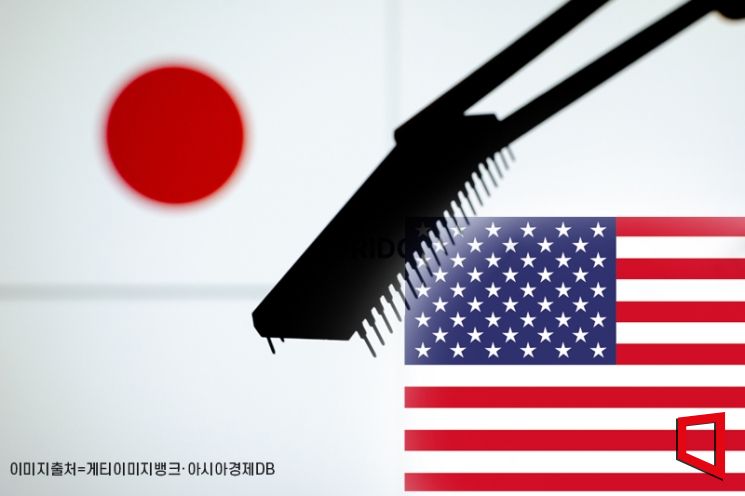
According to the report, Japan's semiconductor investments are proceeding in two directions: domestic mass production of general-purpose semiconductors and strengthening next-generation semiconductor manufacturing capabilities. Recently, Japan has been attracting facility investments from semiconductor companies such as Taiwan's TSMC and the US's Western Digital to quickly establish a foundation for mass-producing general-purpose semiconductors.
Additionally, under the goal of mass-producing sub-2 nanometer semiconductors by 2027, the government has established the semiconductor company Rapidus and is enhancing technological exchanges with the United States, simultaneously working to improve advanced semiconductor manufacturing capabilities.
In particular, the Japanese government is intensifying policy efforts to increase the global market share of battery production capacity by 2030 under its "Battery Industry Strategy." Toyota, which had focused on hybrid vehicles, is investing 400 billion yen domestically to expand its own battery production capacity, aiming to sell 1.5 million electric vehicles annually by 2026 and mass-produce electric vehicles equipped with solid-state batteries between 2027 and 2028.
Japan is already recognized as having world-class basic research capabilities in advanced semiconductors and batteries, and equipment and material companies also hold high market shares. This technological strength forms the foundation for Japan's semiconductor and battery industries to enhance domestic production capacity.
As Japan's investment recovery centered on semiconductors and batteries becomes more visible, analyses suggest that Korea needs to respond in multiple ways. Although it is expected that Japan may not achieve significant results in the short term, if Japan's investments gain momentum, global competition in Korea's key sectors is likely to intensify further.
The Bank of Korea emphasized, "Korea needs to further strengthen its technological competitiveness by expanding research and development investments in the semiconductor and battery sectors," and added, "On the other hand, since Japan possesses high technological capabilities in materials and equipment, it is also important to enhance production efficiency through strengthened cooperation with Japan in areas requiring stable supply chain establishment."
© The Asia Business Daily(www.asiae.co.kr). All rights reserved.
![Clutching a Stolen Dior Bag, Saying "I Hate Being Poor but Real"... The Grotesque Con of a "Human Knockoff" [Slate]](https://cwcontent.asiae.co.kr/asiaresize/183/2026021902243444107_1771435474.jpg)















