Olive Young Facing Fine Decision Over 'Gapjil Allegations'
Key Issue: 'Market Definition'
The Fair Trade Commission (FTC) is expected to decide on sanctions and their severity as early as August regarding allegations of CJ Olive Young's abuse of power over its suppliers. If a review is held, a key issue will be the extent to which Olive Young's relevant market is defined. The distribution industry believes that the market should be delineated by considering not only department stores but also online distribution platforms such as Coupang and Naver as competitors.
According to industry sources on the 14th, the FTC sent Olive Young a review report (equivalent to a prosecutor's indictment) at the end of February and has completed the official opinion submission process. With all procedures necessary for a plenary session review finalized, a meeting is expected to be held as early as August. Previously, the FTC investigated allegations that Olive Young forced exclusive transactions on its suppliers.
The core issue of the review is whether Olive Young can be considered a "market-dominant business operator." Under the Fair Trade Act, heavier sanctions are imposed on "market-dominant business operators" even for the same abusive acts. An FTC official explained, "Abuse by a market-dominant business operator is not just a matter between two businesses but has a much greater impact on the entire market. Therefore, the Fair Trade Act regards it as much more serious and determines the scale of fines accordingly." If the FTC judges Olive Young as a "market-dominant business operator" and sanctions the abuse, substantial fines may be imposed based on criteria such as sales revenue.
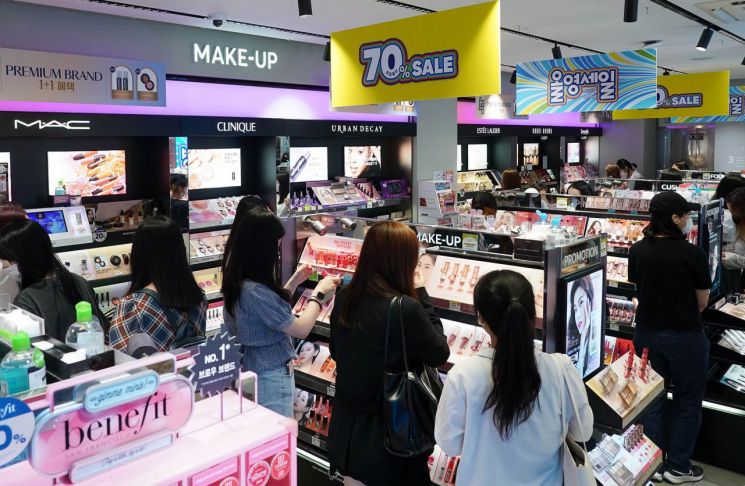
From Olive Young's perspective, considering that the market it operates in includes not only offline health & beauty (H&B) but also online distribution markets competing with Coupang, Naver, and others, its market dominance is insufficient. The Fair Trade Act presumes a business operator to be market-dominant if ▲ its market share is 50% or more, or ▲ the combined market share of three or fewer operators is 75% or more. The premise for determining dominance is market delineation (defining the meaningful related market in which the operator is active). Olive Young argues that its relevant market should be broadly defined as the online and offline distribution market to assess its market dominance.
Expanding the market to include online and offline distribution lowers the market share because major large companies distributing cosmetics such as Coupang, Naver, and Market Kurly are included as competitors. Therefore, even if the abuse allegations are confirmed, it would be difficult to judge Olive Young as a "market-dominant business operator," resulting in lower sanctions such as fines. Conversely, if only the offline health & beauty (H&B) market is defined as the relevant market, the market share would be measured higher, potentially leading to a judgment of market dominance.
The FTC is reportedly viewing Olive Young's relevant market as the H&B market. The FTC is expected to consider that multiple mid-to-low priced brand cosmetics are gathered in one store, providing a space where consumers can experience products, and will examine whether sufficient substitutes exist from the consumer's perspective. It is also reported that some view it as difficult to consider online distributors such as Coupang, Naver, and Kurly as direct competitors, thus excluding them from the relevant market.
© The Asia Business Daily(www.asiae.co.kr). All rights reserved.