Zigbang Survey Results: 45.9% Expect Decline
Main Reason for Decline: 'Economic Recession'
Home Price Increase Outlook Rises from 10.1% to 31.9%
Regarding housing prices in the second half of this year, a decline is still expected to be more prevalent than an increase.
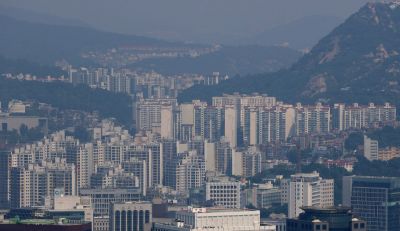
According to comprehensive proptech company Zigbang on the 10th, a survey of 1,000 users of its application about the housing market outlook in their residential areas for the second half of the year showed that 45.9% expected a 'decline.'
Although the proportion expecting a decline remained high, it decreased compared to the end of last year when 77.7% anticipated a drop in housing prices this year. At the end of last year’s survey, 10.2% expected an increase, and 12.1% expected stability. A Zigbang official explained, "This reflects a change from the market sentiment at the end of last year, when a decline outlook was dominant."
The most cited reason for expecting a drop in housing prices was the continuation of the economic recession (32.5%), followed by the perception that current price levels are high (23.7%), the perception that interest rates are high despite the base rate freeze policy (18.7%), the release of properties for sale due to weakening jeonse prices (11.5%), an increase in new housing supply (6.5%), and weakened demand sentiment after urgent sales transactions (5.2%).
The reasons for expecting housing price increases were led by the expectation of a spread of the ‘bottoming out perception’ at 20.7%, followed by government regulation easing (20.1%), a slowdown in the interest rate hike trend (15.4%), inflow of real demand due to property transactions (11.9%), expectations of economic recovery (11.3%), and hopes for price increases due to jeonse price recovery (7.5%).
Regarding jeonse prices in their residential areas, 45.6% expected a ‘decline.’ ‘Stable’ was 27.8%, and ‘increase’ was 26.6%, showing that, similar to sales prices, many also anticipate a decline in jeonse prices.
By residential area, 54.0% of respondents living in the five major provincial metropolitan cities chose ‘decline,’ followed by Gyeonggi (46.2%), Incheon (43.1%), other provinces (42.4%), and Seoul (42.3%).
The most common reason for expecting a decline in jeonse prices was ‘jeonse fraud and increased risk of tenant deposit returns’ at 27.6%. This was followed by an increase in jeonse properties related to gap investment (such as reverse jeonse) at 25.7%, and the perception that current prices are high due to the sharp rise in jeonse prices over recent years (19.1%).
© The Asia Business Daily(www.asiae.co.kr). All rights reserved.
![Clutching a Stolen Dior Bag, Saying "I Hate Being Poor but Real"... The Grotesque Con of a "Human Knockoff" [Slate]](https://cwcontent.asiae.co.kr/asiaresize/183/2026021902243444107_1771435474.jpg)















