As the pilot project for non-face-to-face medical consultations has passed one month since its implementation, discussions on formal legislation are gaining momentum. While the government views it as desirable to legalize the pilot project as it currently stands, the platform industry argues that user feedback has not been properly reflected in the current pilot project and that improvements are necessary.
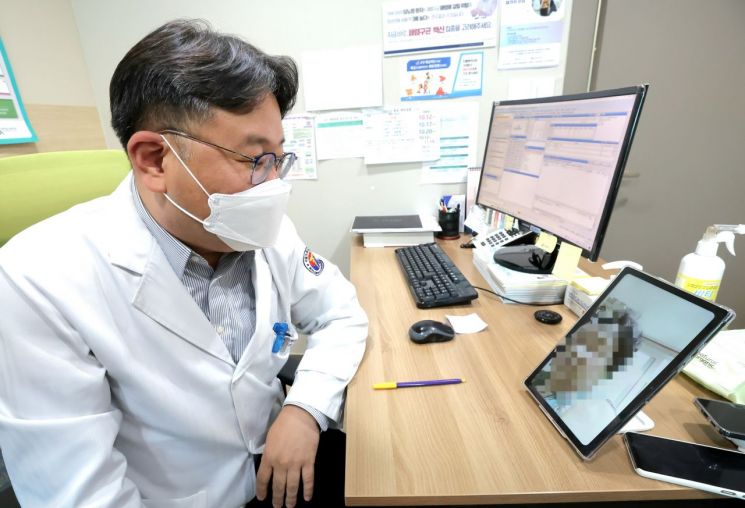
Government: "Legalize the pilot project as is... Platform management regulations are necessary"
The pilot project for non-face-to-face medical consultations, which began on the 1st of last month, is based on the principles of follow-up visits and primary care clinics. Accordingly, except for certain groups such as elderly or disabled individuals with mobility difficulties, residents of islands or remote areas with limited access to medical institutions, and confirmed infectious disease patients, patients can only receive non-face-to-face consultations for the same illness within 30 days after an initial face-to-face consultation.
The Ministry of Health and Welfare is currently discussing the prompt legalization of non-face-to-face medical consultations, which are being conducted as a pilot project, with the National Assembly. Four partial amendments to the Medical Service Act for the introduction of non-face-to-face consultations have been proposed in the National Assembly. Although there are some differences in detailed implementation plans, both the government and the National Assembly have reached a consensus on the necessity of legalization. Minister of Health and Welfare Cho Kyu-hong recently appeared before the National Assembly’s Health and Welfare Committee and, in response to a question about the need for enforcement against violations of the pilot project, stated, "During the current guidance period (three months after implementation), enforcement is not being conducted, but after the guidance period, we will do as much as possible under the current Medical Service Act, and for what is not possible, we will provide recommendations through guidelines," adding, "For a more fundamental solution, I hope that non-face-to-face medical consultations will be legalized quickly."
The Ministry of Health and Welfare believes that non-face-to-face medical consultations should be legalized exactly as in the current pilot project. The main principles, such as focusing on follow-up patients and primary care clinics, prohibiting medical institutions dedicated solely to non-face-to-face consultations, and requiring patients to pick up prescribed medications directly at pharmacies, must be maintained. In addition, the ministry insists that regulations for managing non-face-to-face consultation platforms should be established. Park Min-su, the second vice minister of the Ministry of Health and Welfare, emphasized at the National Assembly’s Health and Welfare Committee’s bill review subcommittee discussing the amendment to the Medical Service Act, "It is necessary to have a legal basis to regulate platforms, even if somewhat broadly. That way, if specific guidelines are not followed, there will be grounds to suspend business operations, which can prevent adverse effects."
 Notice within the platform application for the pilot project of non-face-to-face medical treatment.
 [Photo by Remote Medical Industry Council]
Industry: "40% cancellation rate after pilot project... User feedback must be reflected"
Contrary to the Ministry of Health and Welfare’s position, the platform industry argues that system improvements are necessary during the formal legalization process of non-face-to-face medical consultations. The Remote Medical Industry Council (Wonsanhyeop), which includes platform companies, has pointed out ongoing user inconveniences since the pilot project began. The majority of patients using non-face-to-face consultations were mild cases corresponding to initial visits, but due to the follow-up visit-centered pilot project, these patients can no longer use non-face-to-face consultations. As a result, the cancellation rate of medical consultations, which was about 17% before the pilot project, surged to 40%, and especially the request rate for pediatric and adolescent consultations dropped from 19.3% to 7.3%, according to Wonsanhyeop. Wonsanhyeop analyzed that "the effectiveness has decreased because prescriptions during vulnerable times such as nights and holidays became impossible after the pilot project."
In response, Wonsanhyeop plans to operate a "Non-face-to-face Medical Consultation Pilot Project Inconvenience Reception Center" on each company’s platform to identify user inconvenience cases and seek solutions. Jang Ji-ho, co-chairman of Wonsanhyeop, stated, "The non-face-to-face medical consultation pilot project inevitably caused great confusion because the most important user opinions were not reflected at all during the design process," adding, "The inconvenience reception center is an important channel where users can directly voice their opinions to establish a non-face-to-face medical consultation system that benefits all citizens."
Discussions on the legalization of the non-face-to-face medical consultation pilot project are expected to be largely concluded before the end of August, when the guidance period ends. Meanwhile, since last month, the Ministry of Health and Welfare has been gathering related opinions by forming an advisory group for the non-face-to-face medical consultation pilot project, which includes participants from the medical community, pharmaceutical industry, and platform industry.
© The Asia Business Daily(www.asiae.co.kr). All rights reserved.
![Clutching a Stolen Dior Bag, Saying "I Hate Being Poor but Real"... The Grotesque Con of a "Human Knockoff" [Slate]](https://cwcontent.asiae.co.kr/asiaresize/183/2026021902243444107_1771435474.jpg)
















