HSBC Chenhai and Citigroup Lower CSI 300 Index Forecasts
The Chinese stock market, which recorded historically poor performance in the first half of this year, is expected to find it difficult to recover in the second half as well. In addition to geopolitical uncertainties causing overseas funds to withdraw, it is also anticipated that large-scale stimulus measures like those in the past will be hard to come by due to massive government debt.
HSBC Qianhai Securities, a Chinese investment bank, recently lowered its year-end forecast for the CSI 300, the representative index of the Chinese stock market, to 4300, down 6.5% from the previous estimate. Citigroup revised its year-end forecast for the Hong Kong Hang Seng Index down 8% from 24,000, presented in February, to 22,000. Stephen Sun, an analyst at HSBC Qianhai Securities, said, "At the beginning of the year, the stock market was expected to perform well due to economic fundamentals, but this prediction did not materialize," adding, "The Chinese economic situation is becoming more difficult."
The CSI 300 index, composed of 300 blue-chip stocks from the Shanghai Composite Index and the Shenzhen Composite Index, currently stands at 3821.84 (as of the closing price on the 29th), down more than 14% over the past year. Compared to the peak of 5807.72 in February 2021, during the explosive liquidity phase caused by the COVID-19 pandemic, it has plunged more than 34%.
The MSCI China Index, which consists of more than 700 major companies listed on domestic and overseas Chinese stock markets, also fell 9.4% in the second quarter of this year alone. The South China Morning Post (SCMP) analyzed this as the worst quarterly performance since China abandoned its strict "Zero COVID" policy at the end of last year.
The Chinese economy is increasingly likely to experience delayed recovery amid multiple crises. On the 30th (local time), Bloomberg Economics analyzed that China's economic growth will decline to the 3% range by 2030. Unlike the United States, which recorded a surprise growth in the first quarter and where a no-landing scenario is reemerging, the prevailing view is that China’s reopening-driven economic recovery momentum has peaked.
Real economy indicators such as production, consumption, and investment have fallen short of market expectations for three consecutive months, slowing the pace of recovery, and the youth (ages 16?24) unemployment rate has reached a record high. Meanwhile, the government's willingness to stimulate the economy is not as high as expected. Although Chinese authorities are considering stimulus measures such as interest rate cuts, issuance of special government bonds worth 1 trillion yuan, tax reductions for manufacturing, and easing housing regulations, the realization of these measures remains uncertain. Local governments, struggling with massive debt and declining fiscal revenues, act as obstacles, raising concerns that no stimulus measures will work effectively.
According to Bloomberg News, Zhu Min, deputy director of the China Center for International Economic Exchanges and former deputy managing director of the International Monetary Fund (IMF), forecasted that "Chinese authorities will not implement stimulus measures," citing the threat to the health of the Chinese banking system due to local governments and real estate developers struggling with debt repayments. Jin Kewi, a professor of economics at the London School of Economics (LSE), UK, also emphasized, "Large-scale stimulus is impossible due to resource constraints," adding, "To rebound, the Chinese economy needs stimulus measures worth trillions of yuan, but currently, there is no capacity for that."
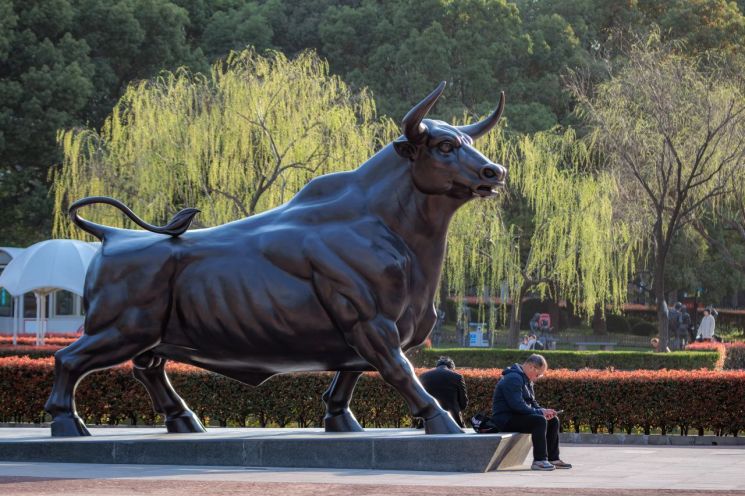
Global investment banks are also lowering their expectations for the Chinese economy. In a report released on the 25th, S&P Global lowered its forecast for China's GDP growth rate this year from 5.5% to 5.2%, a 0.3 percentage point decrease. S&P stated, "Investment and industry are lagging, so the recovery of the Chinese economy is expected to proceed at an uneven pace." Earlier, Goldman Sachs also lowered its GDP growth forecast from 6% to 5.4%, citing disappointment over weak stimulus intensity, and global investment banks such as UBS, Standard Chartered, Bank of America, JP Morgan, and Nomura similarly revised their growth forecasts downward from 5.5?6.3% to 5.1?5.7%.
SCMP stated, "Since the abandonment of the Zero COVID policy, economic optimism has disappeared and the door to stimulus measures has closed, lowering expectations for stock market recovery," and assessed that "the possibility of overseas investors, who have turned their eyes to Japan, India, and other regions in search of high returns, returning is becoming more distant."
© The Asia Business Daily(www.asiae.co.kr). All rights reserved.
![Clutching a Stolen Dior Bag, Saying "I Hate Being Poor but Real"... The Grotesque Con of a "Human Knockoff" [Slate]](https://cwcontent.asiae.co.kr/asiaresize/183/2026021902243444107_1771435474.jpg)















