Police Convert Daegu 'Bbaengbbaengi' Resident Doctor to Suspect
Medical Community "System Problem... Essential Medical Care Will Collapse"
The issue of so-called 'emergency room roundabouts,' where patients die because they cannot find an emergency room to be admitted to, has become a concern both inside and outside the medical community. As a police investigation into medical staff began on the grounds of refusing emergency medical care, opposition from the medical community has continued.
The controversial case is the so-called 'Daegu emergency room roundabout' incident. In March, 17-year-old Ms. A, who fell from a building in Daegu, died after failing to find an emergency room for admission. Ms. A, who was found collapsed in an alley, was transported by a 119 ambulance and searched for a hospital for about two hours, but due to a lack of beds and residents, there was no hospital that could accommodate her, and she ultimately died.
As a result, Mr. B, a third-year resident in the Department of Emergency Medicine at Daegu Fatima Hospital, is at risk of being prosecuted by the police as the person responsible for this incident. The charge applied to Mr. B by the police is a violation of Article 48-2 of the Emergency Medical Service Act (confirmation of capacity for admission, etc.) for refusal of admission without justifiable reason. This hospital was the first place where patient Ms. A visited, and Mr. B was the first to treat her.
The police judged that resident Mr. B did not admit the patient without justifiable reason, so treatment was not provided, and as a result, the patient died.
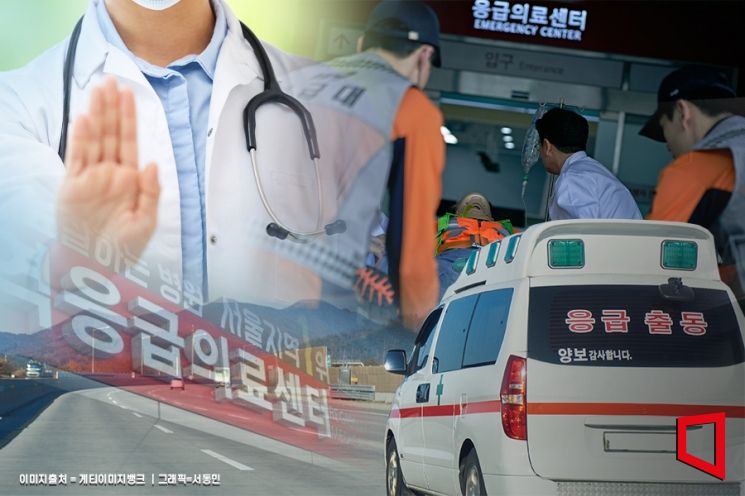
However, the medical community argues that on the day of the incident, the hospital had many emergency room patients and displayed a 'patient admission not possible' notice on the emergency medical information status board, and that it was difficult to admit Ms. A, who was presumed to have made an extreme choice, due to the absence of a psychiatric inpatient ward. At that time, Daegu Fatima Hospital transferred the patient to another hospital capable of psychiatric emergency treatment, but during that process, Ms. A's condition worsened and she died.
They also argue that since this incident stems from structural problems in the emergency medical system and the overall medical system, it is unreasonable to place responsibility on an individual resident, and they fear this case will become a second instance similar to the Ewha Mokdong Hospital case.
This refers to the case in December 2017 at Ewha Mokdong Hospital in Seoul, where four newborns in the intensive care unit died, and medical staff were prosecuted for involuntary manslaughter. The prosecuted medical staff were acquitted in the first and second trials as well as by the Supreme Court.
After this incident, the avoidance of pediatrics worsened, leading to a shortage of pediatric residents, and the medical community claims that a similar avoidance phenomenon may occur in emergency medicine after this incident.
The causes of deaths due to emergency room roundabouts include overcrowding of medical institutions caused by mild patients, shortage of residents, and lack of beds.
Professor Namgung In of the Department of Emergency Medicine at Ewha Mokdong Hospital explained regarding the issue of mild patients in emergency rooms that even if the medical staff judge the patient's condition as mild, if the guardian insists it is severe, it is not uncommon to admit the patient to the emergency room. When emergency room beds are full, even severe patients cannot be admitted.
Professor Nam appeared on SBS Radio's 'Kim Taehyun's Political Show' on the 30th of last month and said, "There is a transport system where mild patients can go to hospitals, that is, regional centers, without necessarily coming to large hospitals. However, there is a deeply rooted perception that you get better at a big hospital, that misdiagnosis is less likely, and you won't suffer unfair treatment, so if they come and stay, we have no choice."
The issue of expanding medical school quotas is at a standstill as the government and the medical community have differing positions. The government has announced plans to increase the medical school quota, which has been frozen for 18 years, to secure the necessary number of doctors, but the Korean Medical Association argues that the shortage of essential and regional medical personnel is a structural problem and that expanding medical school quotas is not the solution.
© The Asia Business Daily(www.asiae.co.kr). All rights reserved.
![Clutching a Stolen Dior Bag, Saying "I Hate Being Poor but Real"... The Grotesque Con of a "Human Knockoff" [Slate]](https://cwcontent.asiae.co.kr/asiaresize/183/2026021902243444107_1771435474.jpg)















