"Strict Punishment for Stock Price Manipulation Realized
Significance of Codifying Unjust Profit Calculation Method
If No Profit or Calculation Difficult, Maximum Fine Up to 4 Billion Won"
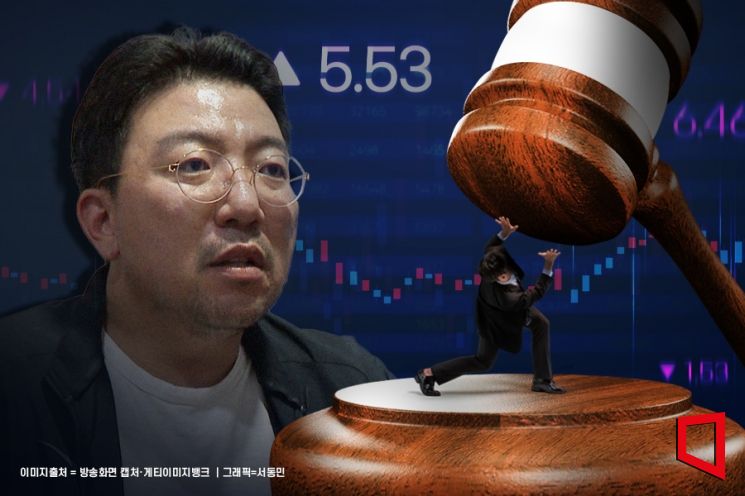
The amendment to the Capital Markets Act, which strengthens criminal penalties and administrative sanctions for unfair trading practices such as stock price manipulation, has passed the National Assembly's Legislation and Judiciary Committee. Until now, there was no clear specification of the 'method for calculating unjust profits' as the basis for criminal punishment, resulting in only 'light punishments.' The establishment of a legal basis is therefore considered highly significant.
On the 29th, the Legislation and Judiciary Committee held a plenary session at the National Assembly main building in Yeouido, Seoul, and approved the amendment to the Capital Markets Act. The amendment strengthens not only criminal penalties but also economic sanctions such as recovery of unjust profits and imposition of fines for serious capital market crimes including stock price manipulation, insider trading, and fraudulent transactions.
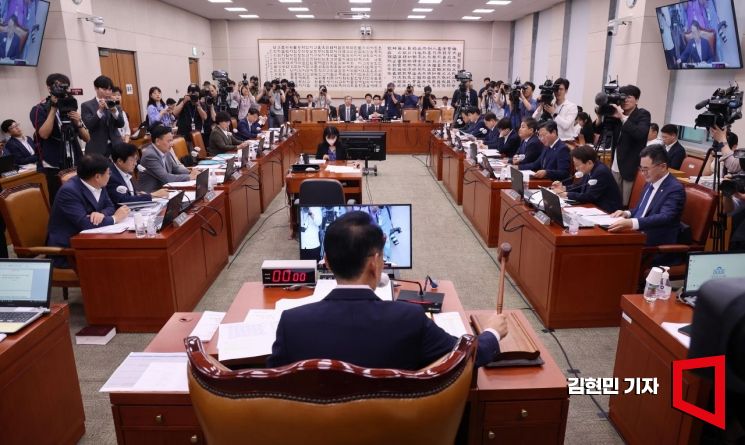 On the 29th, at the plenary meeting of the Legislation and Judiciary Committee held at the National Assembly, Chairman Kim Do-eup is striking the gavel. Photo by Kim Hyun-min kimhyun81@
Until now, the three major unfair trading practices?insider trading, market manipulation, and fraudulent transactions?were only subject to criminal penalties. The problem was that the punishments were always 'light.' To impose penalties, unjust profits must be calculated, but the current law did not even define this. As a result, there have been cases where unjust profits gained from stock price manipulation were judged as 'unknown,' leading to acquittals.
In fact, from 2016 to 2020, the non-prosecution rate for reported or notified unfair trading cases was about 55.8%. According to Supreme Court rulings related to unfair trading (as of 2020), the imprisonment rate was 59.4% (38 people), and probation was 40.6% (26 people). This means that even if stock price manipulation occurs, one out of two cases does not even reach the court. Among those who do go to court, 4 out of 10 are released on probation.
The amendment was passed after some twists and turns. On the 20th, when members of the People Power Party on the Legislation and Judiciary Committee opposed the bill due to issues with the legal system and wording, financial authorities partially revised the amendment.
First, the phrase "If the price fluctuation due to other external factors is explained, it shall be reflected in the difference under paragraph 1," which the Court Administration Office pointed out could violate the 'principle of responsibility,' was deleted.
A Financial Services Commission official said, "Deleting the word 'explanation' does not mean unjust profits cannot be calculated," adding, "Now, based on the unjust profits specified in the law, the prosecution and the Financial Services Commission will agree and soon announce the calculation formula."
Also, if there are no unjust profits or they cannot be calculated, the maximum fine was lowered from 5 billion won to 4 billion won, considering similar legislation such as the Fair Trade Act. Lastly, to clarify the grounds for penalty reductions for those cooperating with investigations, the amendment was revised to a structure similar to other laws like the Crime Reporting Act.
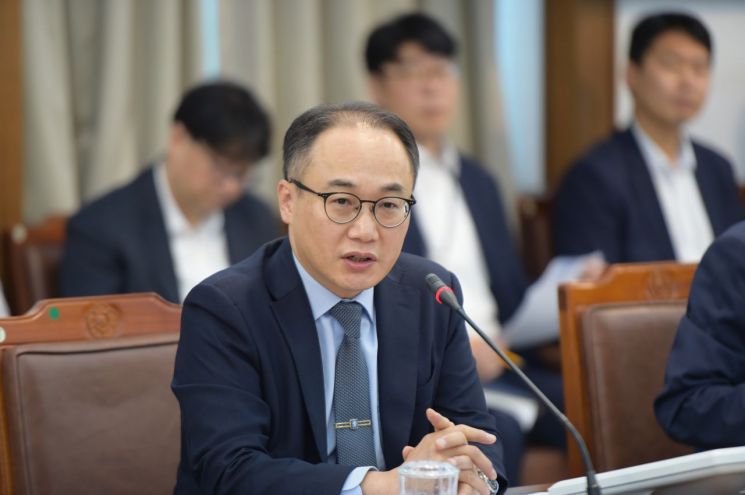
During the bill's passage, Prosecutor General Lee Won-seok and Financial Supervisory Service Governor Lee Bok-hyun also supported the amendment. On the 22nd, Prosecutor General Lee, the first ever to visit the Korea Exchange as the head of the prosecution, expressed a strong will for strict punishment against unfair trading acts such as stock price manipulation.
On the same day as the Legislation and Judiciary Committee plenary session, at the monthly meeting of the Supreme Prosecutors' Office, he emphasized, "The financial and securities crime investigation departments, the Financial Services Commission, the Financial Supervisory Service, and the Korea Exchange must work together to establish the perception that 'unfair trading leads to ruin,'" drawing attention.
Governor Lee Bok-hyun of the Financial Supervisory Service also told reporters after a 'Small Business Owners Meeting' commemorating the launch of Woori Card's Win-Win Finance at Good Neighbors in Yeongdeungpo-gu, Seoul, "We have prepared a revised bill in consultation with the Financial Services Commission and the Ministry of Justice, and have been making efforts to explain it to the committee members for several days," adding, "We expect it to pass the National Assembly."
Expectations are rising that the amendment to the Capital Markets Act, which only remains to be submitted to the plenary session, will serve as an opportunity to strengthen punishments for stock price manipulation. Professor Lee Jun-seo of Dongguk University's Department of Business Administration welcomed the amendment, saying, "It is significant in that the law now specifies the method for calculating unjust profits, enabling appropriate criminal punishment for unfair trading offenders."
© The Asia Business Daily(www.asiae.co.kr). All rights reserved.
![Clutching a Stolen Dior Bag, Saying "I Hate Being Poor but Real"... The Grotesque Con of a "Human Knockoff" [Slate]](https://cwcontent.asiae.co.kr/asiaresize/183/2026021902243444107_1771435474.jpg)

















