Research Team Led by Kim Eun-jun, Director of IBS Synapse Brain Disease Research Center
A path has been opened to treat epilepsy accompanied by autism with medication.
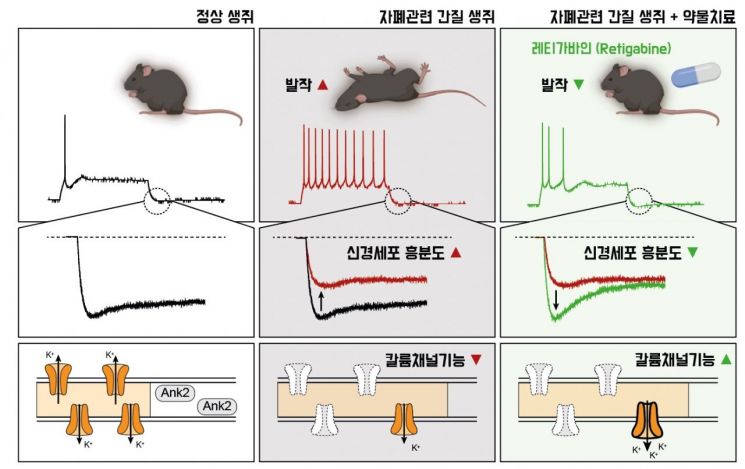
The Institute for Basic Science (IBS) announced on the 28th that the research team led by Eunjoon Kim, head of the Synapse Brain Disease Research Center, identified a new mechanism of epilepsy, which occurs at a high rate in autistic patients, and suggested the possibility of drug treatment based on this discovery.
Autism (Autism Spectrum Disorders) is a type of brain developmental disorder characterized by deficits in social interaction and communication, as well as repetitive behaviors. Its prevalence continues to increase worldwide, currently affecting about 2.8% of the global population, but the exact mechanisms of onset and treatment methods have not yet been fully elucidated.
Autism is accompanied by multiple symptoms, with about 30% of patients exhibiting epilepsy symptoms. Additionally, epilepsy patients have about an eightfold higher probability of being diagnosed with autism compared to the general population. This suggests the possibility that the two diseases share genetic mechanisms. In fact, autism and epilepsy share a significant portion of genetic variations. However, specific research related to this is limited.
The research team revealed how epilepsy develops in a mouse model with a deletion of the ‘ANK2’ gene, which is a risk gene for autism and has recently been identified as a risk gene for epilepsy. The researchers confirmed increased excitability of cerebral cortex neurons in ANK2-deficient mice. This was because the deletion of ANK2 altered the shape of the axon initial segment of cerebral cortex neurons, leading to a decrease in the amount and activity of potassium channels that regulate neuronal excitability. As a result, ANK2-deficient mice exhibited epileptic seizures, and notably, the mice experienced sudden death accompanied by seizures during adolescence.
Furthermore, based on this, the team enhanced potassium channel function in ANK2-deficient mice using ‘Retigabine,’ a type of epilepsy medication. As a result, neuronal excitability was restored to normal levels, and deaths accompanied by epileptic seizures were reduced. This suggests that activation of potassium channels may be effective in treating epilepsy caused by ANK2 deficiency.
Director Kim stated, “We revealed that mutations in the ANK2 gene increase neuronal excitability, causing autism-related epilepsy symptoms,” and added, “This is a meaningful study that elucidates the mechanism and treatment potential of autism-related epilepsy.”
The research results were published online on the 15th in the international journal Nature Communications (IF 17.69).
© The Asia Business Daily(www.asiae.co.kr). All rights reserved.
![Clutching a Stolen Dior Bag, Saying "I Hate Being Poor but Real"... The Grotesque Con of a "Human Knockoff" [Slate]](https://cwcontent.asiae.co.kr/asiaresize/183/2026021902243444107_1771435474.jpg)
















