The Japanese government has decided to restore South Korea to the "white list" (countries with preferential export screening) after about four years. This marks the end of the export regulation conflict between the two countries that had continued since the South Korean Supreme Court's forced labor compensation ruling.
On the 27th, the Japanese government approved a revision to add South Korea to the list of countries in Appendix 3 of the Export Trade Control Order (white list) at a cabinet meeting. This revision will be promulgated on the 30th and will take effect from the 21st of next month.
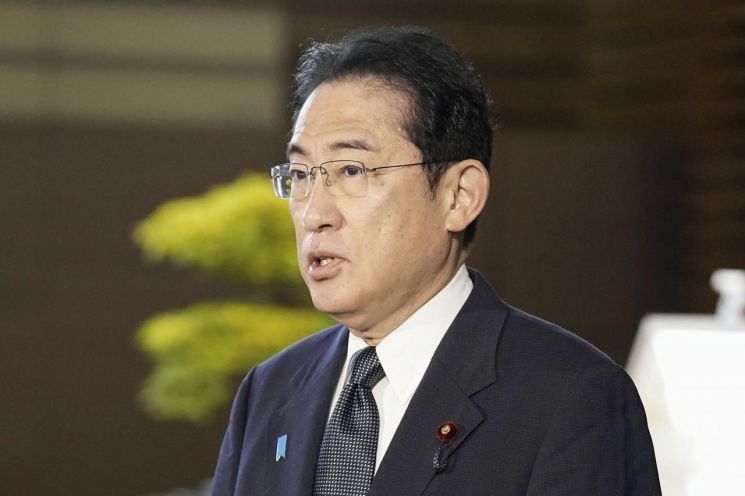
Yastoshi Nishimura, Japan's Minister of Economy, Trade and Industry, said at a press conference held after the cabinet meeting, "This decision was made after a strict verification of South Korea's export control system, institutions, operational status, and effectiveness." He added, "We also agreed on a follow-up framework to review the operation of the system and take appropriate measures if necessary," and said, "If inappropriate exports from South Korea to third countries are confirmed, the Japanese government will urge appropriate responses."
Earlier, the two countries issued a joint message on export regulation issues in March and engaged in export control policy talks from April 10 to 25. Subsequently, the South Korean government published a notice in the official gazette on April 24 to re-include Japan in the white list. Following South Korea's announcement, the Japanese government began the process of revising the ordinance to add South Korea to the white list.
With this measure, the Japanese government will be able to grant "general comprehensive licenses" to domestic companies exporting products or technology to South Korea. The general comprehensive license is a system that grants a comprehensive license every three years only to countries on the white list when exporting strategic materials that can be used for military purposes.
After being excluded from the white list, South Korea was subject to the "special general comprehensive license," which is one level lower than the general comprehensive license. This means that export licenses are granted every three years only for items with relatively low strategic sensitivity among strategic materials.
Additionally, the Japanese government withdrew export regulations on three key semiconductor materials in March in line with the Korea-Japan summit. In the same month, the South Korean government also withdrew the lawsuit it had filed with the World Trade Organization (WTO) regarding this issue. This effectively marks the end of the export regulation conflict that lasted for four years since 2019.
The dispute between the two countries was triggered when the South Korean Supreme Court issued a final ruling ordering Japanese defendant companies to compensate forced labor victims in 2018. In retaliation for the ruling, Japan imposed export regulations on three semiconductor materials in July 2019 and excluded South Korea from the white list the following month. South Korea also took countermeasures, including filing a complaint with the WTO against Japan.
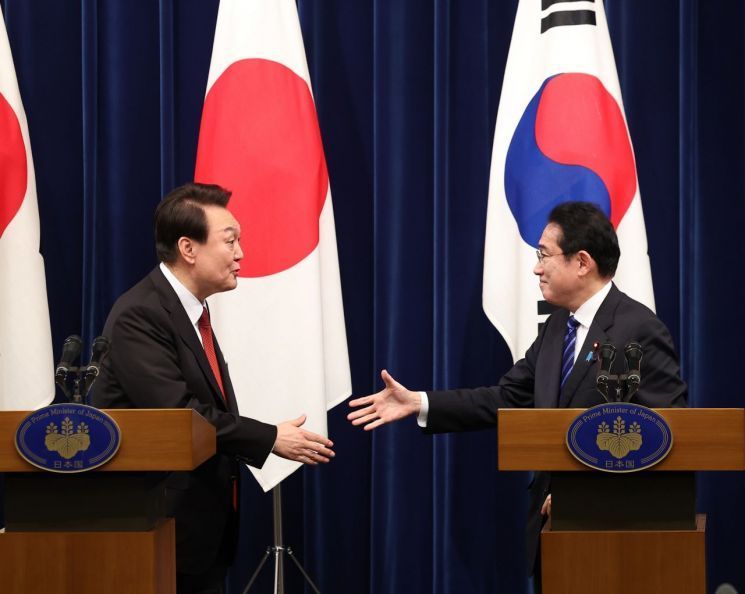
The dispute entered a resolution phase after the Korea-Japan summit in March, where the leaders of both countries agreed to resolve the export regulation conflict.
© The Asia Business Daily(www.asiae.co.kr). All rights reserved.
![Clutching a Stolen Dior Bag, Saying "I Hate Being Poor but Real"... The Grotesque Con of a "Human Knockoff" [Slate]](https://cwcontent.asiae.co.kr/asiaresize/183/2026021902243444107_1771435474.jpg)
















