Indonesia, the World's 4th Most Populous Country
Pharmaceutical Market Expected to Grow 10% Annually
Joint Ventures Required & 'Halal Certification'
Both an Obstacle and an Opportunity
Domestic pharmaceutical and bio companies are continuing their efforts to capture the Indonesian pharmaceutical market, the world's 4th most populous country. As the market is rapidly growing, they are actively seeking cooperation as a foundation for expanding into other Islamic countries.
 A bird's-eye view of the blood product plant that SK Plasma is promoting locally in Indonesia [Photo by SK Plasma]
According to industry sources on the 27th, SK Plasma and GC Green Cross are preparing to establish a blood product plant in Indonesia. SK Plasma has partnered with Daewoong Infion, a local joint venture of Daewoong Pharmaceutical in Indonesia. Construction began last month, with completion targeted for 2025. The facility will be capable of processing 1 million liters of raw plasma annually. GC Green Cross also received final approval for the related business license from the Indonesian Ministry of Health on the 1st and signed a memorandum of understanding with the Indonesian Red Cross and local pharmaceutical company Triman on the 14th.
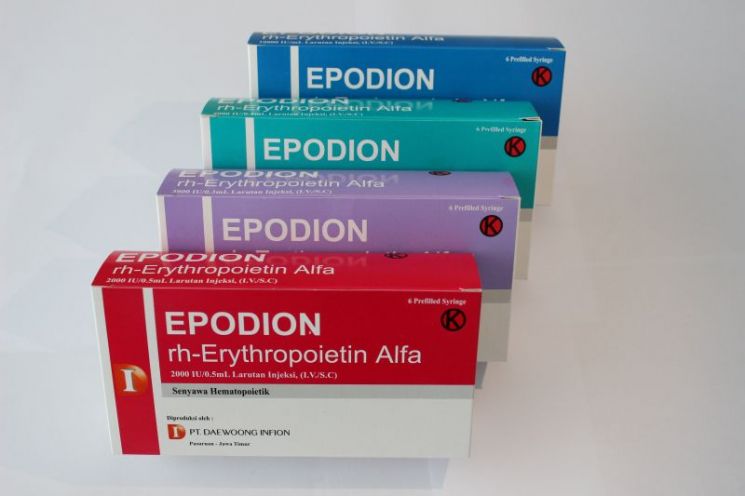
In addition to blood product companies, various domestic pharmaceutical and bio companies are continuing to enter the Indonesian market. Daewoong Pharmaceutical was the first to open the way. In 2012, Daewoong Pharmaceutical established the joint venture Daewoong Infion with local pharmaceutical company Infion. They built a pharmaceutical factory in the Surabaya area producing anemia treatment drug (EPO) 'Epodion' and others. Additionally, Chong Kun Dang launched the joint venture CKD-OTTO with OTTO in 2015 to produce anticancer drugs and immunosuppressants, and Dong-A ST completed the 'Compiva Dong-A Indonesia' plant in 2018 through a joint venture with Compiva to produce anemia treatment drug 'Eporon' and neutropenia treatment drug 'Leukostim'.
The reason they are entering Indonesia is that although the hurdles are somewhat high, once overcome, it is an opportunity market with high growth potential. Indonesia has a population of approximately 279.48 million, ranking as the world's 4th most populous country after China, India, and the United States. Riding on this, the pharmaceutical market is rapidly growing. According to the U.S.-based credit rating agency Fitch Ratings, Indonesia's pharmaceutical sales are expected to grow from 110.6 trillion rupiah (about 9.6 trillion KRW) in 2020 at an average annual growth rate of about 10%, reaching 176.3 trillion rupiah (about 16.3 trillion KRW) by 2025.
On the other hand, since 90% of pharmaceutical raw materials are imported, there is a steady call for self-reliance within Indonesia. Accordingly, the Indonesian Ministry of Health has been implementing a 10-year plan since 2016 to foster the pharmaceutical and medical device industries with a focus on internalizing pharmaceutical production. In particular, blood products are 100% dependent on imports, so the Indonesian government is putting great effort into establishing domestic blood product plants.
Halal Certification and Local Joint Ventures... Both Challenges and Opportunities
Notably, all of these companies have chosen joint ventures with local pharmaceutical companies rather than entering alone. This is a strategy aligned with local regulations. To distribute and sell pharmaceuticals within Indonesia, cooperation with a local company equipped with production facilities is required, and within five years of entry, the related pharmaceutical technology must be transferred to enable local manufacturing.
An industry insider said, "This approach requires finding a partner, and if the search for a proper partner fails, entry can be difficult," but added, "On the other hand, if a successful joint venture is achieved, initial investment costs can be significantly reduced, and the market can be expanded rapidly, so the benefits are substantial."
Another obstacle is 'Halal' certification. Halal refers to products made according to Islamic law, from raw materials to processes and final products. Animal-derived ingredients such as pork, alcohol content, and animal testing are all excluded. Although Indonesia does not designate Islam as the state religion, 87% of its population are Muslims, making it the world's largest Muslim country. Accordingly, the Indonesian government announced a policy to introduce Halal certification for pharmaceuticals after a five-year grace period starting in October 2021.
However, Indonesia's Halal certification body, MUI, is considered one of the world's top three Halal certification organizations alongside Malaysia's JAKIM and Singapore's MUIS, making Indonesian Halal certification a gateway to entering the broader Muslim market of approximately 1.6 billion people.
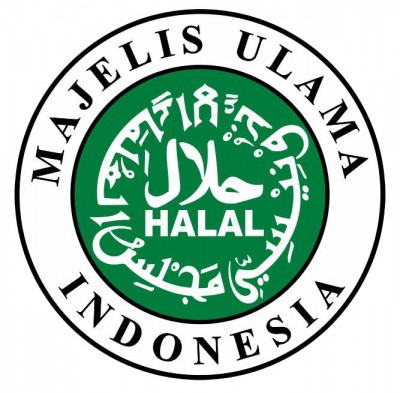
In fact, Daewoong Infion's Epodion became the world's first animal cell-derived biopharmaceutical to receive Halal certification from MUI in 2020. Unlike synthetic drugs, which are easier to certify because their raw materials are synthetic chemicals, biopharmaceuticals require certification for cells, enzymes, DNA, and more, making the process complex, yet they succeeded. Daewoong Infion plans to leverage this to target the Middle Eastern EPO market, estimated at about 300 billion KRW.
The government is also actively supporting local market entry. The Korean Ministry of Food and Drug Safety announced on the 26th that it will visit Indonesia from the 25th to the 29th to hold a director-level bilateral cooperation meeting with the Indonesian Food and Drug Authority to strengthen cooperation in plasma fraction quality management and support the export of Korean biopharmaceuticals to Indonesia. Through this, they plan to discuss cooperation related to the ongoing blood product plant project and visit local biopharmaceutical manufacturing plants to listen to regulatory challenges and seek solutions.
© The Asia Business Daily(www.asiae.co.kr). All rights reserved.



















