Tunnel Excavation Equipment Removal This Morning
Facility Inspection Before Discharge Starts from the 28th
The construction of the underwater tunnel for the discharge of contaminated water from the Fukushima Daiichi Nuclear Power Plant has been completed. Once the final task of covering the discharge outlet is finished, equipment inspections before the release will begin on the 28th. Since the Japanese government aims to release the contaminated water this summer, the countdown to the actual discharge has effectively begun.
On the 26th, public broadcaster NHK and local private broadcaster Fukushima Chuou TV reported that at 9:30 a.m., Tokyo Electric Power Company (TEPCO) dismantled the heavy machinery used in the construction of the Fukushima contaminated water tunnel.
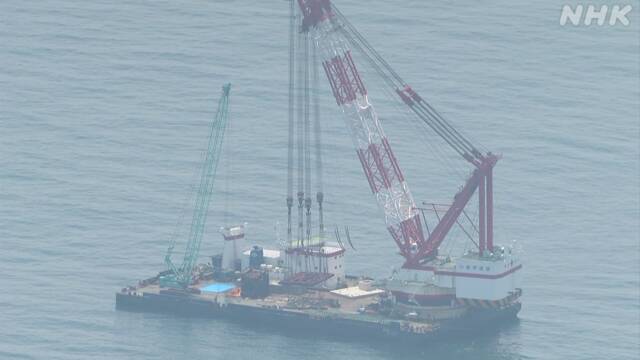
The heavy machinery, called a "shield machine," was used to bore the underwater tunnel through which the contaminated water will be discharged into the ocean. TEPCO plans to send the contaminated water purified by the Advanced Liquid Processing System (ALPS) through the approximately 1 km long underwater tunnel for release into the sea.
TEPCO had planned to lift the heavy machinery the previous day but halted the operation due to high waves and resumed it at 7 a.m. on the same day. Divers first entered the water to detach the connection between the tunnel discharge section and the excavator. Then, using a ship equipped with a large crane, they began lifting the equipment and completed the dismantling by pulling it from underwater onto the ship at 9:30 a.m.
TEPCO plans to install a cover on the contaminated water discharge outlet at the end of the tunnel to prevent sediment accumulation. Once the cover installation is complete, the construction of the contaminated water discharge facilities, which began in August last year, will be finished.
With the Japanese government announcing the discharge timing as this summer, the Fukushima Daiichi Nuclear Power Plant began trial operation of the discharge facilities on the 12th. From the 28th, the Nuclear Regulation Authority of Japan will conduct pre-discharge inspections to verify the overall performance of the facilities.
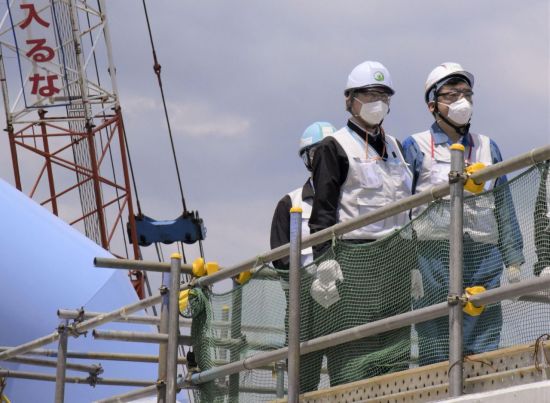
Earlier, on the 24th, Shinsuke Yamanaka, chairman of the Nuclear Regulation Authority, inspected the trial operation. After the inspection, Chairman Yamanaka told reporters, "We plan to focus on confirming whether the equipment operates normally and whether the function to block water flow in case of abnormalities works properly." He added, "The inspection completion date has not been set, but once this inspection is passed, preparations for the contaminated water discharge facilities will be complete."
The Japanese government plans to proceed with the discharge based on the final report from the International Atomic Energy Agency (IAEA), which will assess whether there are any significant issues with the release after the performance inspection. The IAEA is not expected to strongly oppose the discharge of the contaminated water.
© The Asia Business Daily(www.asiae.co.kr). All rights reserved.
![Clutching a Stolen Dior Bag, Saying "I Hate Being Poor but Real"... The Grotesque Con of a "Human Knockoff" [Slate]](https://cwcontent.asiae.co.kr/asiaresize/183/2026021902243444107_1771435474.jpg)
















