A (36), who was involved in a lease dispute lawsuit over a villa in Jongno-gu, Seoul, discovered a new fact around June 2021 while the second trial was ongoing. It turned out that C, who had assisted with the disputed housing lease contract, was not a licensed real estate agent but a brokerage assistant.
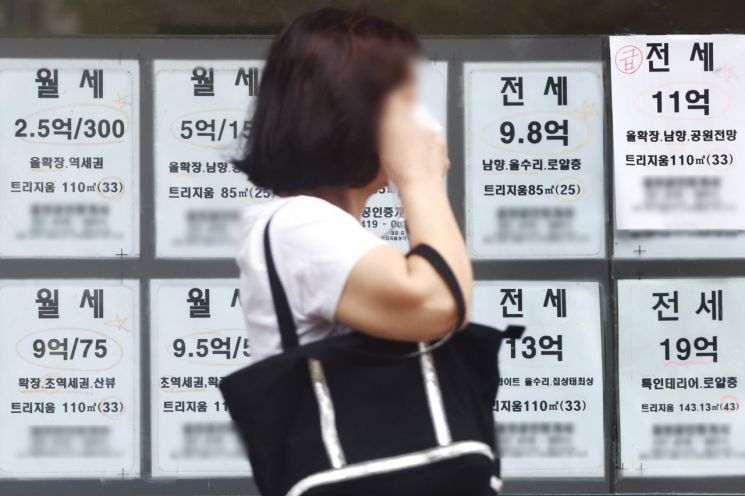
A had been engaged in a civil lawsuit for two years starting from May 2020 with B, who intended to live in A’s villa under a jeonse (long-term deposit lease) contract. Initially, A and B agreed to split the jeonse deposit into a down payment and a balance without any interim payments. However, just before the balance payment date, B requested A to allow an interim payment first and delay the balance payment due to personal circumstances, which caused conflict. A insisted on receiving the balance as scheduled, while B argued that A was not honoring a special clause in the lease contract that allowed mutual agreement to adjust the balance payment date, eventually leading to a court case.
C testified as a witness in the first trial between the two parties. Until then, A was unaware that C was a brokerage assistant. At the time the lease contract was being negotiated, C had introduced himself as a director of a real estate brokerage firm, leading A to naturally assume he was a licensed real estate agent. The case proceeded through the first and second trials and even reached the Supreme Court’s final appeal, where A ultimately lost. C’s testimony was decisive. The 11th Civil Division of the Western District Court (Chief Judge Ham Seok-cheon), which presided over the first trial, ruled based on C’s testimony without knowing he was a brokerage assistant. The judge was effectively misled. The lawyers also treated C as a licensed real estate agent during the trial.
According to the transcript of the first trial at the Western District Court obtained by this publication, when B’s lawyer referred to C as a “real estate agent” and asked questions, C answered “yes” to all. For example, when asked, “Since the witness was a (real estate) agent, both A and B conveyed their intentions through the witness, right?” C replied, “Yes.” When A’s lawyer asked, “Since when have you worked as a licensed real estate agent?” C casually answered, “About 10 years since 2008 at the current real estate office.” The judge, observing this, also treated C as a real estate agent and inquired about the contract situation toward the end of the trial.
If a brokerage assistant had mediated the contract, it would have been an illegal act, and the court should have examined whether the contract itself could be valid. However, the court overlooked this fact and failed to deliver a proper judgment. A filed a complaint against C at Jongno Police Station for fraud, coercion, and perjury. After investigation, the police forwarded the case to the Western District Prosecutors’ Office with a recommendation for no charges, and the prosecutors also decided not to prosecute. A appealed to the Seoul High Prosecutors’ Office, requesting a reinvestigation, but this was also dismissed. On the 12th, A filed a petition for reconsideration with the court, seeking a retrial regarding the prosecution’s investigation and is currently awaiting the outcome.
Since the nationwide surge of jeonse fraud in February, illegal acts by some brokerage assistants have been identified as a cause of accidents. Statistics from the Korea Association of Licensed Real Estate Agents show that the accident rate caused by brokerage assistants among real estate brokerage accidents has steadily increased: 57.1% in 2018, 62.7% in 2019, and 67.4% in 2020, fueling public outrage. This trend has extended into the legal community. There has been an increase in lawsuits filed over brokerage assistants directly or indirectly handling real estate contracts. Punishments for brokerage assistants who violate the law have mostly been limited to fines, prompting calls for reconsideration of penalty severity. In August last year, the Daegu District Court fined a brokerage assistant 4 million won for directly mediating a lease contract and receiving commissions without a licensed real estate agent qualification.
Brokerage assistants are usually office workers at real estate agencies. Unlike licensed real estate agents who must obtain official certification, anyone can become a brokerage assistant by paying a 40,000 won training fee and completing a mandatory 4-hour education course. Their duties are limited to site guidance and general office work not directly related to brokerage activities. In November 2019, the Constitutional Court rejected a constitutional review petition challenging the clause in the Licensed Real Estate Agents Act that prohibits brokerage assistants from directly dealing with clients or representing both parties in transactions, ruling that the clause does not infringe on the freedom of professional practice of real estate brokerage firms.
The government and the National Assembly are considering or have proposed various measures to restrict brokerage assistants’ duties and prevent accidents, drawing attention to whether these issues can be resolved. The Ministry of Land, Infrastructure and Transport is reportedly considering requiring real estate agents and brokerage assistants to wear name tags to distinguish between the two on-site, addressing concerns about difficulty in differentiation. A revision to the Licensed Real Estate Agents Act mandating disclosure of brokerage assistants and limiting the number of assistants hired to no more than five times the combined number of licensed real estate agents and affiliated agents passed the National Assembly in March and is scheduled to take effect on October 19.
© The Asia Business Daily(www.asiae.co.kr). All rights reserved.
![Clutching a Stolen Dior Bag, Saying "I Hate Being Poor but Real"... The Grotesque Con of a "Human Knockoff" [Slate]](https://cwcontent.asiae.co.kr/asiaresize/183/2026021902243444107_1771435474.jpg)
















