Kawasaki-si Gariwa Nuclear Plant Restart Issue
Resident Distrust Grows Amid Repeated Safety Concerns
In Japan, where nuclear power plants are being restarted amid a power shortage, local residents' distrust of Tokyo Electric Power Company (TEPCO), the company responsible for the Fukushima nuclear accident, is growing, causing difficulties in the restart process. Not only residents but also various local governments have opposed TEPCO, the main party responsible for the Fukushima Daiichi nuclear accident, taking charge of nuclear plant operations due to safety concerns. Especially, the Japanese government's concern is deepening as resolving the power shortage in the Tokyo metropolitan area becomes urgent.
On the 23rd, Nihon Keizai Shimbun (Nikkei) and public broadcaster NHK reported that the Nuclear Regulation Authority of Japan decided the previous day to re-examine whether TEPCO is suitable as the operator of the Kashiwazaki-Kariwa nuclear power plant in Niigata Prefecture, which is related to the plant's restart. This plant had been shut down since 2007 due to earthquake damage.
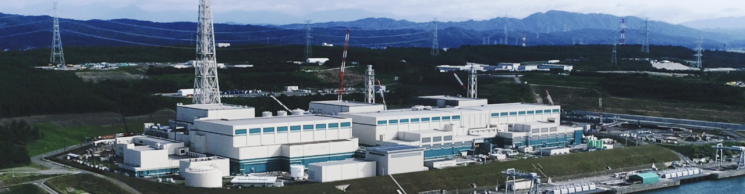 Kashiwazaki-Kariwa Nuclear Power Plant overview. (Photo by Kashiwazaki-Kariwa Nuclear Power Plant official website)
Mainichi Shimbun reported, "The Regulatory Authority recognized TEPCO as suitable for restarting Units 6 and 7 of the Kariwa nuclear power plant in 2017 and approved the review," adding, "It is unusual for the Regulatory Authority to declare a re-examination of a decision already made."
This plant had been preparing for restart since 2017, undergoing Regulatory Authority reviews, with plans to operate after this summer. However, the Regulatory Authority completely reversed its judgment. The Authority announced it would review TEPCO's eligibility as the operator, given its involvement in the Fukushima Daiichi nuclear accident.
Particularly, the Regulatory Authority focused on safety issues in plant operations. In 2021, there was a security breach when a plant employee entered the central control room without authorization, and last month's inspection revealed ongoing deficiencies such as alarm malfunctions and inadequate monitoring during severe weather. Consequently, the Authority rated the countermeasures at the worst level, "red," out of four levels.
Residents' distrust of TEPCO has further increased. Moreover, in the same month, a TEPCO employee lost documents related to nuclear safety construction by placing them on the exterior of a car and driving off, prompting the mayor of Kashiwazaki and others to officially state that TEPCO cannot be trusted. There are even demands that "a nuclear operator other than TEPCO should take charge of the plant." Since the consent of the local government where the plant is located is essential for restarting, the restart seems unlikely.
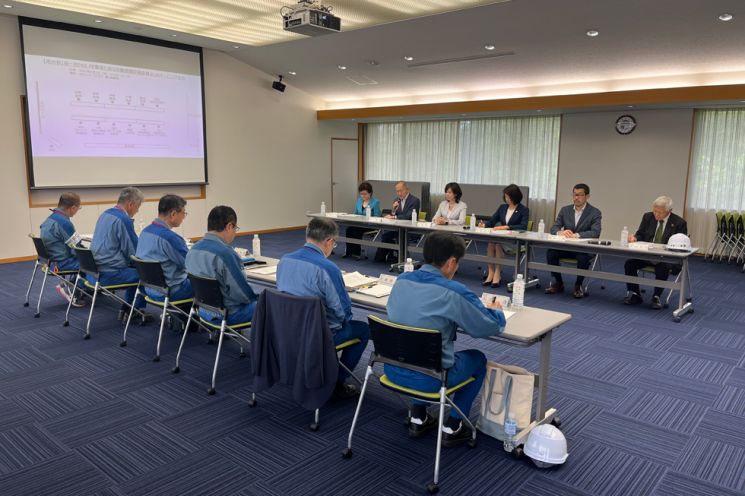 Officials are holding a meeting at the Kashiwazaki Kariwa Nuclear Power Plant. (Photo by Kariwa Nuclear Power Plant website)
Due to this issue, TEPCO is expected to face widespread criticism not only from Kawasaki City but also from the broader regions it supplies with electricity. Previously, TEPCO decided to raise electricity rates by 14% starting this month, assuming the plant could be restarted in October. However, with the restart timing now unpredictable, expectations for improved performance have diminished.
Nikkei reported, "Except for Tohoku Electric Power's Ogawa Unit 2 in Miyagi Prefecture scheduled for restart in February next year, no other nuclear restarts are planned," adding, "There are concerns that the Tokyo metropolitan area will face power supply difficulties not only this summer but also in winter."
© The Asia Business Daily(www.asiae.co.kr). All rights reserved.
![Clutching a Stolen Dior Bag, Saying "I Hate Being Poor but Real"... The Grotesque Con of a "Human Knockoff" [Slate]](https://cwcontent.asiae.co.kr/asiaresize/183/2026021902243444107_1771435474.jpg)
















