
This month, the government’s decision to open health and medical big data related to cancer and bio for 2 million people is drawing attention from academia and the healthcare industry. It is expected to be utilized for research on new treatments and the development of digital healthcare industry services.
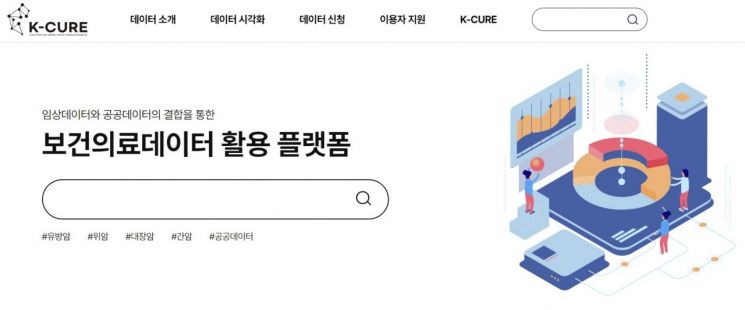
The big data to be released by the government initially consists of information on 1.98 million registered cancer patients. It will be opened through the 'K-CURE' cancer public library, built in collaboration with the Ministry of Health and Welfare, the National Cancer Center, and the Korea Health Information Service. This data combines death information from Statistics Korea, cancer registration data from the Central Cancer Registry, qualification and screening information from the National Health Insurance Service, and medical usage claim information from the Health Insurance Review & Assessment Service.
Specifically, it includes seven types of cancer registration data from the Central Cancer Registry, 448 types of data such as insurance premiums, health checkups, and cancer screenings (breast, colorectal, liver, stomach, cervical cancer) from the National Health Insurance Service, 67 types of claim details including general statements, treatment details, and diagnosis details from the Health Insurance Review & Assessment Service, and three types of death data from Statistics Korea. This data is pseudonymized to prevent identification of specific individuals before being provided. Researchers who need the data can apply through the K-CURE portal. When applying, they must submit an IRB (Institutional Review Board) approval notice, research plan, data usage application, and research project summary.
Additionally, research resources collected through the national bio big data pilot project for 25,000 people will be fully opened. Specifically, this includes a rare disease patient database (DB) of 14,900 newly collected during the pilot project period and clinical and genomic data DB of 9,700 people donated through existing government-supported projects. This includes clinical epidemiological information such as gender, age, and rare disease classification, as well as genetic information and human-derived materials such as serum and plasma. Researchers wishing to receive this data must apply for research resource provision through the National Institute of Health’s National Central Human Resources Bank and receive it after review.
This provision of big data is expected to accelerate research activities in academia and related industries. South Korea has accumulated world-class health and medical data through the National Health Insurance system. According to the National Health Insurance Service, the general health checkup rate of Koreans was 70.0% and the cancer screening rate was 58.2% as of last year. However, due to the sensitive nature of health-related data as personal information, its practical use in research has been limited, which has been pointed out as a limitation. A healthcare industry official said, "The more data is released, the more research and service development using it can be ignited," adding, "Especially startups and ventures interested in new markets will have great opportunities to utilize it."
The government is also accelerating the opening of medical data. In the 'Advanced Industry Global Cluster' promotion plan announced on the 1st of this month, the government stated it will build a 'National Integrated Bio Big Data' containing clinical and genomic information for 1 million people and personal health information. The government’s plan is to significantly open data to medical institutions and companies to lead to research and innovative product and service development tailored to Korean characteristics.
© The Asia Business Daily(www.asiae.co.kr). All rights reserved.


















