KAIST Research Team
Oral Chitosan-Bilirubin Nanoparticles
Inhibit Inflammation-Inducing Macrophage Activity
Confirmed Excellent Intestinal Inflammation Treatment Effect
A new therapeutic agent more effective for chronic enteritis, which modern people frequently suffer from, has been developed.
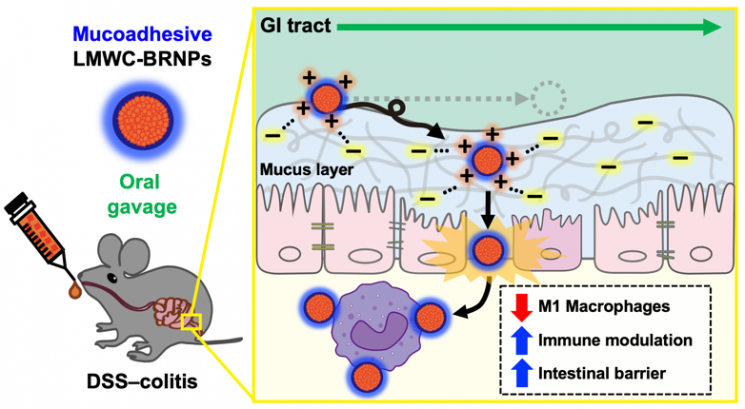
KAIST announced on the 21st that a joint research team led by Professors Sang-Yong Jeon and Byung-Kwan Cho from the Department of Biological Sciences developed chitosan-bilirubin (Bilirubin) nanoparticles that can target excessively activated macrophages in inflammatory intestines upon oral administration.
Recently, the number of patients with inflammatory bowel disease, which causes chronic inflammation in the intestines due to westernized diets, genetics, and various environmental factors, has been steadily increasing in South Korea. However, the development of effective treatments remains insufficient.
Bilirubin is a substance produced when hemoglobin breaks down and has a strong scavenging effect against reactive oxygen species generated during inflammation, resulting in excellent anti-inflammatory effects. Therefore, attempts to develop drugs based on bilirubin have continued. However, its hydrophobicity makes direct clinical application difficult.
The research team succeeded in synthesizing chitosan-bilirubin nanoparticles (LMWC-BRNPs) by combining bilirubin with low molecular weight water-soluble chitosan (LMWC), which possesses both mucosal adhesion and water solubility, enabling delivery in the body, especially via oral administration. Notably, the chitosan-bilirubin nanoparticles showed superior intestinal function normalization effects compared to 5-aminosalicylic acid (5-ASA), a non-steroidal anti-inflammatory drug (NSAID) currently used for treating inflammatory bowel disease. Upon oral administration, they exhibited strong mucosal adhesion due to electrostatic interaction with the mucosal layer, allowing absorption into the intestinal barrier, outperforming existing oral treatments. Additionally, they were absorbed by inflammatory macrophages, inhibiting their activity and reducing the secretion of pro-inflammatory cytokines and reactive oxygen species (ROS), which are major inflammatory factors in inflammatory bowel disease. By regulating the ratio of immune regulatory T cells to inflammatory Th17 cells, they demonstrated efficacy in restoring disrupted intestinal immune homeostasis.
Through animal experiments, the research team also confirmed that chitosan-bilirubin nanoparticles prevented changes in the intestinal microbial pattern caused by inflammation, suppressed the proliferation of Turicibacter, an inflammatory bacterium, and maintained the numbers of three key probiotics: Sutterella, Oscillospira, and Lactobacillus. This suggests the potential for development as an excellent nanomedicine that surpasses existing treatments that merely inhibit inflammation.
The results of this study were published online on the 25th of last month in ‘ACS Nano,’ a prestigious journal in the field of nano-material engineering.
© The Asia Business Daily(www.asiae.co.kr). All rights reserved.
![Clutching a Stolen Dior Bag, Saying "I Hate Being Poor but Real"... The Grotesque Con of a "Human Knockoff" [Slate]](https://cwcontent.asiae.co.kr/asiaresize/183/2026021902243444107_1771435474.jpg)















