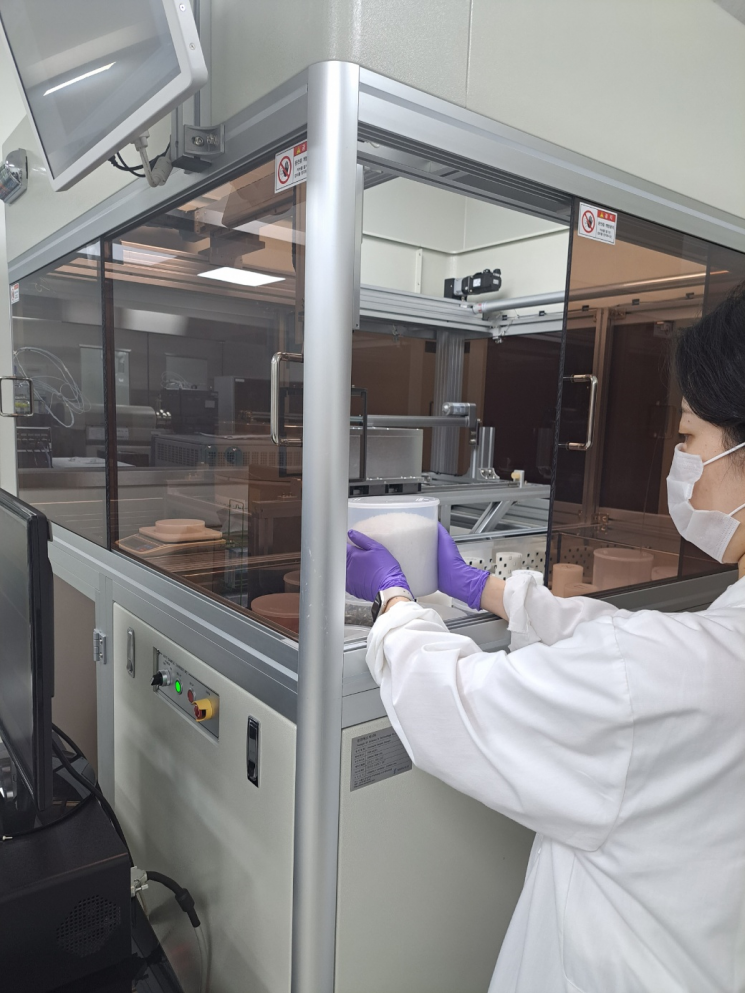
 The Gyeonggi-do Institute of Health and Environment is conducting radiation exposure tests on salt distributed in the market.
Amid growing concerns such as salt hoarding ahead of the discharge of contaminated water from the Fukushima nuclear power plant in Japan, the radiation exposure levels of sea salt distributed in the market have been found to be safe.
The Gyeonggi-do Institute of Health and Environment announced on the 21st that all sea salt distributed within the province met the standards after conducting radioactive material tests.
From the 1st to the 14th of this month, the institute conducted detailed tests for radioactive contamination indicators, iodine (I-131) and cesium (Cs-134, Cs-137), on 24 samples of domestically produced sea salt (including those produced in the province) sold at large retail stores, local food markets, and online within the province. The results showed that none of the 24 samples detected even trace amounts of iodine or cesium (standard limit 100 Bq/kg).
Detailed test results can be found on the websites of the Gyeonggi-do Institute of Health and Environment and the Gyeonggi Provincial Government.
Park Yong-bae, director of the Gyeonggi-do Institute of Health and Environment, stated, "The institute plans to continuously monitor food products distributed within the province to alleviate residents' concerns."
© The Asia Business Daily(www.asiae.co.kr). All rights reserved.
![Clutching a Stolen Dior Bag, Saying "I Hate Being Poor but Real"... The Grotesque Con of a "Human Knockoff" [Slate]](https://cwcontent.asiae.co.kr/asiaresize/183/2026021902243444107_1771435474.jpg)















