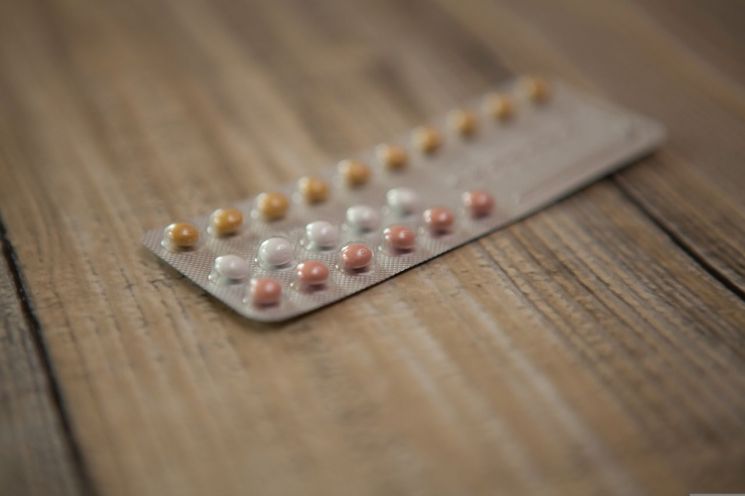
A study has found that taking contraceptive pills to prevent pregnancy can significantly increase the risk of depression. In particular, women who started taking contraceptive pills from their teenage years had a 130% higher incidence of depression.
A research team from Uppsala University in Sweden analyzed data from the UK Biobank, studying over 250,000 women from birth to menopause.
According to a paper published in the journal Epidemiology and Psychiatric Sciences, led by Professor Therese Johansson, the team investigated whether women used contraceptive pills, the timing of their first depression diagnosis, and when they began experiencing depressive symptoms even if they had not received an official diagnosis.
The contraceptive pills taken by the subjects contained both female hormones estrogen and progesterone, classified as 'combined contraceptive pills.'
The researchers confirmed that during the first year of oral contraceptive use, the incidence of depression was higher compared to those who had never used oral contraceptives.
Although the risk was not distinct after the first year, taking combined oral contraceptives at any point in life was still associated with an increased lifetime risk of depression in women.

Women who started taking contraceptive pills as adults had a 92% higher risk of experiencing depression, while those who began in their teenage years had a 130% higher incidence of depression.
The exact reason why contraceptive pills increase the risk of depression has not been clearly proven. However, experts speculate that changes in female hormone secretion affect brain regions responsible for emotional processing and cognitive functions.
Professor Johansson stated, "While contraceptive pills provide several benefits to women, such as preventing pregnancy and reducing the risk of ovarian and uterine cancers, it is important to be fully aware of the side effects. Doctors and patients should consider these potential risks when contemplating oral contraceptives and conduct personalized risk-benefit assessments."
The research team noted that since this study focused on combined contraceptives, conclusions cannot be drawn about other contraceptive options such as contraceptive patches or implants. They added that future research will explore various formulations and administration methods.
Meanwhile, a 2019 study from Columbia University in the United States also found that women who took oral contraceptives during their teenage puberty were three times more likely to experience depression as adults.
Even after discontinuing oral contraceptives, the risk of depression remained high. This result persisted after accounting for other variables such as age at menarche, age at first sexual experience, and current oral contraceptive use.
© The Asia Business Daily(www.asiae.co.kr). All rights reserved.
![Clutching a Stolen Dior Bag, Saying "I Hate Being Poor but Real"... The Grotesque Con of a "Human Knockoff" [Slate]](https://cwcontent.asiae.co.kr/asiaresize/183/2026021902243444107_1771435474.jpg)
















