Korea Exchange Expands Criteria for Selecting Stocks Suspected of Price Manipulation
Difficult to Detect New Types of Price Manipulation Like 'Gradual Long-Term Rise'
"Types That Rise Gradually Over Long Periods Regardless of Performance Should Also Be Reflected"
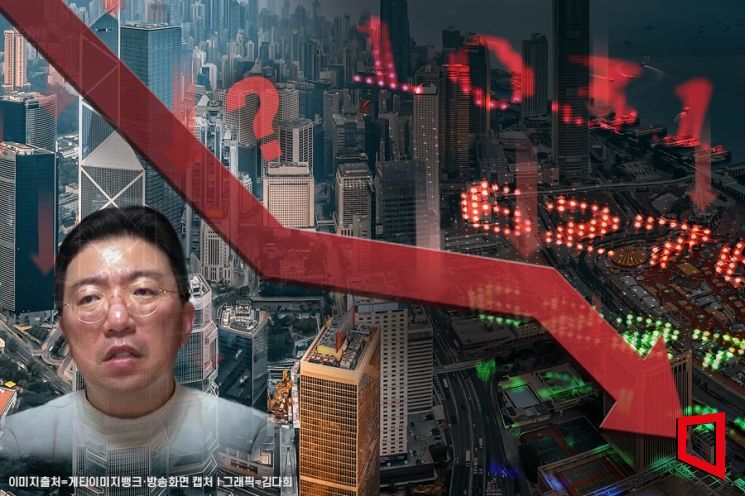
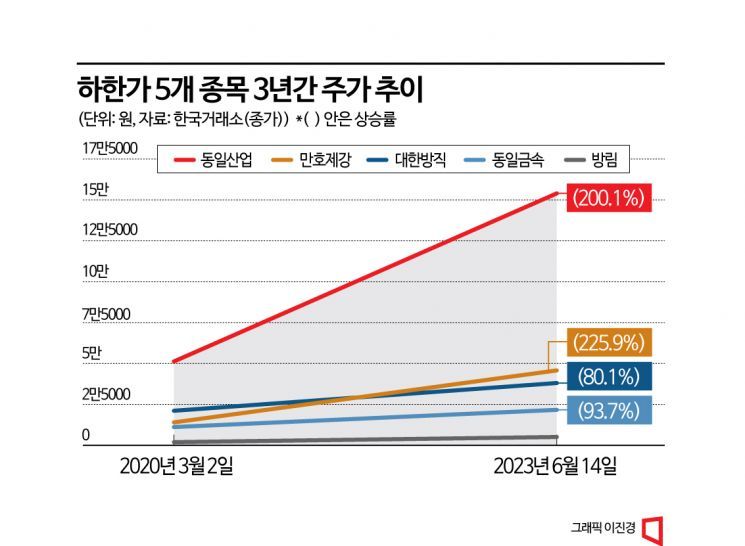
On the 14th, five listed companies?Dongil Industry, Dongil Metal, Manho Steel, Daehan Textile, and Banglim?suspected of stock price manipulation, all mysteriously hit their daily limit down. The fact that these five stocks, which have no commonalities, simultaneously hit the limit down and that their prices had steadily risen over a long period drew comparisons to the eight stocks involved in the 'Ra Deok-yeon Gate.'
As the prosecution continues its investigation into Ra Deok-yeon and his associates, financial authorities hastily announced countermeasures. In particular, they declared plans to extend the monitoring period for detecting unfair trading from a short term to a long term (over one year). However, a similar incident occurred again just two months later, before these measures could be properly implemented. There are concerns that the current market surveillance system has limitations in detecting and eradicating new types of unfair trading that gradually raise stock prices over a long period without any positive news.
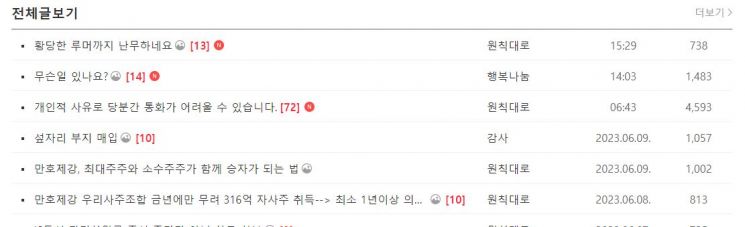 A stock investment cafe on a portal operated by Director Kang Mo, who is suspected of being involved in the incident of five stocks hitting the lower price limit.
According to the Korea Exchange on the 15th, five stocks?Banglim, Dongil Industry, Manho Steel, Daehan Textile from the KOSPI, and Dongil Metal from the KOSDAQ?hit their daily limit down at similar times the previous day. Despite no clear positive developments or earnings improvements over the past three years, these stocks’ prices steadily increased. Unlike the Ra Deok-yeon stock price crash incident, there was no common selling window, suggesting that this was not a price manipulation exploiting loopholes in Contracts for Difference (CFD). This time, sell orders poured out through various channels including KB Securities, Kiwoom Securities, and Shinhan Investment Corp.
In the securities industry, rumors are circulating that a Naver stock investment cafe that recommended these stocks is involved. The cafe operator, Kang Mo, claimed in interviews with several media outlets that the price increase was due to gathering friendly shares for activist purposes. However, Kang Mo was previously found guilty by the Supreme Court in December last year for conducting about 10,000 instances of price manipulation from February 2014 to August 2015, targeting KOSPI-listed companies Jogwang Leather, Samyang Trading, IS Dongseo, and Daehan Textile, receiving a sentence of two years imprisonment with four years probation and a fine of 400 million won.
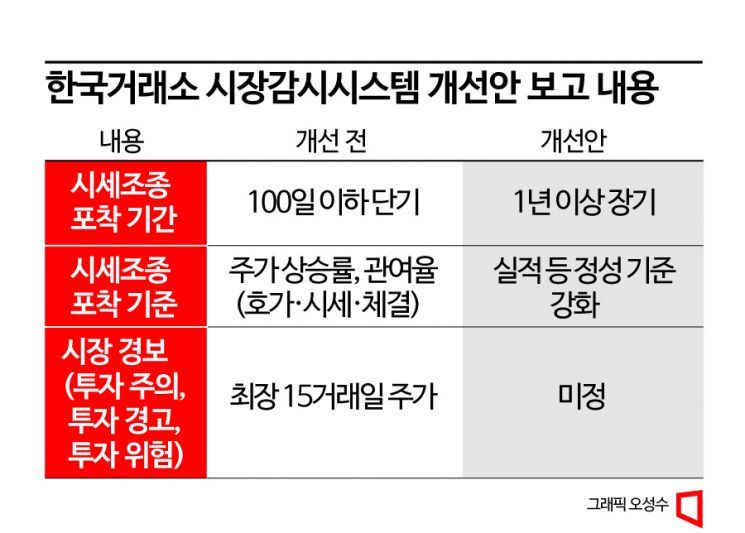
The Korea Exchange suspended trading of the five stocks hitting the limit down from the 15th until further notice and requested disclosure inquiries. Dongil Metal, Banglim, and Manho Steel were designated as investment caution stocks (due to concentrated trading in a few accounts). This action is based on Article 12 of the Korea Exchange Market Surveillance Regulations titled “Measures Related to Market Surveillance.” According to Article 12, if it is deemed necessary to protect investors due to sudden changes in trading conditions or rumors during market surveillance, the exchange may request verification of facts related to sudden trading changes, suspend trading, or change the method of contract execution.
The Korea Exchange’s swift announcement of trading suspension on the day of the mass limit down is part of the market surveillance system reform discussed with financial authorities last month. At that time, the Korea Exchange reported to financial authorities that it would expand the criteria for selecting suspicious stocks from short-term (under 100 days) to long-term (over one year) to respond to unfair trading involving long-term price manipulation. They also planned to enhance the system to detect if similar patterns from different individual accounts indicate the same group.
Monitoring suspicious stocks for price manipulation over a long period is not a legal amendment but can be immediately applied through internal regulations. In fact, monitoring of unfair trading such as collusive trading has been strengthened compared to before. For example, an investor involved in shareholder activism sold 10,000 shares of stock A in the over-the-counter market (KOTC). A few days later, another person bought 10,000 shares, and when the activist investor bought an additional 10,000 shares, a popup warning about unfair trading appeared.
However, there are concerns that it is practically difficult to detect unfair trading in advance as it evolves in completely new ways. The Korea Exchange Market Surveillance Committee conducts audits on stocks that stand out in trading volume and other data under qualitative criteria such as earnings. The Ra Deok-yeon Gate was a special case initiated thanks to a tip-off. For cases like the five stocks hitting the limit down, whose prices gradually rose over more than three years, it is difficult to detect abnormal signals in the data.
A financial investment industry insider said, “There is no talk of monitoring battery stocks that surged sharply in a short period, but voices calling for monitoring or strengthening sanctions on stocks whose prices gradually rose over a long period are growing, which is an ironic situation,” adding, “Even value investment institutions or individual investors who comply with the law and invest long-term could suffer disadvantages.”
There are also strong calls to precisely set the criteria and scope for selecting stocks suspected of price manipulation. Hwang Se-woon, senior researcher at the Korea Capital Market Institute, said, “It is difficult to warn simply based on stocks rising three to five times the KOSPI increase,” and added, “Recently, stocks suspected of price manipulation have characteristics of value stocks, so the best approach is to strengthen the pre-warning system to reflect types where prices gradually rise over a long period regardless of earnings.”
© The Asia Business Daily(www.asiae.co.kr). All rights reserved.
![Clutching a Stolen Dior Bag, Saying "I Hate Being Poor but Real"... The Grotesque Con of a "Human Knockoff" [Slate]](https://cwcontent.asiae.co.kr/asiaresize/183/2026021902243444107_1771435474.jpg)

















