The Seoul Metropolitan Government announced on the 15th that it has finalized the rapid integrated planning proposal for the redevelopment of the Sillim-dong 675 area. Although this area had long been neglected in terms of development, the new rapid integrated planning proposal has put the redevelopment project back on track.
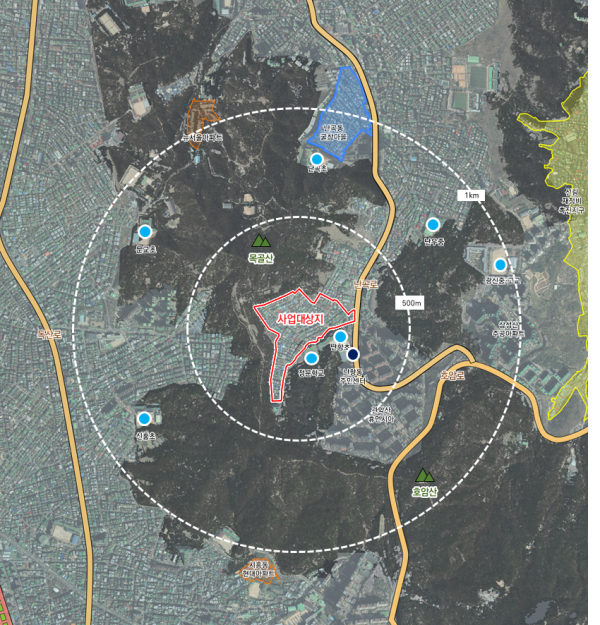
The Sillim-dong 675 area is located at the edge of Gwanak-gu along Nangok-ro. It is a residential area formed along the slopes of Mokgolsan Mountain. Surrounded by greenery, residents can enjoy views of the mountain landscape from various parts of the village, and the adjacent hiking trails are popular walking paths for the community.
While this natural environment is a valuable asset to the village, it has also posed constraints on development. Due to aging housing and poor parking conditions, the area was designated as a maintenance planned zone in 2011 to improve the environment. However, the project stalled due to low-rise height planning standards and was removed from the zone in 2014. Although small-scale environmental improvement projects were carried out afterward, residents’ demands for fundamental solutions led to its selection as a candidate site for rapid integrated planning.
According to the rapid integrated planning proposal, the Sillim-dong 675 area will be transformed into a “green village in the city where nature and people communicate” (approximately 25 floors, 1,480 households). First, the zoning within the site, which includes Type 1 and Type 2 general residential areas (up to 7 floors), was upgraded to encourage efficient architectural planning and enhance project feasibility. At the same time, flexible urban planning standards were applied while establishing height planning guidelines to ensure harmonious urban landscapes with the natural scenery and surrounding low-rise residential areas.
Additionally, a terrain-adaptive complex plan was designed to preserve the existing topography as much as possible, and where unavoidable level differences occur, the terrain was utilized to create three-dimensional spaces. The site is a valley-shaped slope with a height difference of more than 40 meters between its highest and lowest points. Considering the slope direction and minimizing the sense of oppression, as well as efficient construction implementation, various forms of floor slabs were configured for the complex.
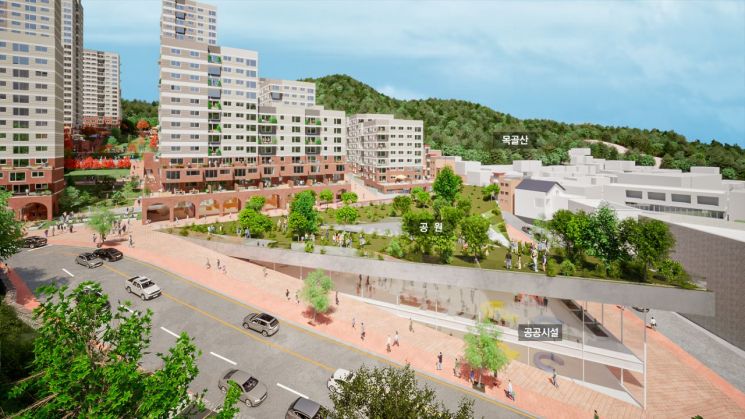
Furthermore, a circulation plan was established to organically connect the site with its surroundings, making it a convenient passageway linking the region. The plan prioritizes pedestrian accessibility to key destinations and considers the mobility of vulnerable groups using the slopes, aiming to create a safe and comfortable pedestrian-centered complex.
In addition, cultural and welfare facilities, which are lacking in the area, are planned near the entrance of the site along Nangok-ro. The planned park and welfare facilities are expected to become vibrant community hubs. In particular, public facilities are planned at the site entrance to improve residents’ accessibility, including a comprehensive childcare support center and other welfare facilities, totaling approximately 5,000 square meters in gross floor area.
With the finalization of the rapid integrated planning proposal for Sillim-dong 675, the city anticipates that the maintenance planning procedures will be initiated within the year. The streamlined procedures of rapid integrated planning are expected to significantly shorten the project duration.
Jo Nam-jun, Director of the Seoul Metropolitan Government’s Urban Planning Bureau, stated, “This site has experienced ups and downs in project promotion over a long period. We focused on applying flexible urban planning standards to enhance project feasibility while ensuring a harmonious landscape with the surroundings. We expect the complex to be an attractive landscape not only for residents who will enjoy a pleasant environment but also for citizens passing by the area.”
© The Asia Business Daily(www.asiae.co.kr). All rights reserved.
![Clutching a Stolen Dior Bag, Saying "I Hate Being Poor but Real"... The Grotesque Con of a "Human Knockoff" [Slate]](https://cwcontent.asiae.co.kr/asiaresize/183/2026021902243444107_1771435474.jpg)
















